How did white Colonial and Federal Americans write about Native Americans?

Researching Colonial Era Native American tribes that lived in the modern Washington, DC; Maryland; and Virginia region has proved challenging for countless historians. As a result of forced migration, disease, and minimal preserved documents few historical documents remain from Indigenous perspectives in this region.
What does remain, are many documents from settlers’ perspectives. This exhibit looks at how settler-colonists used language related to Indians in their writing and how the language of race was used and changed over time. This digital exhibit is organized in a timeline format.
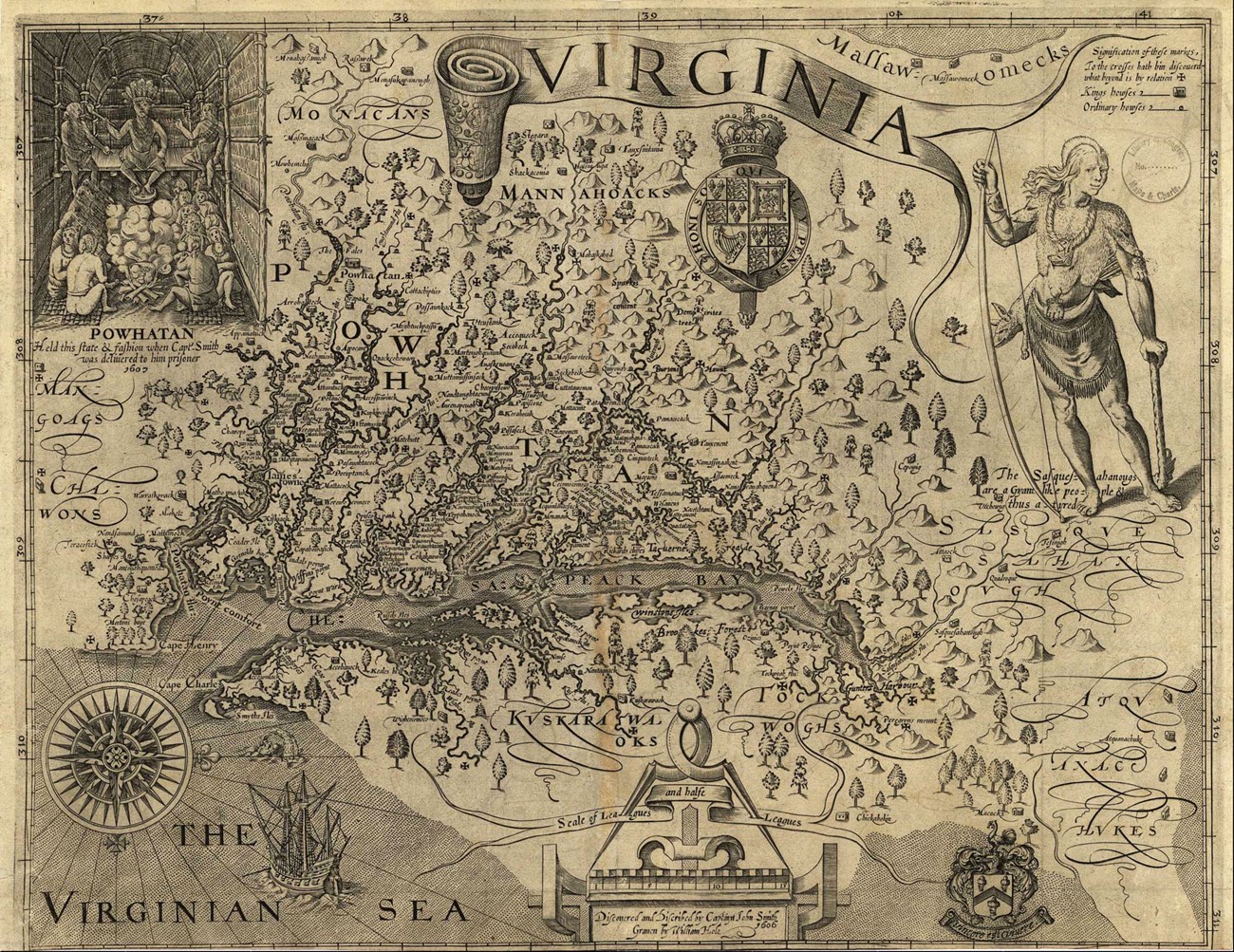
Pervasive Themes:
I. racemaking and colonial superiority
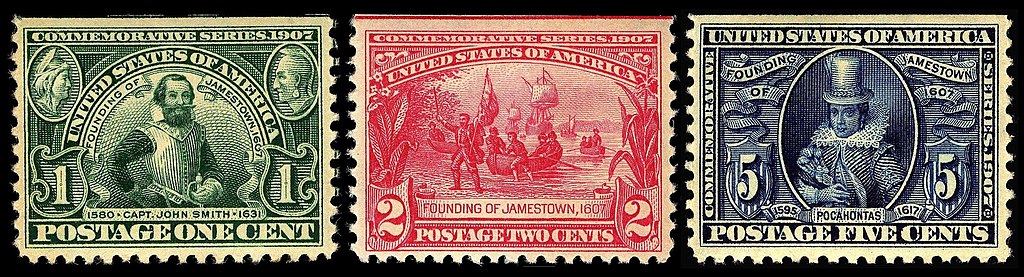
These stamps, though created in 1907 indicate the pervasive and widely accepted racemaking that occurred in the colonial period. They celebrate the 200 year anniversary of the founding of Jamestown, and continue the racemaking established at the colony’s founding.
John Smith is shown framed by unnamed and generic Indigenous figures in the one cent stamp. Together these stamps show ideas of white, European superiority at work. While colonial leaders like JS are centered as historical heroes, Native Americans are represented as historically relevant only when they have assimilated. Pocahontas, a central figure of American mythology is depicted, but it is an image of her in English clothing.
Written in bold across the top of each stamp, the United States of America is celebrated as the outcome of this legacy of racemaking, violence, and land appropriation.
II. racemaking, violence, and the creation of the ‘savage’
is there an artifact that shows savage being used alongside violence you can put here and break this annotation into 2?
We perceive and well know you intend to destroy us, that are here to intreat and desire your friendship, and to enjoy our houses and plant our fields, of whose fruit you shall participate: otherwise you will have the worse by our absence; for we can plant any where, though with more labour, and we know you cannot live if you want our harvest, and that reliefe we bring you. If you promise us peace, we will beleeve you; if you proceed in revenge we will abandon the Country.
Okaning, a Chickahominy man, to John Smith3
While Europeans associated the early racial categories of “Indian” and “Salvage” with violence, Okaning, a Chickahominy man, believes the English settler-colonists “intend to destroy [his tribe].” Smith used the spelling “salvage” to write “savage” through his work. [move to the voyant section]
While settler-colonists like Smith attempted to associate Indigenous people with violence, Indigenous people associated English with destruction.

Terms
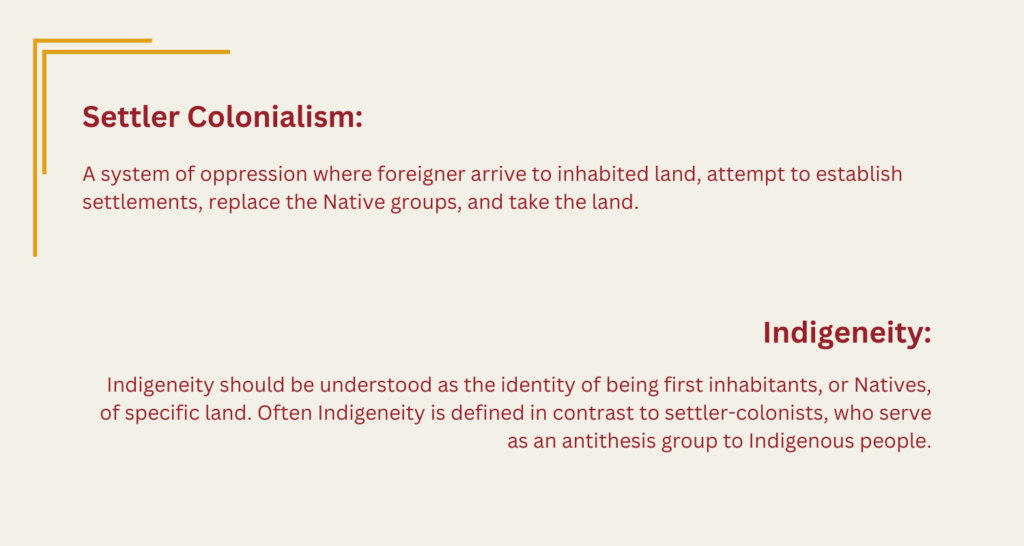
The process by which colonizers reclassified diverse Indigenous peoples as one single race, unified by their supposed inferiority to white Europeans, is called racialization. This process began almost as soon as European settler-colonists had contact w/… This exhibit traces how racialization occurred…


Methods
As human readers, we decipher information and text through close reading — analyzing each word, phrase, and location on the page. This project uses a web-based program, Voyant, to supplement close reading with distant reading. Voyant creates word counts, word associations, and other analyses that show how words are used together, and how often. This method lets researchers combine their close readings skills with technology that can highlight previously hidden themes.

Topic modeling is one form of distant reading. It is statistical analysis that takes the most frequent words in texts–for example, “indians”–and places them alongside other words that appear most frequently alongside them, like “peace.” It then categorizes these words that appear together in topics, as shown in the collocate graph above.
You can think of a topic as a conversation, where nothing anyone writes exists alone.6 Instead, all writing is influenced by ongoing conversations around the author. The sources analyzed can give us ideas about what conversations and how language was used in the social circles and communities of the predominantly wealthy, white, English authors.
Sources
For this research I collected primary sources from disparate archives. The sources are linked in the yellow drop down menus below.
18th Century Maryland Legal Documents
19th Century Thomas Jefferson Papers
Travel Books
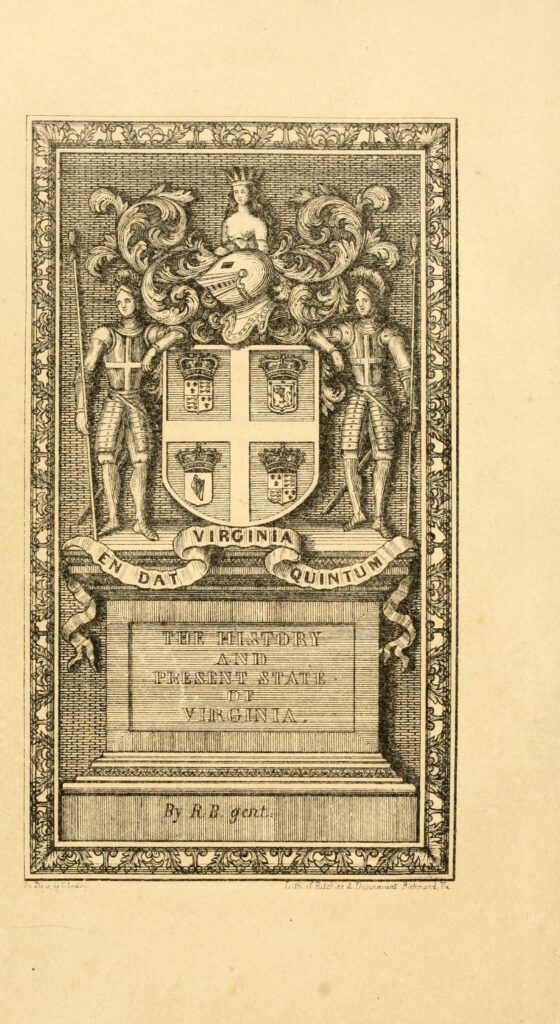
European settlers often published accounts of their travels and conquest for people in Europe to read. They did this to share information with people in Europe and convince workers and settlers to join them in North America. For European corporations colonizing the mid-Atlantic region, the settlement of the “New World” was a business venture. To have a successful business, they needed people.
These books share detailed descriptions about the mid-Atlantic region and how settler-colonists interacted with and racialized Native groups.
Maryland Legal Documents
The Maryland State Archives hold a large collection of colonial records that mention or relate to Native tribes. Using their, Mayis Indigenous Resource Guide, I performed topic modeling on documents referring to the following tribes:
- Anacostan
- Nacotchtank
- Nanticoke
- Pamunkey
- and Piscataway
Because spelling was not standardized at this time, there are many spellings for tribe names.
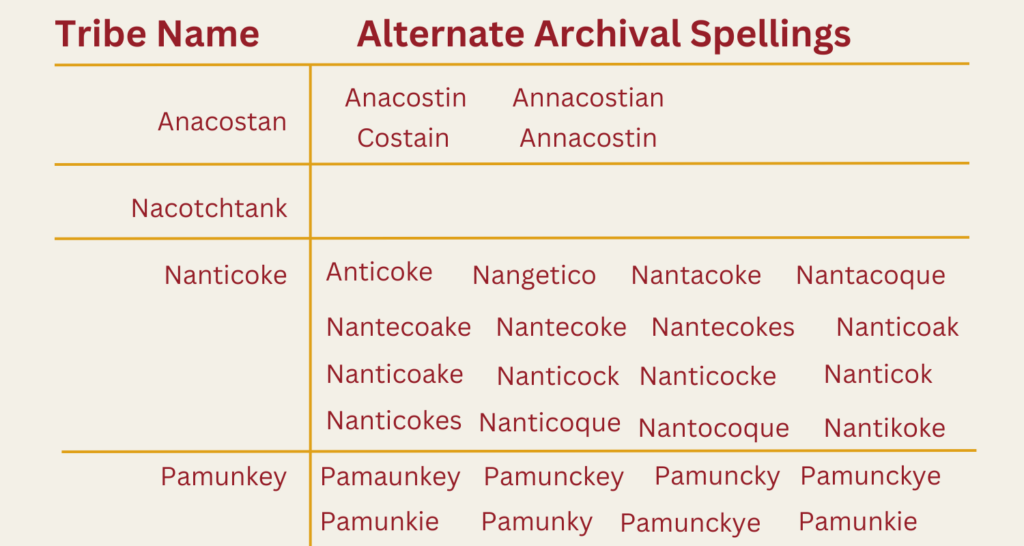
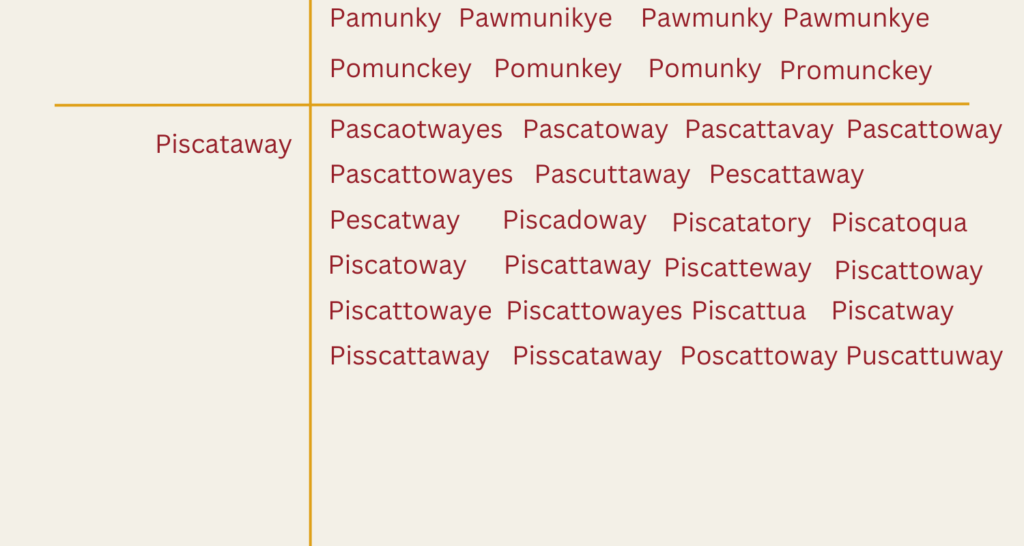
What we can understand from all of these different spellings is the high rates at which colonists and Native Americans interacted.
Jefferson Documents
The last group of sources used are papers written by Thomas Jefferson that include the word “red” or “Indian.” I selected these documents, first to understand ongoing discourses as the English colonies transitioned into the United States. Secondly, I chose these terms because of their use in racializing contexts, with “red” often referring to Indigenous peoples and “Indian” as a monolithic settler-colonist constructed term.
Early Seventeenth Century
17th century documents indicate that English settler-colonists and Native Americans began racemaking upon contact. Early relationships between Settler-colonists and Indigenous groups were not straightforward or predetermined, and colonists heavily relied on the assistance of local tribes.7
“Indian” as race was developed in these early interactions. In many of the travel narratives, settler-colonists referred to individuals according to their respective tribes in the early to mid seventeenth century.
Word Cloud of seventeenth century travel books8
The word cloud above shows the words used most often in seventeenth century travel books. Word clouds show how often in the texts analyzed, different words appear. The bigger the word, the more often it is used. Notice that the terms “men”, “country”, “England”, “people”, “king”, and “salvages” appear the largest, and therefore occur most often.
This word cloud highlights that while English colonists certainly saw Native Americans as ‘others’, they were not yet thinking of them as a singular or unified race. Often, the English colonists imagined tribes as different monarchies, even referring to tribal leaders as “kings” and “emperors.”
English colonists recognized Native tribes’ power and regional networks. However, they interpreted tribal governments and their power through their own experiences with the English colonies and the English monarchy.

The trend line graph above highlights how frequently the words “salvage”, “Indian”, “Indians”, and “savage”, are used in the travel books.
Among other words in the texts, “salvage” in the collocate plot above most often appears in the travel books alongside the words “great”, “captaine”, “men”, and “slaine”. John Smith utilizes “salvage” to label Indigenous people in everyday language, it is also closely associated with violence, whether committed by or against a Native American, where “slaine” comments on a death or murder.

Eighteenth Century
Moving into the mid to late seventeenth century and eighteenth century, it is evident that racemaking on the part of English colonists and Native Americans was taking shape. An analysis of legal documents referring to Anacostan, Nanticoke, Pamunkey, and Piscataway tribes from the Maryland State Archives reveals that the words “Indian” and “Indians” are most frequently used in the body of text. What can be interpreted from this is that “Indian” as both a racial category and widely used descriptor of people is occurring.

Word Cloud of Maryland State Archives Documents relating to Anacostan, Nanticoke, Pamunkey, and Piscataway tribes, ca. 1659 – 177310
The next largest counts of words that appear in the documents are “county,” “land,” “house,” and “tobacco,” indicating the central focus on control of property in these documents. Upon closer reading, many of the legal proceedings negotiate land boundaries, peace agreements, and alliances. in a letter to the Colony of Maryland Lower House, Ababco Tequassino Ha’tsawap a “king” from the Eastern Shore wrote,
… they further [show] that notwithstanding they never sold any Land to the English nor gave permission to seat any Lands on the Southside Choptank higher than William Stephen’s Creek, yet the English do daily Encroach upon them, & even sit down amongst them in their clear Fields with their Cattle & Hogs destroying their Corn without which they cannot Subsist. They therefore pray that the Land above William Stephens Creek as high as the Creek called Secretary Sewall’s Creek may be reserved & laid out for them & that no English may set within those Bounds…
Proceedings and Acts of the General Assembly April 1666, Maryland State Archives11
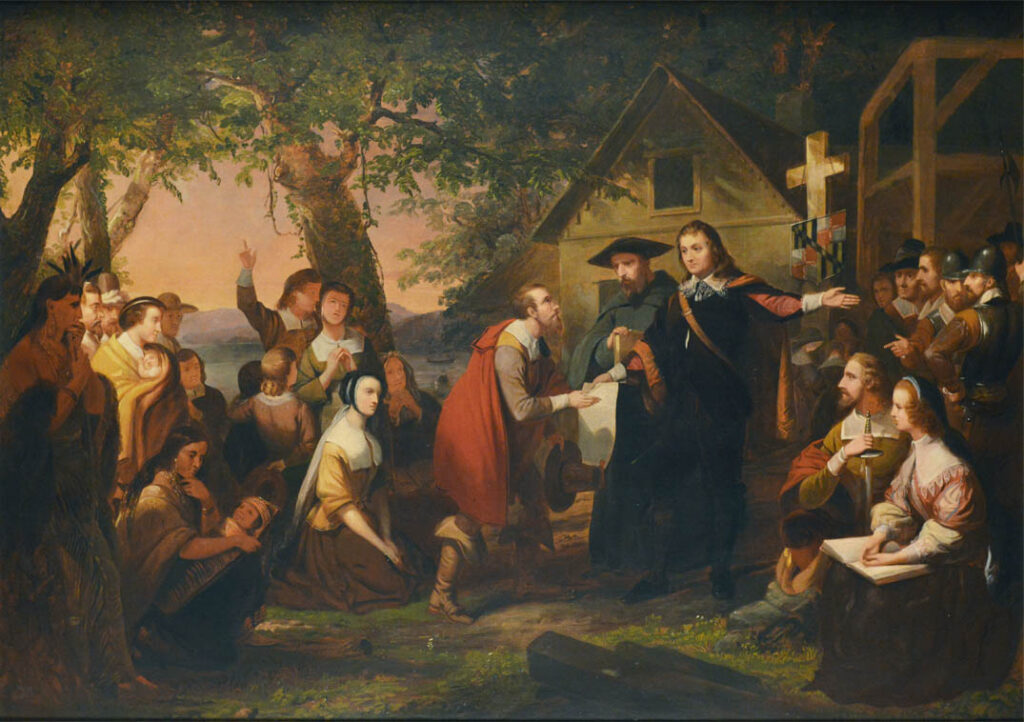
This painting, completed over 200 years after the event, depicts the allegorical scene in which Historic St. Mary’s City was founded by settler-colonists in Maryland. As a result, it draws upon innately American themes of racemaking highlighting occupation of land by English Christian settlers, and an imagined dwindling community of Native people one family falling off the edge, similar to Ababco Tequassino Ha’tsawap’s fear.

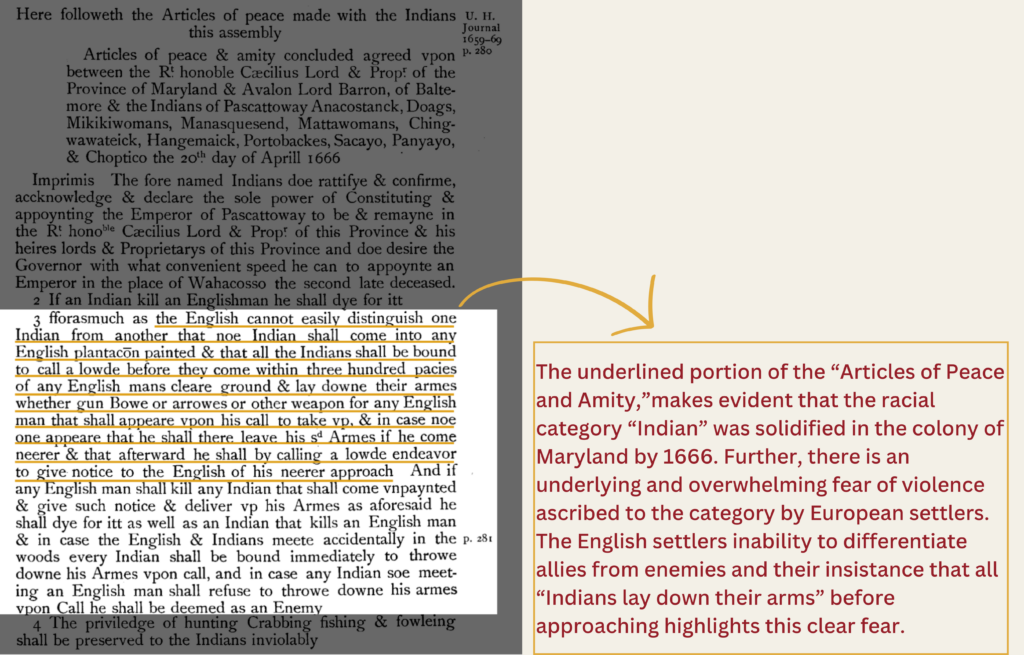
Analyzing the Colonial Maryland legal proceedings further, the word “Indians” appears most frequently alongside “English,” “come,” and “peace.” Closer reading of the documents highlights that “peace” refers to changing and renegotiated Articles of Peace and Amity. Several of these articles state:

Turn of the Nineteenth Century:
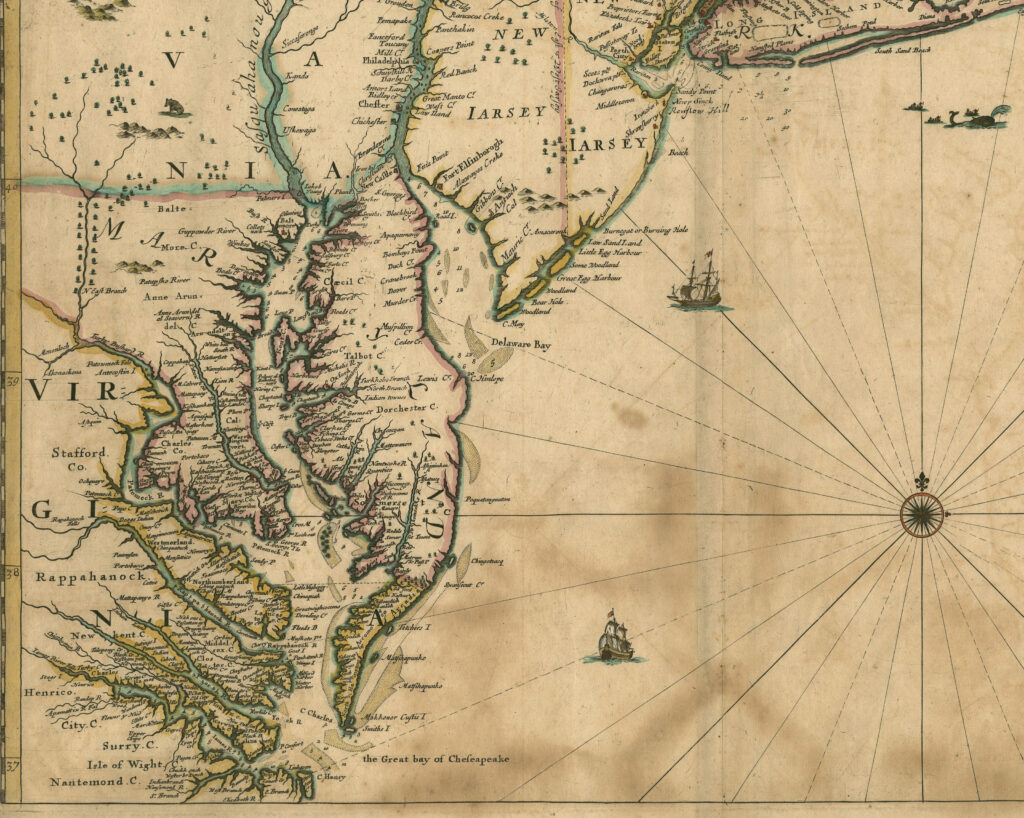
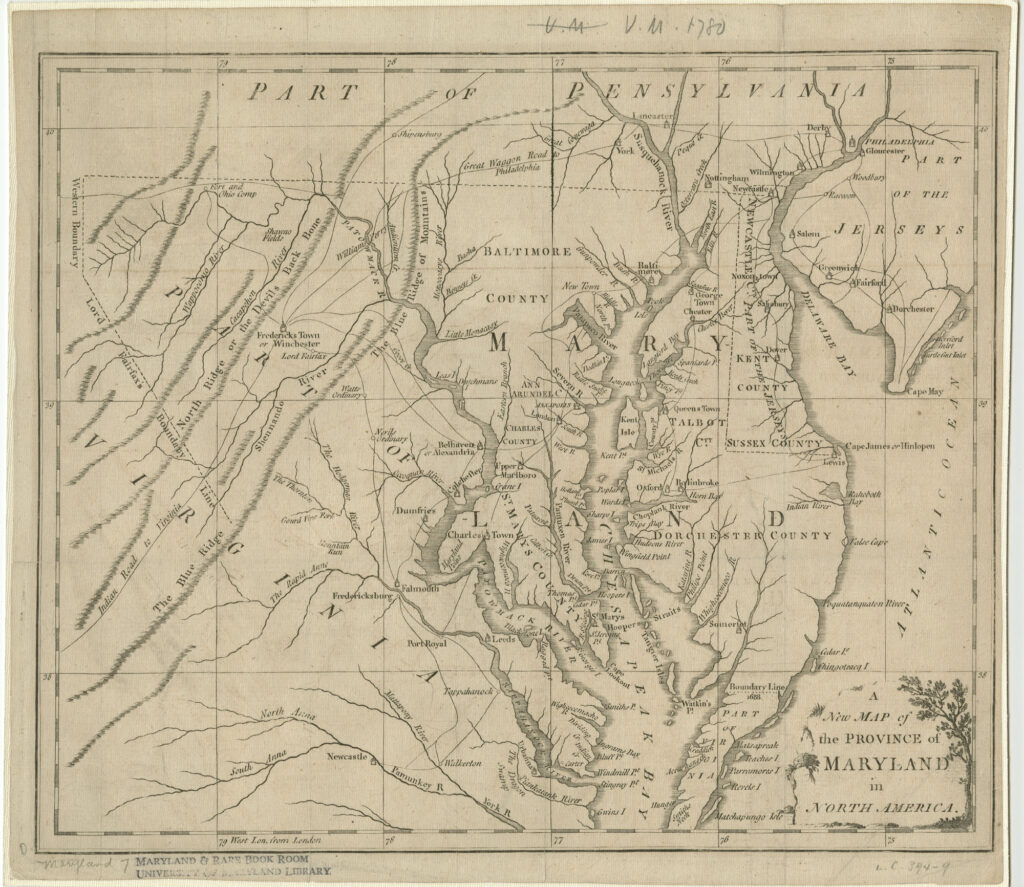
By the late 1700s to early 1800s, tribes in the Mid-Atlantic were no longer mentioned in documents relating to their citizens or communities, but instead were used as geographic markers. Even as Native Am tribes and nations were forced off their land at astonishing rates, Native place names remained as reminders that the area was Indigenous land. At the same time, the map below, depicts that Native names, like Piscataway, Potomac, and Pamunkey, are used to name waterways, and occur alongside the use of English monarchs’ names for Maryland counties.
The movement to associate Native American Tribe names with geographic regions and waterways can further be visualized in the trend line below. Below you can see that the words “Indian,” “tobacco,” “land,” and “inspector” are all used most frequently in the documents including the word “Pamunkey.” Upon closer reading, Pamunkey appears in these eighteenth century documents only in relation to geographic places: Pamunkey Creek and Warehouses [for tobacco] at Pamunkey and Chickamuxon.
Notes on the State of Virginia:
Thomas Jefferson’s work, Notes on the State of Virginia, is often pointed to as a foundational text of Early America. Jefferson wrote the book in the midst of the American Revolution, supported by the French government to learn more about the American colonies, and printed in Paris by 1785.15

The trend line graph above segmented Notes on the State of Virginia into ten parts. It is evident that Jefferson writes at length about Native people in his work using racialized terms.
BREAK TO TALK ABOUT THE PRESIDENTIAL YEARS
Within the text, Jefferson discusses Native tribes in the region as if they are no longer there, indicating that white colonists had settled into the settler-colonial logic, erasing the Native American and replacing them with white settlers.17

Conclusions
While many questions remain unanswered, a distant reading of early travel books and Colonial legal documents shows how the process of racemaking began almost immediately upon contact between Native people and English settler colonists. As “Indian” became solidified as a racial group, English ascriptions of violence to Native Americans in the mid-Atlantic and claims to their land proliferated.
By the turn of the nineteenth century, Indigenous peoples had been forcibly moved farther west and colonial America became the United States. white Americans living far from Indigenous communities imagined Native Americans only in the past, and their descendants as childlike dependents of the US government.
Despite limited documentation from Colonial American Indians’ perspectives, the hallmarks of settler colonialism can still be traced through English centric documents. These texts and images reveal how early settler colonialism in the mid-Atlantic region used processes of racialization to physically and symbolically eliminate and replace Native communities.
Citations
- Smith, John, and William Hole. Virginia. [London, 1624] Map. https://www.loc.gov/item/99446115/. ↩︎
- Founding of Jamestown commemorative stamps, set of 3; Issued in conjunction with the opening of the Jamestown Exposition of 1907. U.S. Post Office; Individual stamp images courtesy Smithsonian National Postal Museum. https://commons.wikimedia.org/wiki/File:Founding_of_Jamestown_3_stamps_1907_issue.JPG. ↩︎
- Smith, John, and Jay I. Kislak Reference Collection. The generall historie of Virginia, New England & the Summer Isles: together with The true travels, adventures and observations, and A sea grammar. Glasgow: J. MacLehose ; New York: Macmillan, 1907, 85. ↩︎
- Fields, Karen E. and Barbara J. Fields. Racecraft: The Soul of Inequality in American Life. New York: Verso, 2012. 16-17. ↩︎
- Documents processed to analyze were found and edited from the Maryland State Archives “MAYIS Indigenous Records Collection” https://mayis.msa.maryland.gov/pages/Browse.aspx. Proceedings of the Council of Maryland 1671-1681, vol. 15, 251-252.; Proceedings of the Council of Maryland 1671-1681, vol. 15, pgs.416-420.; Proceedings of the Council of Maryland, vol. 20, pgs 68-69.; Proceedings and Acts of the General Assembly, 1693-1697, vol 20, pg 437.; Proceedings and Acts of the General Assembly, 1693-1697, vol. 19, pgs. 385-386.; Proceedings of the Council of Maryland, 1693-1697, vol. 20, pgs73-74.; Proceedings and Acts of the General Assembly, 1693-1697, vol 19, 407-09.; Proceedings and Acts of the General Assembly, vol. 19, pgs 526-531.; Proceedings and Acts of the General Assembly, 1693-1697, vol 19, pgs 570-575.; Act Granting Nanticoke Land, Oct. 20, 1698.; Proceedings of the County Court of Charles County, 1666-1674, pg34.; Proceedings of the County Court of Charles County, 1666-1674, pgs.97-99.; Proceedings of the Provincial Court, 1663-1666, pgs 127-8.; Proceedings of the Provincial Court, 1658-1662, vol.41, pg 287.; Proceedings of the Council of Maryland, 1671-1681, vol 15, pg 78.; Proceedings of the Council of Maryland, vol 15 pgs 90-93.; Proceedings of the Council of Maryland, 1671-1681, Vol15, pgs 90-92.; Proceedings and Acts of the General Assembly April 1666-June1676, vol 2, pgs 487-89.; Proceedings of the Provincial Court, 1679-1680/1, vol 69, pgs 155-6.; Proceedings of the Council of Maryland, 1681-1685/6, vol 17, pgs 98-102.; Proceedings of the Council of Maryland, 1693-97, vol 25, pg 86.; Proceedings of the Council of Maryland, vol 20, pg 282.; Proceedings of the Council of Maryland, 1698-1731, vol 25, pgs 85-6.; Proceedings of the Council of Maryland 1698-1731, vol 25, pg 256.; Proceedings and Acts of the General Assembly, 1693-1697, vol 19, pgs 384-86.; Proceedings and Acts of the General Assembly, 1693-1697, vol 19, pgs 406-08.; Proceedings of the Council of Maryland, 1693-1697, vol 20, pgs 456.; Court Records of Prince George’s County, Maryland, 1696-1699, vol 202, pg xxi.; Acts of the General Assembly Hitherto Unpublished 1694-1698, 1711-1729, vol 38, pg 104.; Proceedings of the Council of Maryland, 1696/7-1698, vol 23, pg 143.; Proceedings of the Council of Maryland, 1696/7-1698, vol 23, pg 185.; Proceedings and Acts of the General Assembly, March 1697/8 – July 1699, vol 22, pgs 390-1.; Proceedings and Acts of the General Assembly, March 1697/8 – July 1699, vol 22, pgs 308-9.; Proceedings and Acts of the General Assembly, March 1697/8-July 1699, vol 22, pgs 328-330.; Proceedings of the Council of Maryland, 1696/7 -1698, vol 23, pgs 187-88.; Proceedings of the Council of Maryland, 1698-1731, vol 25, pgs 85-87.; Chancery Court, Chancery Record, 1671-1712, vol 748, pg 561.; Acts of the General Assembly hitherto unpublished 1694-1698, 1711-1729, vol 38, pgs 343-44.; Proceedings and Acts of the General Assebmly, 1748-1751, vol 46, pgs 156-63.; Proceedings and Acts of the General Assembly, 1766-1768, vol 61, pgs 243-47.; Proceedings and Acts of the General Assembly, October 1773 to April 1774, vol 64, pgs 150-158.; Proceedings and Acts of the General Assembly April 1666 – June 1676, vol 2, pgs 10-11.; Proceedings and Acts of the General Assembly April 1666 – June 1676, vol 2, pgs 10-11.; Proceedings and Acts of the General Assembly April 1666- June 1676, vol 2, pgs 25-8.; Proceedings and Acts of the General Assembly April 1666 – June 1676, vol 2, pgs 73-4.; Proceedings and Acts of the General Assembly April 1666 – June 1676, vol 2, pg 131.; Proceedings and acts of the General Assembly of Maryland May 28, 1717 – April 22, 1720, vol 33, pg 162.; Proceedings and Acts of the General Assembly of Maryland May 28, 1717 – April 22, 1720, pgs 238-39.; Proceedings of the Council of Maryland, 1636-1667, vol 3, pg 360.; Proceedings of the Council of Maryland, 1636 – 1667, vol 3, pg 402-03.; Proceedings of the Council of Maryland, 1636 -1667, vol 3, pgs 453-54.; Proceedings and Acts of the General Assembly April 1666 – June 1676, vol 2, pgs 476-77.; Proceedings of the Council of Maryland, 1636 – 1667, vol 3, pg 481.; Proceedings and Acts of the General Assembly January 1637/8 – September 1664, vol 1, pg 348.; Proceedings and Acts of the General Assembly April 1666 – June 1676, vol 2, pgs 10-12.; Proceedings and Acts of the General Assembly April 1666 – June 1676, vol 2, pgs 15-6.; Proceedings and Acts of the General Assembly, April 1666 – June 1676, vol 2, pgs 25-7.; Proceedings and Acts of the General Assembly, April 1666 – June 1676, vol 2, pg 73.; Proceedings and Acts of the General Assembly April 1666 – June 1676 “An Act for Confirmation of the Articles of Peace made with the Indians.”; Proceedings of the Council of Maryland 1667 – 1687/8, vol 5, pgs 33-34.; Proceedings of the Council of Maryland 1667 – 1687/8, vol 5, pgs 65-66.; Proceedings of the Council of Maryland, 1667 – 1687/8, vol 5, pgs 134-138.; Proceedings of the Council of Maryland 1667 – 1687/8, vol 5, pgs 245-248.; Proceedings of the Council of Maryland 1667 – 1687/8, vol 5, pgs 338-350.; Proceedings and Acts of the General Assembly April 1666 – June 1676, vol 2, pgs 10-12.; Proceedings and Acts of the General Assembly April 1666 – June 1676, vol 2, pgs 15-16.; Proceedings and Acts of the General Assembly April 1666 – 1676, vol 2, pgs 25-7.; Proceedings of the Council of Maryland, 1681 – 1685/6, vol 17, pgs 38-41.; Acts of the General Assembly Hitherto Unpublished 1694 – 1698, 1711 – 1729, vol 38, pgs 104-05.; Proceedings of the Council of Maryland 1671 – 1681, vol 15, pgs 91-92.; Proceedings of the Council of Maryland 1671 – 1681, vol 15, pgs 92.; Proceedings of the Council of Maryland 1671 – 1681, vol 15, pg 217.; Proceedings of the Council of Maryland 1671 – 1681, vol 15, pgs 251-52.; Proceedings of the Council of Maryland, 1671 – 1681, vol 15, pgs 188-89.; Proceedings of the Council of Maryland, 1696/7 – 1698, vol 23, pgs 142-43.; Proceedings of the Council of Maryland, 1698 – 1731, vol 25, pgs 185-86. ↩︎
- Underwood, Ted. “Topic Modeling Made Just Easy Enough.” The Stone and the Shell Blog. https://tedunderwood.com/category/methodology/topic-modeling/. ↩︎
- Ordahl Kupperman, Karen. Indians & English: Facing Off in Early America. Ithaca: Cornell University Press, 2000. 14-15. ↩︎
- Stéfan Sinclair and Geoffrey Rockwell, “Cirrus”, Voyant Tools, accessed April 3, 2024, https://voyant-tools.org/?corpus=ad6a5ad0ce99bb5bb6136a1376c68215&view=Cirrus. Beverley, Robert, Approximately, and Charles Campbell. The history of Virginia, in four parts. Richmond, J. W. Randolph, 1855. Pdf. https://www.loc.gov/item/01006558/.; Bland, Edward, -1653, Sackford Brewster, and Elias Pennant. The discovery of New Brittaine. Began August 27. anno Dom. London, Printed by T. Harper for J. Stephenson, 1651. Pdf. https://www.loc.gov/item/04029775/.; Plowden, Charles, and Ya Pamphlet Collection. A short account of the establishment of the new See of Baltimore in Maryland: and of consecrating the Right Rev. Dr. John Carroll first bishop thereof on the feast of the assumption,: with a discourse delivered on that occasion, and the authority for consecrating the bishop, and erecting and administering the said see: to which are added extracts from the different bills of right and Constitution of the United States. London: Coghlan, 1790. Pdf. https://www.loc.gov/item/2004695062/.; and Smith, John, and Jay I. Kislak Reference Collection. The generall historie of Virginia, New England & the Summer Isles: together with The true travels, adventures and observations, and A sea grammar. Glasgow: J. MacLehose ; New York: Macmillan, 1907. Pdf. https://www.loc.gov/item/75320262/. ↩︎
- Morden, Robert. A New Map of New England, New York, New Jersey, Pennsylvania, Maryland and Virginia. 1685. The University of Maryland Digital Collections. https://digital.lib.umd.edu/mdmap/1685/a-new-map-of-new-england. ↩︎
- Documents processed to analyze were found and edited from the Maryland State Archives “MAYIS Indigenous Records Collection” https://mayis.msa.maryland.gov/pages/Browse.aspx. Proceedings of the Council of Maryland 1671-1681, vol. 15, 251-252.; Proceedings of the Council of Maryland 1671-1681, vol. 15, pgs.416-420.; Proceedings of the Council of Maryland, vol. 20, pgs 68-69.; Proceedings and Acts of the General Assembly, 1693-1697, vol 20, pg 437.; Proceedings and Acts of the General Assembly, 1693-1697, vol. 19, pgs. 385-386.; Proceedings of the Council of Maryland, 1693-1697, vol. 20, pgs73-74.; Proceedings and Acts of the General Assembly, 1693-1697, vol 19, 407-09.; Proceedings and Acts of the General Assembly, vol. 19, pgs 526-531.; Proceedings and Acts of the General Assembly, 1693-1697, vol 19, pgs 570-575.; Act Granting Nanticoke Land, Oct. 20, 1698.; Proceedings of the County Court of Charles County, 1666-1674, pg34.; Proceedings of the County Court of Charles County, 1666-1674, pgs.97-99.; Proceedings of the Provincial Court, 1663-1666, pgs 127-8.; Proceedings of the Provincial Court, 1658-1662, vol.41, pg 287.; Proceedings of the Council of Maryland, 1671-1681, vol 15, pg 78.; Proceedings of the Council of Maryland, vol 15 pgs 90-93.; Proceedings of the Council of Maryland, 1671-1681, Vol15, pgs 90-92.; Proceedings and Acts of the General Assembly April 1666-June1676, vol 2, pgs 487-89.; Proceedings of the Provincial Court, 1679-1680/1, vol 69, pgs 155-6.; Proceedings of the Council of Maryland, 1681-1685/6, vol 17, pgs 98-102.; Proceedings of the Council of Maryland, 1693-97, vol 25, pg 86.; Proceedings of the Council of Maryland, vol 20, pg 282.; Proceedings of the Council of Maryland, 1698-1731, vol 25, pgs 85-6.; Proceedings of the Council of Maryland 1698-1731, vol 25, pg 256.; Proceedings and Acts of the General Assembly, 1693-1697, vol 19, pgs 384-86.; Proceedings and Acts of the General Assembly, 1693-1697, vol 19, pgs 406-08.; Proceedings of the Council of Maryland, 1693-1697, vol 20, pgs 456.; Court Records of Prince George’s County, Maryland, 1696-1699, vol 202, pg xxi.; Acts of the General Assembly Hitherto Unpublished 1694-1698, 1711-1729, vol 38, pg 104.; Proceedings of the Council of Maryland, 1696/7-1698, vol 23, pg 143.; Proceedings of the Council of Maryland, 1696/7-1698, vol 23, pg 185.; Proceedings and Acts of the General Assembly, March 1697/8 – July 1699, vol 22, pgs 390-1.; Proceedings and Acts of the General Assembly, March 1697/8 – July 1699, vol 22, pgs 308-9.; Proceedings and Acts of the General Assembly, March 1697/8-July 1699, vol 22, pgs 328-330.; Proceedings of the Council of Maryland, 1696/7 -1698, vol 23, pgs 187-88.; Proceedings of the Council of Maryland, 1698-1731, vol 25, pgs 85-87.; Chancery Court, Chancery Record, 1671-1712, vol 748, pg 561.; Acts of the General Assembly hitherto unpublished 1694-1698, 1711-1729, vol 38, pgs 343-44.; Proceedings and Acts of the General Assebmly, 1748-1751, vol 46, pgs 156-63.; Proceedings and Acts of the General Assembly, 1766-1768, vol 61, pgs 243-47.; Proceedings and Acts of the General Assembly, October 1773 to April 1774, vol 64, pgs 150-158.; Proceedings and Acts of the General Assembly April 1666 – June 1676, vol 2, pgs 10-11.; Proceedings and Acts of the General Assembly April 1666 – June 1676, vol 2, pgs 10-11.; Proceedings and Acts of the General Assembly April 1666- June 1676, vol 2, pgs 25-8.; Proceedings and Acts of the General Assembly April 1666 – June 1676, vol 2, pgs 73-4.; Proceedings and Acts of the General Assembly April 1666 – June 1676, vol 2, pg 131.; Proceedings and acts of the General Assembly of Maryland May 28, 1717 – April 22, 1720, vol 33, pg 162.; Proceedings and Acts of the General Assembly of Maryland May 28, 1717 – April 22, 1720, pgs 238-39.; Proceedings of the Council of Maryland, 1636-1667, vol 3, pg 360.; Proceedings of the Council of Maryland, 1636 – 1667, vol 3, pg 402-03.; Proceedings of the Council of Maryland, 1636 -1667, vol 3, pgs 453-54.; Proceedings and Acts of the General Assembly April 1666 – June 1676, vol 2, pgs 476-77.; Proceedings of the Council of Maryland, 1636 – 1667, vol 3, pg 481.; Proceedings and Acts of the General Assembly January 1637/8 – September 1664, vol 1, pg 348.; Proceedings and Acts of the General Assembly April 1666 – June 1676, vol 2, pgs 10-12.; Proceedings and Acts of the General Assembly April 1666 – June 1676, vol 2, pgs 15-6.; Proceedings and Acts of the General Assembly, April 1666 – June 1676, vol 2, pgs 25-7.; Proceedings and Acts of the General Assembly, April 1666 – June 1676, vol 2, pg 73.; Proceedings and Acts of the General Assembly April 1666 – June 1676 “An Act for Confirmation of the Articles of Peace made with the Indians.”; Proceedings of the Council of Maryland 1667 – 1687/8, vol 5, pgs 33-34.; Proceedings of the Council of Maryland 1667 – 1687/8, vol 5, pgs 65-66.; Proceedings of the Council of Maryland, 1667 – 1687/8, vol 5, pgs 134-138.; Proceedings of the Council of Maryland 1667 – 1687/8, vol 5, pgs 245-248.; Proceedings of the Council of Maryland 1667 – 1687/8, vol 5, pgs 338-350.; Proceedings and Acts of the General Assembly April 1666 – June 1676, vol 2, pgs 10-12.; Proceedings and Acts of the General Assembly April 1666 – June 1676, vol 2, pgs 15-16.; Proceedings and Acts of the General Assembly April 1666 – 1676, vol 2, pgs 25-7.; Proceedings of the Council of Maryland, 1681 – 1685/6, vol 17, pgs 38-41.; Acts of the General Assembly Hitherto Unpublished 1694 – 1698, 1711 – 1729, vol 38, pgs 104-05.; Proceedings of the Council of Maryland 1671 – 1681, vol 15, pgs 91-92.; Proceedings of the Council of Maryland 1671 – 1681, vol 15, pgs 92.; Proceedings of the Council of Maryland 1671 – 1681, vol 15, pg 217.; Proceedings of the Council of Maryland 1671 – 1681, vol 15, pgs 251-52.; Proceedings of the Council of Maryland, 1671 – 1681, vol 15, pgs 188-89.; Proceedings of the Council of Maryland, 1696/7 – 1698, vol 23, pgs 142-43.; Proceedings of the Council of Maryland, 1698 – 1731, vol 25, pgs 185-86. ↩︎
- Proceedings and Acts of the General Assembly April 1666, Maryland State Archives, vol 2, 196-97, https://msa.maryland.gov/megafile/msa/speccol/sc2900/sc2908/000001/000002/html/am2–197.html. ↩︎
- Tompkins Harrison Matteson, “Founding of Maryland,” Oil on Canvas Maryland State Archives, 1853, https://msa.maryland.gov/msa/speccol/sc1500/sc1545/apc_website/apcpaintings_foundingofmaryland.html. ↩︎
- Proceedings and Acts of the General Assembly, April 1666-June 1676, May 1666, vol. 2, 25, https://msa.maryland.gov/megafile/msa/speccol/sc2900/sc2908/000001/000002/html/am2–25.html. ↩︎
- John Hinton, “A New map of the province of Maryland in North America,” Penn State University Libraries Digital Collections, 1781, https://digital.libraries.psu.edu/digital/collection/maps1/id/30078/. ↩︎
- Peden, William. “Introduction,” in Notes on the State of Virginia. Omohundro Institute of Early American History at Williamsburg, Virginia. Chapel Hill, University of North Carolina Press, 1996. XVI. ↩︎
- Jefferson, Thomas. Notes on the State of Virginia. Edited by William Eden. Omohundro Institute of Early American History at Williamsburg, Virginia. Chapel Hill, University of North Carolina Press, 1996. ↩︎
- Jefferson, Thomas. Notes on the State of Virginia. Edited by William Eden. Omohundro Institute of Early American History at Williamsburg, Virginia. Chapel Hill, University of North Carolina Press, 1996. 93-95. ↩︎
Proudly powered by WordPress
Antiracist Research & Policy Center (ARPC) Resource Site
Proudly powered by WordPress