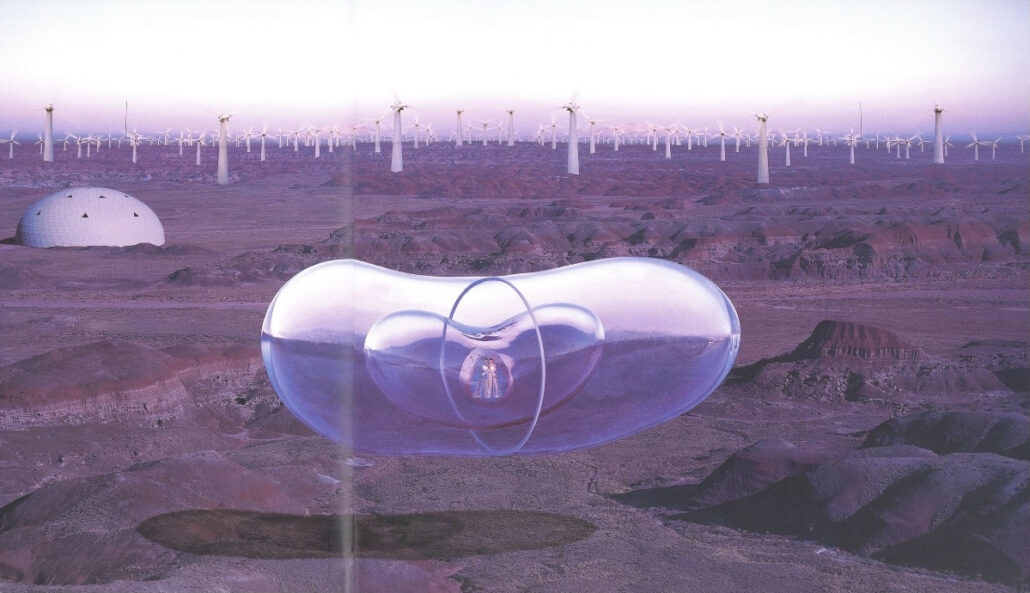
Figure 7. Mariko Mori, Entropy of Love 1998. Courtesy of Deitch Projects Color Photograph on Glass 10ft x 20ft x 0.85 inches
Entropy of Love
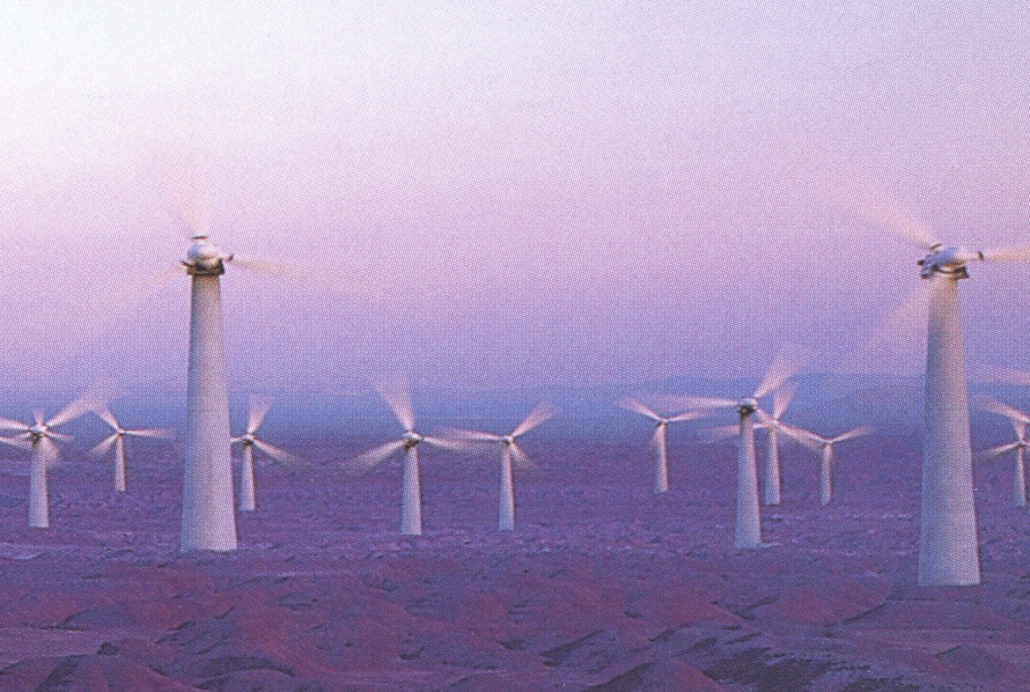
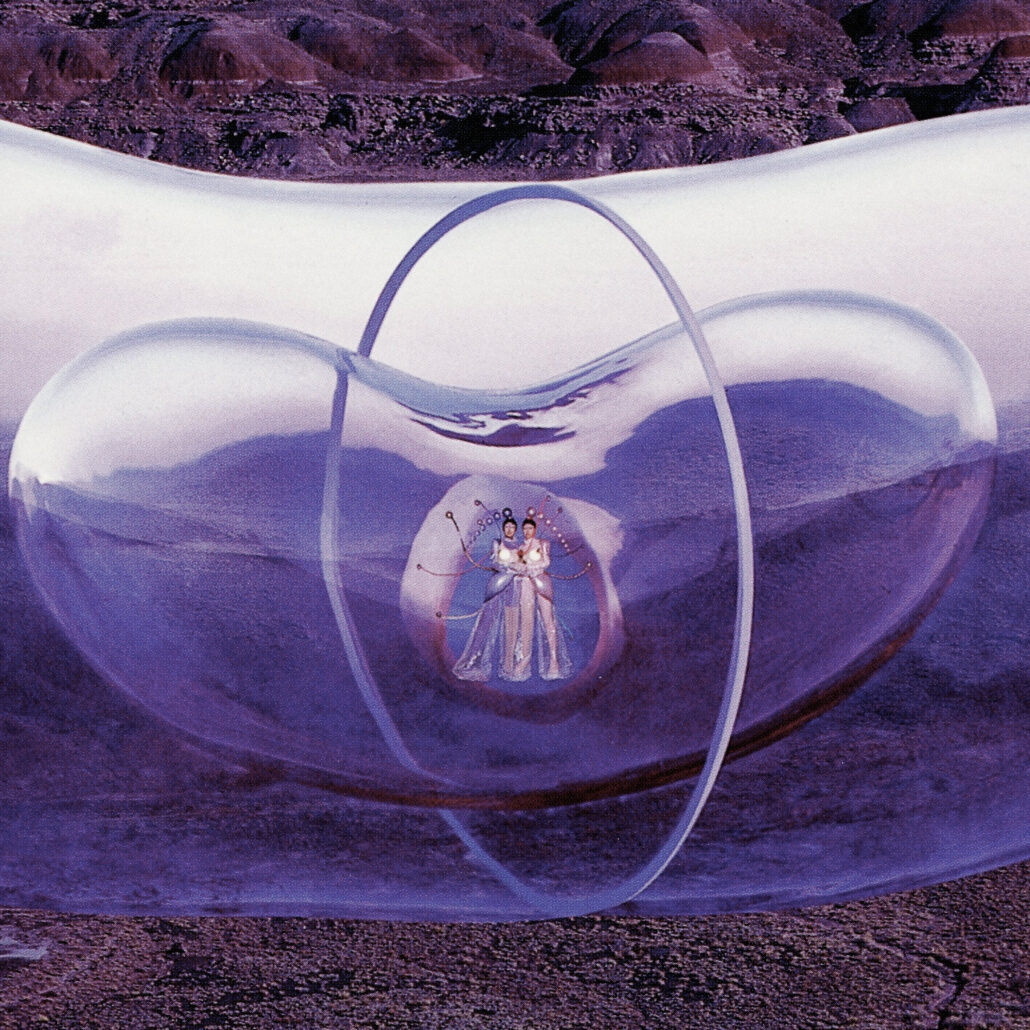
The first image, “Entropy of Love” was created in 1996 (Fig. 7). The background incorporates images primarily shot in Arizona, including the dome of the Biosphere 2 in Tucson, which can be seen in the left middle ground (Fig. 8).[54]Also visible is a wind-power station in California, which can be seen on the horizon line (Fig. 9).[55] Hovering in the foreground of the photocollage is what Mori called the “love shelter,” which is where the title of this image likely comes from. The floating acrylic bubble, which is recurring imagery in Mori’s work, encloses Mori and her sister (Fig. 10). To begin to understand this image, we must consider what the title means. Entropy refers to the degree of disorder or randomness in any system. It is the lack of order or gradual decline into disorder. What keeps entropy from going further haywire is the energy and input that we put into it. In this case, the energy is probably love. The entropy of love or the lack of predictability of love can be tied to the most important part of Buddhahood which is reaching Nirvana and letting go of all emotions, and being free from emotional suffering.
Figure 8. Detail of Biosphere 2 dome in “Entropy of Love”
Figure 9. Detail of wind station in “Entropy of Love”
Figure 10. Detail of Mori and her sister in “Entropy of Love”
In “Entropy of Love,” the love shelter is the centerpiece. The artist and her sister stand within the womb-like structure. Based on Figure 10, we can see Mori and her little sister Asuka dressed in sheer skirts and bug-like bodices. Their upper bodies are armored in a shell-like suit, with cords sticking out from all directions. The cords are attached, most notably, to each of their chests, where a white globe shines against the purple haze of the image. The sisters hold arms and are surrounded by a series of blobbed shapes, the outermost layer reflecting the wind turbines, as seen in Figure 9. Where “Pure Land” and “Burning Desire” (Figures 1 and 11) attempt to reference Buddhist tradition in the costumes and body language, “Entropy of Love” uses Mori’s cyborg and technological iconography, especially in Mori and her sister’s outfits.
The energy and spirit are hidden beneath layers and symbols that Mori so carefully placed. As previously mentioned, the lifeless nature of the Esoteric Cosmos is a commonality among each of the four stages seen. The dome of the Biosphere 2 in Figure 8, however, is a science museum and 3-acre greenhouse in the middle of the Arizona desert that holds many varieties of plant life. The purpose of it is to show the great challenges of sustaining Earth and quality of life.[56] The wind turbines are a source of power and energy as well. Finally, the womb that Mori and her sister reside in is the greatest source of life visible here. What all of these elements have in common here is their connection to a greater power source, whether natural or human-made. They all generate something, like the cell or womb that holds the life of Mori or the structure that nurtures hundreds of plants. The feminist reading of this image emphasizes the womb imagery and the creation of life, motherhood, and womanhood. Although this image does not explicitly reference Buddhism, with traditional outfits or mudras, the reference is in the title of the image and the representation of the first stage of life or the creation of the spirit. This work responds to the idea of soft and strong femininity because of its acceptance and empowerment of the role of the mother and the womb. There is nothing aggressively feminist about this work, only the strength of motherhood and the creation of life.
[54] Eliel, “Interpreting Tradition,” 29.
[55] Eliel, “Interpreting Tradition,” 29.
[56] “About Biosphere 2,” The University of Arizona, “About Biosphere 2,” accessed August 31, 2022, https://biosphere2.org/about/about-biosphere-2.