Almost every week, a different expert in federal policy or international relations visits the classes of American University. There’s something special about being in DC. What does that look like for our grad programs on Media, Technology and Democracy? To name a few, in the 2025-26 school year we’ve had:
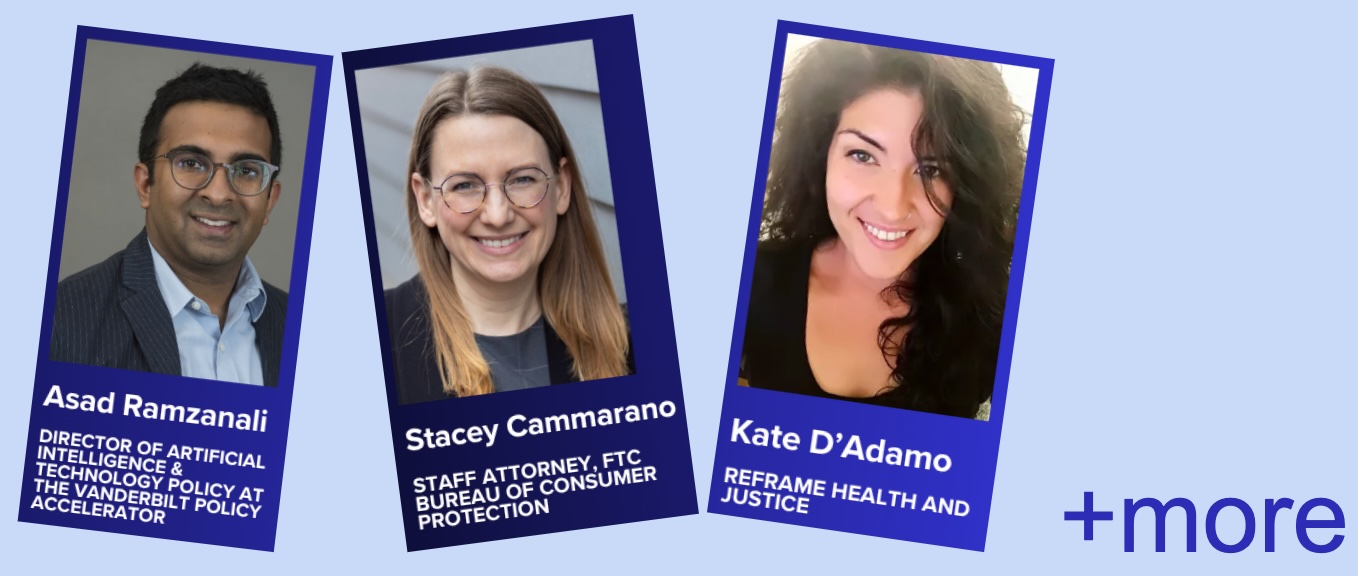
- Asad Ramzanali, former Chief of Staff and Deputy Director for Strategy at the White House Office of Science and Technology Policy (OSTP), and current Director of Artificial Intelligence and Technology Policy at the Vanderbilt Policy Accelerator.
- Stacey Cammarano, Staff Attorney at the FTC Bureau of Consumer Protection.
- Kate D’Adamo, a community organizer with Reframe Health and Justice working on policy and advocacy to changing and addressing laws and policies for sex worker rights.
- Laura DeNardis, Director of the Center for Digital Ethics at Georgetown, Endowed Chair in Tech, Ethics, and Society, and former dean at American University.
- Meredith Rose, Senior Policy Counsel at Public Knowledge.
- David Karpf, Associate Professor of Media and Public Affairs at George Washington University
- Dr. Nathalie Marechal, Co-Director of Privacy and Data Project at the Center for Democracy & Technology (CDT).
- Dhanaraj Thakur, Research Director at the Center for Democracy & Technology (CDT).
- Ei Myat Noe Khin, Program Manager at the Open Technology Fund.
The intimacy of Washington, D.C., means the experts are less removed from the classroom, and the in-person connection can lead to an internship or job later on. Proximity means fewer flights and less travel planning.
Topics classes tend to have more speakers, but some appear in methods and theory classes. Some are working within institutions, while others are challenging them. They span policy, nonprofits, media, and technology.