
Reflection
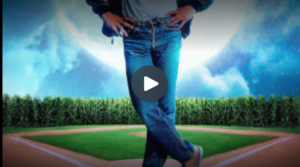
This multimodal project is a video essay with images, movie clips, voiceovers, and visual quotations. I used iMovie to edit my clips and construct this video. It is about 18:30 minutes long (yikes!) and I discuss four different films. I touch on The Sandlot, A League of Their Own, Field of Dreams, and 42. My goal for this multimodal text was to create an engaging and informative video on baseball movies. I also wanted to create an original video about a topic that people might not think about or have ever considered in their day-to-day lives. In my opinion, baseball is such an important element of American culture, so being able to dissect the sport on a psychological and analytical level helped me understand the sport even more…and I hope it enlightens other people too! In this video, I am trying to argue that the draw of these classic baseball movies is the nostalgic elements within them. These nostalgic elements draw audiences in to watch baseball movies, and as a result, the hidden social messages within these movies like gender and race equality are conveyed to the audience. I argue that a viewer goes to watch a baseball movie because of those nostalgic elements, but after finishing the movie, they are left changed and reminded of important social issues. These movies are not just baseball movies; they are vessels for sharing a greater message. A big part of the conversation surrounding nostalgia that I am responding to is from a section of a journal written by two scholars, R. Burg and P. Johnson. They claim that too much nostalgia can be a bad thing. I agree that nostalgia can be blinding, especially in these baseball movies. And I concur that viewers tend to see just the baseball and all the happy and good parts of the sport. But as I state in my video, I don’t think nostalgia invokes this blindness. Instead, I believe that nostalgia is the draw that gets people to hear, digest, and understand these messages. So, I partially agree with Burg and Johnson.
My target audience for this video is kids or young adults around my age, about 18 years old. I tried to blend simple grammar with sophisticated word choices woven into my script. I wanted my video to be as engaging as possible. Knowing that we live in a world with social media, and that attention spans have been drastically declining with the rise of short videos on social media platforms, I tried to talk or have audio going every second of this video. I did my best to keep a relatively fast-ish pace of speaking so that I wouldn’t put my audience to sleep. I also attempted to use a mix of pictures, movie clips, voiceover, clips of me speaking, and quotes on the screen to change up what my viewer is seeing and hearing constantly – again catering to those short attention spans.
I remember watching Esteban Garcia’s video essay in class, and while he talked really fast, that pace of speaking did keep me engaged throughout his whole video. So, I tried to speak at his pace, but I also added in movie clips to break up my pace of speaking and give my viewers a little mental break. I admit this video is certainly longer than intended, which does not lend itself to the short attention spans of today, but I felt that everything I had to say was important!
I have never done a video essay before, so this project really pushed me outside my comfort zone. My biggest challenge was probably figuring out how to utilize the software properly. Learning how to cut clips, detach audio, add transitions, and overlay were all new techniques to me. It took a long time to construct this video, but I can happily say that I’m proud of it and I think I did a decent job (for my first time at least)!
I’ve also never really dabbled in looking at films deeper than just watching them once when they come out. I really enjoyed watching these movies and also reading articles and journals that analyzed them. It was really cool to deepen my understanding and perspective of these movies because I was exposing myself to other opinions. I hope to teach others about what I’ve learned and the argument I’m trying to make. But if nothing else, I learned so much from this project, and I will most definitely never watch any of these baseball movies the same way I used to – or any movie for that matter. I feel I have developed my analytical film eyes with this project, and I’m excited to see how the experience I have gained from this project will influence how I watch films in the future.
References
Adobe Stock (2025.) “Little league baseball.” [Photograph]. stock.adobe.com/search?k=little+league+baseball.
Adobe Stock (2025.) “Movie theater.” [Photograph]. stock.adobe.com/search?k=movie+theater.
Amazon Product. “Clock.” [Photograph]. www.amazon.com/SHARP-Wall-Clock-Operated-Classroom/dp/B092RJTMXL?th=1.
Brake, D. (2010). “Introduction: The Feminism of Title IX.” In Getting in the Game: Title IX and the Women’s Sports Revolution (pp. 1-14). New York, USA: New York University Press. doi.org/10.18574/nyu/9780814799659.003.0001.
Britannica. (2025, Nov. 14). “Jackie Robinson.” [Photograph]. www.britannica.com/biography/Jackie-Robinson.
Burg, R.V. & Johnson, P.E. (2009, Oct.). “Yearning for a past that never was: Baseball steroids, and the anxiety of the American dream.” Critical Studies in Media Communication, 26(4), 351-371. Research.ebsco.com/c/qhqmd7/viewer/pdf/leabiluofb?route=details.
Evans, D.M. (Director). (1993, Apr. 7). The Sandlot [Film]. 20th Century Fox.
Helgeland, B. (Director). (2013, Apr. 12) 42 [Film]. Warner Bros. Pictures.
History.com (2025, May 17). “Civil rights movement timeline.” [Photograph]. History.com. www.history.com/articles/civil-rights-movement-timeline.
iStock. (2025.) “Dad and son baseball.” [Photograph]. www.istockphoto.com/photos/father-son-baseball.
Lawler, M. (2025, Nov. 25). “5 ways nostalgia is good for your health (and when it’s not).” [Photograph]. Everyday Health, Getty Images. www.everydayhealth.com/emotional-health/ways-nostalgia-is-good-for-your-health-and-when-its-not/.
Lukin, K. (2019, Jan. 31). “5 ways to immediately improve your romantic relationship.” [Photograph]. Psychology Today, Thinkstock/Getty Images. www.psychologytoday.com/us/blog/the-man-cave/201901/5-ways-to-immediately-improve-your-romantic-relationship.
Marshall, P. (Director). (1992, July 1). A League of Their Own [Film]. Columbia Pictures and Parkway Productions.
Pincus, J.D. (2020-2021). “It’s about the moments: What baseball means to me.” Nine, 29(1/2), 25-36. www.proquest.com/docview/2555431177?pqorigsite=primo&accountid=8285&sourcetype=Scholarly%20Journals.
Robinson, P.A. (Director). (1989, April 29). Field of Dreams [Film]. Gordan Company.
Sedikides, C. & Wildschut, T. (2018, Mar. 1). “Finding meaning in nostalgia.” Review of General Psychology, 22(1), Abstract. https://doi.org/10.1037/gpr0000109.
Young, N. (2018, Oct. 17). “After dark: Rooftop screening of ‘The Sandlot’ hits home with nostalgia.” University Wire. www.proquest.com/docview/2123986198?pqorigsite=primo&accountid=8285&_oafollow=false&sourcetype=Wire%20Feeds.