
Prisoners of Presidential Power: Internment and Its Ramifications
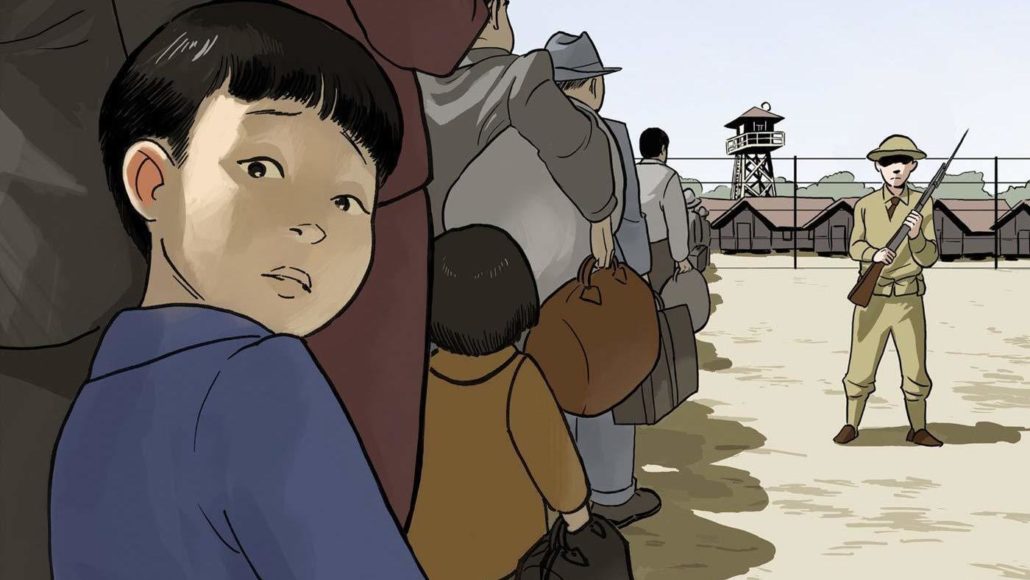
The years leading up to the United States’ involvement in the second world war were marked by paranoia, jingoism, and most prominently Anti-Japanese sentiment. By the turn of the 20th century, that sentiment had materialized into law. 1914 saw the passage of The Alien Land Act which prevented first-generation Japanese Americans from purchasing land. Japanese Americans had already established successful farms and agricultural businesses and, as such, were seen as threats to white farmers. Ten years later, as the Anti-Japanese Sentiment continued to climb, Congress passed the Immigration Restriction Act of 1924, a bill that completely barred further Japanese immigration. It was an action intended to curb the increasing economic prosperity of both Japanese Immigrants and first-generation Japanese Americans. (Edelson 83) These statutes were emblematic of a nationwide trajectory towards xenophobia.
As Japan waged war in Asia, The United States continued to wage a cultural and legal war with Japanese-Americans which culminated in Franklin Delano Roosevelt’s Executive Order 9066, requiring the relocation and internment of hundreds of thousands of Japanese Americans. It was claimed by supporters of FDR and the president himself that the Internment was simply a response to the horrific events of Pearl Harbor and a way to ensure that national security was not jeopardized. He justifies his action on the basis that he has “the authority vested in [him] as president of the United States, and Commander in Chief of the Army and Navy … to [protect] against espionage and sabotage to national defense material.”(Roosevelt). Roosevelt argued that Internment was justified because there was a clear need to place the interests of national security over individual freedoms. He further argued that Executive Order 9066 was a justifiable utilization of presidential power during wartime. This raises questions about the constitutionality of Japanese-American Internment. Was it a justified use of bilateral emergency power? While at the time Supreme Court rulings such as Hirabayashi and Korematsu upheld Roosevelt’s order, examining the Internment from a modern perspective reveals an alternate truth. Executive Order 9066 was a clear violation of Japanese Americans’ constitutional rights and a gross misuse of wartime emergency power.
The first benchmark Internment Supreme Court case was Hirabayashi v. the United States. Gordon Hirabayashi was a 24-year-old Japanese American college student who refused to obey a curfew of Japanese Americans enforced by Executive Order 9066. He was arrested, put on trial, and sentenced to imprisonment. He challenged the conviction, claiming that the curfew unfairly targeted him based on his Japanese descent, eventually taking his case to The Supreme Court. The verdict to uphold Hirabayashi’s conviction was unanimous with a concurring opinion stating that “acting in cooperation, Congress and The Executive have the constitutional authority to impose the curfew restrictions here complained of” (Hirabayashi), The court asserts that imposing a curfew, because it was imposed by bilateral action between Congress and The President is constitutional, with the justice further stating that emergency power is “not restricted to the winning of victories in the field and the repulse of enemy forces”(Hirabayashi) While this assertion is correct that the constitution assigns the war power to the Executive and Congress, it widens the scope of bilateral authority far wider than any reasonable person could argue it was intended to be. The ruling expanded emergency powers further at the expense of individual rights. Associate Justice Stone’s opinion argued that “some infringement on individual liberty” was allowable in time of war, but his analysis drastically undercuts the blow to democracy that that concession makes. Individual rights have always been guaranteed protection from government interference. The Fifth Amendment was drafted as a part of the Bill of Rights with the express purpose to prevent the government from overreaching its power and becoming tyrannical. It was designed as an insulator, with the Fifth Amendment preventing “[deprivation] of life, liberty, or property, without due process of law”(Amendment V). Hirabayashi’s ruling widened the scope of wartime power near breaking point, trampling on the Bill of Rights that, ironically, was instituted to prevent plenary governmental power.
The second benchmark Internment Supreme Court case was Korematsu v. the United States. The court ruled in a 6-3 decision along the lines of Hirabayashi, claiming that Internment was born out of military necessity and “the court must be careful not to second guess decisions regarding national defense made by Congress and the executive”(Edelson 94). The court reasserted that bilateral emergency power was able to prioritize national security over individual rights once more. However, the most intriguing aspect of the Korematsu case came in the form of the dissenting opinion delivered by Justice Murphy. Murphy begins his dissent by renouncing Internment and claiming that “Such exclusion goes over the very brink of constitutional power and falls into the ugly abyss of racism”(Korematsu). He further insists that both Congress and The President have surpassed their war power duties outlined in the constitution. He continues by insisting “it is essential that there be definite limits to military discretion…individuals must not be left impoverished of their constitutional rights on a plea of military necessity that has neither substance nor support”(Korematsu). Murphy’s dissenting opinion is a scathing rejection of plenary emergency power, stating that in a constitutional democracy military necessity should not outweigh individual constitutional protections. While his dissent did little to change the ruling, it did serve as an important precedent in the ongoing conversation of individual rights versus emergency power.
It is difficult to know what it means to be constitutionally “right”. We rarely arrive at the right answer the first time. Korematsu v. the United States and Executive order 9066 are two shining examples of retroactive judicial revision. As part of the Civil Liberties Act of 1988, Congress apologized “on behalf of the people of the United States for the evacuation, relocation, and internment of such citizens and permanent resident aliens” (constitutioncenter.org). This retroactive judicial revision culminated in the eventual overturning of Korematsu v. the United States in 2018.
Emergency plenary power is a tool that has historically been used justly and unjustly. The mass Internment of Japanese-Americans is a ringing case for the ladder. The Supreme court’s willingness to support bilateral emergency control that infringed on Japanese Americans’ rights has been widely condemned in the years after WWII. It is often difficult to draw a line in the sand for when emergency power should be utilized. This was especially true when examining Internment because the President had the full might of Congress on his side.
However, looking back on Internment from the 21st century it is clear that the rulings on both Hirabayashi and Korematsu drew the wrong line in the sand and failed to place enough restrictions on emergency wartime power.


Leave a Reply
Want to join the discussion?Feel free to contribute!