
Industrial Division and Discipline
I'm a working man
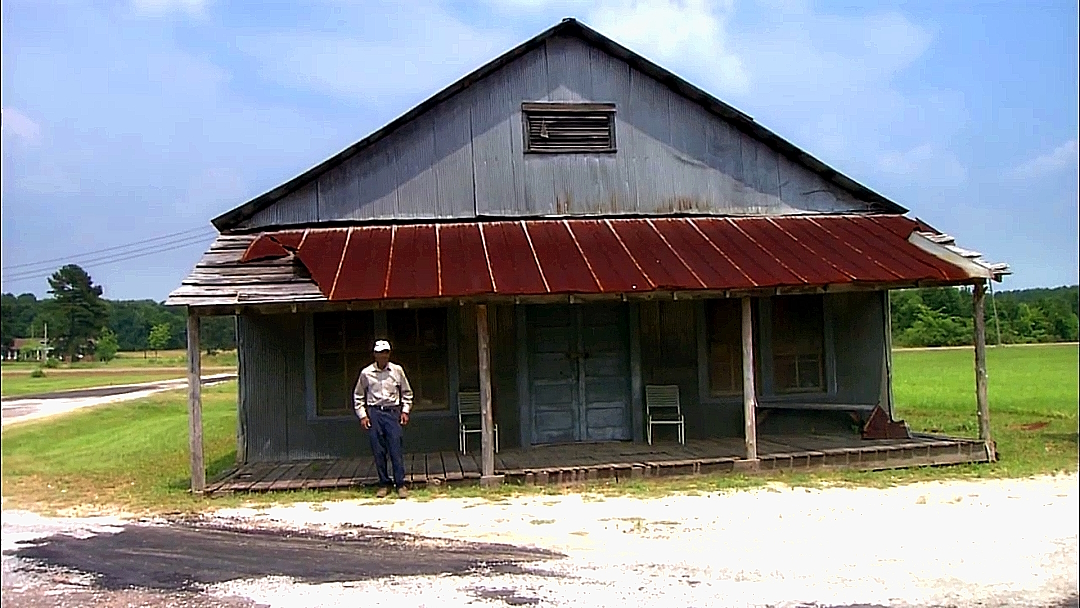
History Refused to Die considers narratives of racial discrimination and economic hardship and transforms these suppressive histories into redemptive ones grown from hard labor and through his association with Black artists in the South. In this chapter, I consider the historical significance of domestic and industrial forms of labor that Dial engaged with and the artists’ groups he associated himself with in his home state of Alabama. Dial spoke frequently about his experiences as a farmer and factory worker; he also did other kinds of manual work including carpentry, house painting, pipe fitting, ranching, highway building, and fishing.[24] Manual labor was part of Dial’s daily experience, as he witnessed the work of farmers, steelworkers, and coalminers. In an interview from 1995 to 1996, Dial said to Arnett:
“I done most every kind of work a man can do. Cement work on the highways, pouring iron at Jones Foundry, loaded bricks at Harbison Walker brickyard, did some pipe fitting, worked down at the waterworks, did carpentry and house painting for different white contractors, metalwork—all kind of it—iron and steel at Pullman Standard for about thirty years. I’m a working man.”[25]
At the time of this interview, Dial was open to Arnett about his past experiences holding various jobs and lending his services to those in the Bessemer community. Dial often referred to his working status and advocated for the ability to be proactive through one’s physical labor. A solution-oriented narrative such as this illuminates the objects in History Refused to Die because of their utilitarian roots and their fulfilled usage.
Dial was born in rural Emelle, Alabama, on the Luther Elliot’s plantation and was raised by his mother, Mattie Bell. When Dial was six or seven, he began to work with his cousin, Buddy Jake Dial, on the White Dial family farm, where he spent time picking cotton.[26] Dial’s relationship with Buddy Jake Dial exposed him to yard art at an early age, and he observed how his cousin created these types of works on the farm. To generate more income, Dial’s family moved to Bessemer, Alabama in 1941. One of Dial’s skills was farming, which he had practiced while living there. Dial’s financial contribution to his family began at the age of thirteen when he started farming rather than attending school. The occupational knowledge Dial gained was arguably through his observation of others utilizing tools around his farm and in his later occupations, rather than systematic learning from school. In a 1995 interview between Dial and Arnett, Dial shared that he grew a copious number of crops, including okra, and raised livestock on his farm.[27] Most of Dial’s life involved around the clock maintenance of the farm fields, growing produce, as well as being a steel laborer at the manufacturing company, the Pullman Standard Company Plant.
Dial became familiar with sharecropping, a labor system where a landowner would give a portion of land to farmers to grow crops on.[28] Following the Civil War, a sharecropping system developed which gave newly emancipated slaves land to farm, and to maintain this, a contractual agreement was made between White landowners’ and Black laborers.[29] A sharecropper was responsible for the crops for which he or she was paid a portion from the landowner.[30] This agricultural system put many Southern Black farmers, including Dial, in severe debt due to its financial setup. History scholar Josh Hodge explains that the sharecropping system, sat upon similar pillars of slavery: segregation and submission. The essential cog in this system was the control of products.[31] Farmers benefited little from the sharecropping system since landowners decided the cost of crops. Other threats, such as poor weather conditions, laws being set between farmers and landowners, and racial exclusion, prevented Black farmers from financial gain.
Dial expressed how he and his family “came up hard” doing around the clock chores such as tilling dirt with their mule or garden fork. Other means of Dial’s labor occurred with hay baler operations and crop collecting for the family.[32] Dial’s frequent discussion of his family’s work around the fields suggests his rootedness on the farm, where he had intimate familial relationships with his brother and cousin. When Dial shared with Arnett the types of chores that he observed and conducted at Luther Elliot’s plantation or the Dial Farm during his youth, he explained,
“I have did every kind of farming. All kind that been called.I come up hard, and I didn’t want to chores, I growed everything there,garden stuff—collard greens, sweet potatoes, corn, peas, squashes,watermelons, peanuts, tomatoes, rutabagas, beets, okra, turnips. Everything that growed I done tried.”[33]
Dial not only reflects on his time growing different crops but he also underscores the significance of the Southern Black labor force, particularly farming. Dial’s agrarian background was an embedded profession in his family that likely began in the 1830s when Emelle, Alabama, was beginning to establish a farming landscape.
This is a map of Emelle, Alabama where Dial lived during his childhood. The town is approximately an hour and a half southwest of Bessemer, Alabama. The town is also considered to be part of the Black Belt region of Alabama and lies close to the Mississippi-Alabama border.
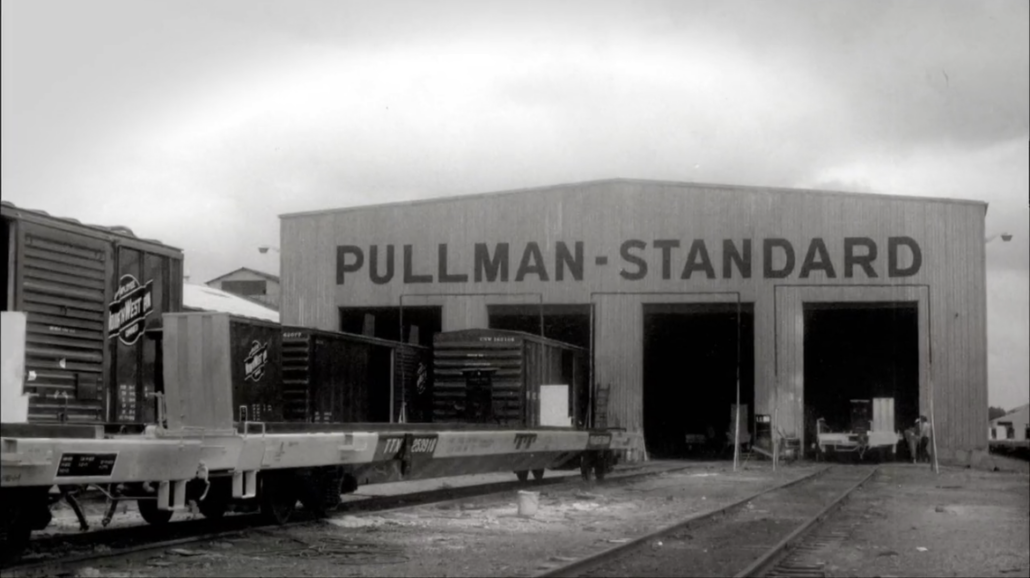
Dial sought employment at the Pullman Standard Company in Bessemer, Alabama, when he was twenty-four years old, and spent thirty-one years working there. The Pullman Standard Company Plant was one of the nation’s largest employers of African Americans.[34] When the Bessemer Plant officially opened, it primarily produced box cars, open-top hoppers, covered hoppers, gondolas, and flat cars, and it pulled in a large number of Black employers throughout the twentieth century, including the Dial’s family.[35] Black workers were likely moved around, which would have exposed them to several techniques needed for production. Assembly Magazine editor Austin Weber describes that the operations at the Pullman Plant were largely systematized, meaning that when one step of construction was complete, another group would come for the following construction step.[36] For example, Pullman’s advancing freight car construction in the twentieth century relied on machine drills, grinders, lathes, planes, riveters, punches, and hydraulic presses. Automatic, arc, and electric spot welding also emerged once the Pullman company switched from wood to steel in the early 1900s.[37]
Dial’s experiences working in a labor-restricted environment is articulated in Susan Eleanor Hirsch’s book, After the Strike: A Century of Labor Struggle at Pullman. Hirsch states that “U.S. corporations and labor relations experts developed strategies based on modes of supervision, applications of technology, and provision of nonwage benefits as they sought to control and exploit workers.”[38] The Bessemer Plant’s white workers were assigned to “skilled jobs” compared to the minority Black workers who were given “less skilled” jobs.[39] According to Hirsch, in the 1960s, white workers were all riveters and Black workers were the buckers who were not permitted to hold a rivet gun.[40] Black and white workers would often have to switch places when working inside a boxcar. For example, a Black worker had to climb outside the box car while a White worker climbed into the rivet.[41] The support of segregationist construction strategies between white and Black workers also meant that labor was inefficient. These realities at the Bessemer Pullman Plant show what Dial would have witnessed regarding Black workers’ discrimination and how they were forced to reconcile racially divided working conditions.
[24] Thornton Dial, William Arnett, and Paul Arnett. Thornton Dial: Strategy of The World. (Jamaica, New York: Southern Queens Park Association Inc. 1990), 3.
[25] “Thornton Dial,” Souls Grown Deep,” https://www.soulsgrowndeep.org/artist/thornton-dial.
[26] “Thornton Dial.” Souls Grown Deep,” https://www.soulsgrowndeep.org/artist/thornton-dial.
[27] Dial explained to Arnett that he grew okra, collard greens, beets, rutabagas, corn, peas, turnips, potatoes, squashes, watermelons, peanuts, and tomatoes. Dial also raised livestock ranging from cows, goats, chickens, turkeys, ducks, and rabbits. See, “Thornton Dial.” Souls Grown Deep. https://www.soulsgrowndeep.org/artist/thornton-dial.
[28] Joseph Dial was an early inhabitant of Emelle, Alabama, which was established in 1912. The name Emelle likely originated from his granddaughter’s name, Emelle. The farm that Dial worked on was referred to as the Dial Family Farm, which may refer to Joseph who purchased and sold the land of Emelle. The town was also part of the larger farming community in the Alabama Black Belt region in the 1830s. See, “Emelle.” Encyclopedia of Alabama. https://encyclopediaofalabama.org/article/emelle/.
[29] In a desperate effort to restore landowners’ farmlands and obtain jobs for newly emancipated Black people, a contractual or legal agreement was created for White landowners and Black laborers. Landowners needed cheap labor which could be done by freed Black people. In a sharecropping system, a laborer works an area of land for the landowner and is paid with a portion of the crop. In the tenant system, the tenant rented the land from the landowner and pays his rent to the landowner with a portion of the crop. See, The History of Agriculture in Alabama: A Historic Context, Alabama Historical Commission. https://ahc.alabama.gov/, 21.
[30] The History of Agriculture in Alabama, 21.
[31] The sharecropping system dominated Alabama’s Black Belt region. Josh Hodge explains that in 1940, more than fifty percent of the population was Black across several Black Belt counties. Hodge also states that the landowner sold the produce, rather than the sharecroppers. The landowner could deduct the cost of necessary resources provided to the sharecropper which often drove croppers into a further debt with little opportunity for upward mobility. See, Josh Hodge, “Twentieth Century Alabama Agriculture: Sharecropping, Twentieth Century Alabama Agriculture: Sharecropping, Agribusinesses, and Direct Marketing Agribusinesses, and Direct Marketing,” Vulcan Historical Review 15, no. 9 (2011): 5-6.
[32] Alabama Public Television, “Mr. Dial Has Something to Say,” YouTube Video, 59:11, https://www.pbs.org/video/alabama-public-television-documentaries-mr-dial-has-something-to-say/.
[33] “Thornton Dial.” Souls Grown Deep. https://www.soulsgrowndeep.org/artist/thornton-dial.
[34] “Labor and Race Relations” Pullman History, last modified April 2020, https://pullman-museum.org/labor/laborRelations.html.
[35] Edward S. Kaminski, Pullman-Standard freight cars, 1900-1960, (Berkeley, CA: Signature Press), 2007.
[36] Austin Weber, “Manufacturing History Comes Alive in Pullman.” Assembly 64, no. 11, last modified November 2021. https://www.proquest.com/trade-journals/manufacturing-history-comes-alive-pullman/docview/2629100550/se-2.
[37] Weber, “Manufacturing History Comes Alive in Pullman.” https://www.proquest.com/trade-journals/manufacturing-history-comes-alive-pullman/docview/2629100550/se-2.
[38] Susan Eleanor Hirsch, After the Strike: A Century of Labor Struggle at Pullman (Illinois: University of Illinois Press, 2003), 3.
[39] Hirsch, After the Strike, 170.
[40] Hirsch, After the Strike, 202.
[41] Hirsch, After the Strike, 202.