Professor Allan Lichtman Discusses 2016 Election

lichtman-alan

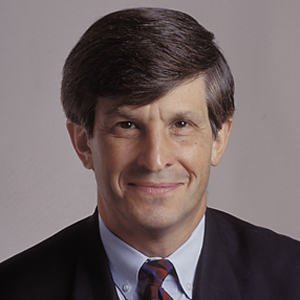
During the 2016 presidential election season, Distinguished Professor Allan J. Lichtman was interviewed twice in the Washington Post to discuss his system for predicting the outcome of U.S. presidential elections. Back in May, Lichtman was not yet ready to reveal his prediction for the 2016 contest, citing the complicating factors of deep divisions within the Republican Party wrought by the Trump candidacy. “It’s looking shaky for the party in power,” Lichtman said at the time, “but the prediction is not yet set because there are still two uncertain keys, and there is also a third possibility, which is not strictly a key but I talk about it in my book, and that is the challenging party dividing itself.” According to Lichtman, the two “uncertain keys” are “the contest key” and the “foreign policy success key.” But in September, Lichtman, having correctly predicted every election since 1984, was ready to make his prediction: the Republican Party will win the White House in a narrow victory. He was quick to add, however, that the “unprecedented nature of the Trump candidacy” still meant that “he could defy all odds and lose even though the verdict of history is in his favor.”

Lichtman emphasized that his thirteen predictive “keys to the White House” ultimately represent more of a referendum on the two parties rather than their respective candidates. Confidence in his model, which is based upon a retroactive analysis of every presidential election since 1860, leads Lichtman to put little stock in media polls, which “are often wrong.” As he puts it, the election “will not be decided by the debates, the speeches, the ads, the tricks of the campaign.” The real key, on which an “ultimately pragmatic” American electorate will base their vote, is “the performance of the party holding the White House.”

New Faculty Spotlight: Andrew Demshuk

demshuk3

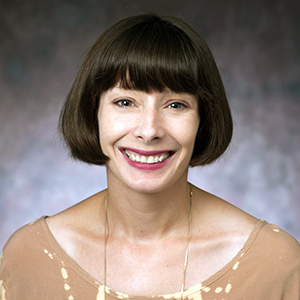
The history department is pleased to welcome Andrew Demshuk among its ranks. Demshuk, a specialist in central European history, is the author of The Lost German East: Forced Migration and the Politics of Memory, 1945–1970 (Cambridge, 2012). He joins us from the University of Alabama at Birmingham, where he taught for five years. At AU, Demshuk teaches courses on modern German and East European history, as well as nationalism, genocide and ethnic cleansing, and the politics of memory in urban planning. He hopes to build upon the legacy of longtime professor Richard Breitman, who retired in 2015 after four decades at AU. Recently returned from a seventeen-month research trip in Germany and Poland supported by the Alexander von Humboldt Foundation, Demshuk is currently working on his manuscript for a comparative analysis of ideology and public response in post-1945 urban reconstruction in three cities that had once belonged to the German Reich and were then rebuilt by three differing successor regimes: Frankfurt (West Germany), Leipzig (East Germany), and Wroclaw (Poland). He has also completed a new book (under contract with Oxford) that measures public response to the East German Communist demolition of Leipzig’s 15th-century University Church in 1968 (just months before the Prague Spring crackdown across the border) as a means of measuring the relationship between regime and populace in the so-called People’s State.

New Faculty Spotlight: Malgorzata J. Rymsza-Pawlowska

D17_110_Malgorzata_Rymsza nfs Malgorzata_Rymsza_Pawlowska, CAS, faculty

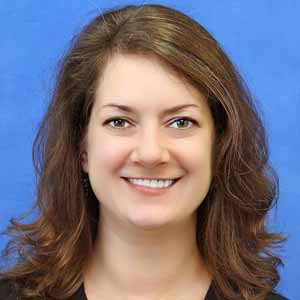
The History Department is pleased to welcome Malgorzata J. Rymsza-Pawlowska among its ranks. Rymsza-Pawlowska, a cultural historian of the nineteenth and twentieth century United States, is the author of the forthcoming book, History Comes Alive: Popular Culture, Public History, and America’s New Feeling for the Past (University of North Carolina Press). She joins the department after three years at Eastern Illinois University. At AU, she serves as Associate Director of the Graduate Program in Public History, together with Dan Kerr, director of the program. “I’m thrilled to be returning to D.C., where I grew up and where so much of my research lies, to take this new position,” she said. “I’ve long been an admirer of the excellent programs and faculty here, and am looking forward to working with colleagues and students in the department, across campus, and in the Washington area’s numerous cultural institutions.”

Eric Lohr Begins Tenure as Chair of the History Department

In Summer 2016, Professor of Russian History Eric Lohr took over the reins as Chair of the Department of History. He follows in the footsteps of Professor Pam Nadell, who ably shouldered leadership of the department for five years. “I inherit a department that is in great shape as a result of Pam’s lengthy tenure,” Lohr said. He also reflected on his various priorities over the next three years as chair. “I want to provide robust support for faculty research and try to facilitate our amazing ongoing record of faculty publications,” Lohr said, noting the strong balance of scholarly productivity and teaching performance exhibited across the ranks of departmental faculty.

lohr-eric

Lohr also looks forward to meeting the challenge of managing the transition to a new university-wide Core Curriculum, which will replace the longstanding General Education requirements and require the department to tailor its teaching strengths to a revised set of learning objectives and pedagogical venues. Foremost among the challenges Lohr will face is a nationwide trend in the decline of history majors. “We need to think more about the ways we attract students to history and how we convince undergrads that thinking about history is a good use of their time.” Though Lohr realizes that it will “take more effort than it did in the past to keep students coming to our classes,” he is optimistic that such a challenge can be met through innovative approaches. Lohr’s tenure as department chair will also afford him time to continue his own research projects: he is currently writing a book on Russian mobilization and demobilization efforts during and after World War I, and the ways in which these efforts facilitated the Bolshevik seizure of power in 1917.

History Professor Eileen Findlay Honored with Outstanding Teaching Award

Professor of Latin American history Eileen Findlay was presented with the “Outstanding Teaching in a Full-Time Appointment” award at the 2016 University Faculty Awards ceremony. This prestigious award is designed to reflect “sustained contributions to the university over many years” and requires excellence in teaching as documented by student evaluations, comments, and feedback; success of former students; and a wide range of advising and mentoring activities with AU students. Across the years, students have praised Prof. Findlay’s “energy, passion, and enthusiasm” in the classroom, her intellectual rigor, and her extraordinary capacity to motivate them.

findlay-eileen

According to former Department Chair Pam Nadell, who presented the award to Findlay, “time and again students say that she is ‘one of the best, if not the very best, teachers, that they have ever encountered.’” Perhaps the most telling testimony of all, Nadell says, comes from the excited student who claimed: “I have never come across a professor who could make the process of writing a 60-page paper fun” until meeting Prof. Findlay. Nadell went on to note that Findlay has mentored more than a dozen students to Fulbright awards and other prestigious scholarships, her alumni have gone on to graduate study at the most elite universities and won major fellowships, and her doctoral students are engaged in teaching and research at universities, institutes, and seminaries around the nation.

Former AU History Major Now Professor of History


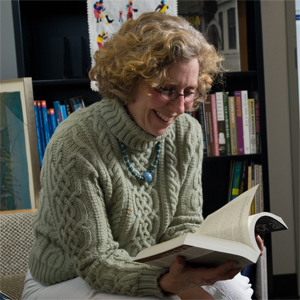
Former History Major Colleen Moore (Class of 2001) first explored her passion for history at American University. Now, after obtaining her Ph.D. in Russian History at Indiana University in Bloomington, she is an assistant professor of history at Florida Southern College. “My undergraduate coursework in history at American well prepared me for graduate school, and beyond,” Moore said.

hs-colleen-moore-1

She singled out classes taught by the late James Mooney as particularly inspiring. “If it weren’t for Mr. Mooney, I wouldn’t have become a history major, but I am so glad I did. I recall my classes at American fondly and use some of the same texts that I read for them in my own teaching.”

Chinese History Students Meet With Taiwan Ambassador

IMG_1638 IMG_1643

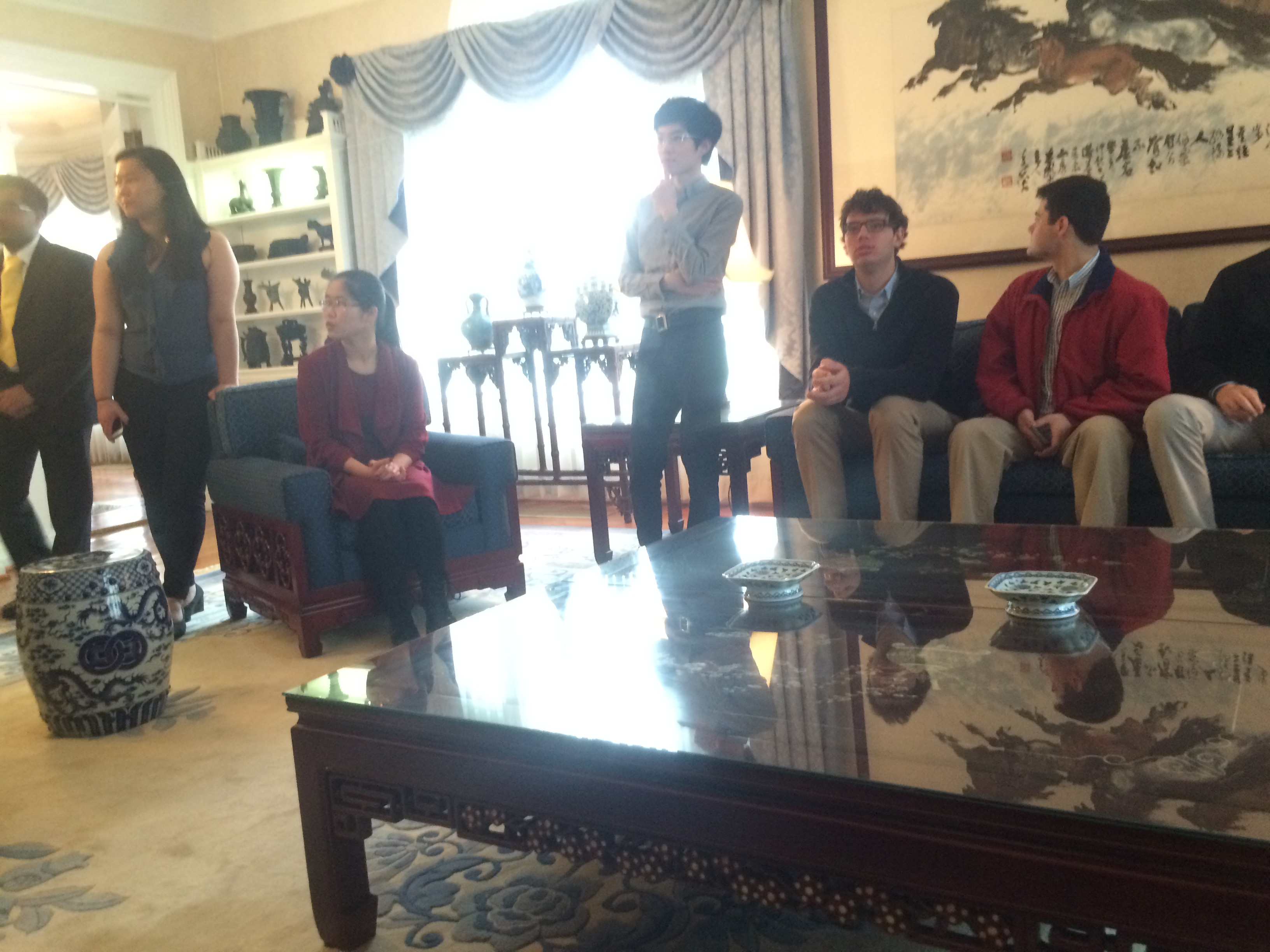
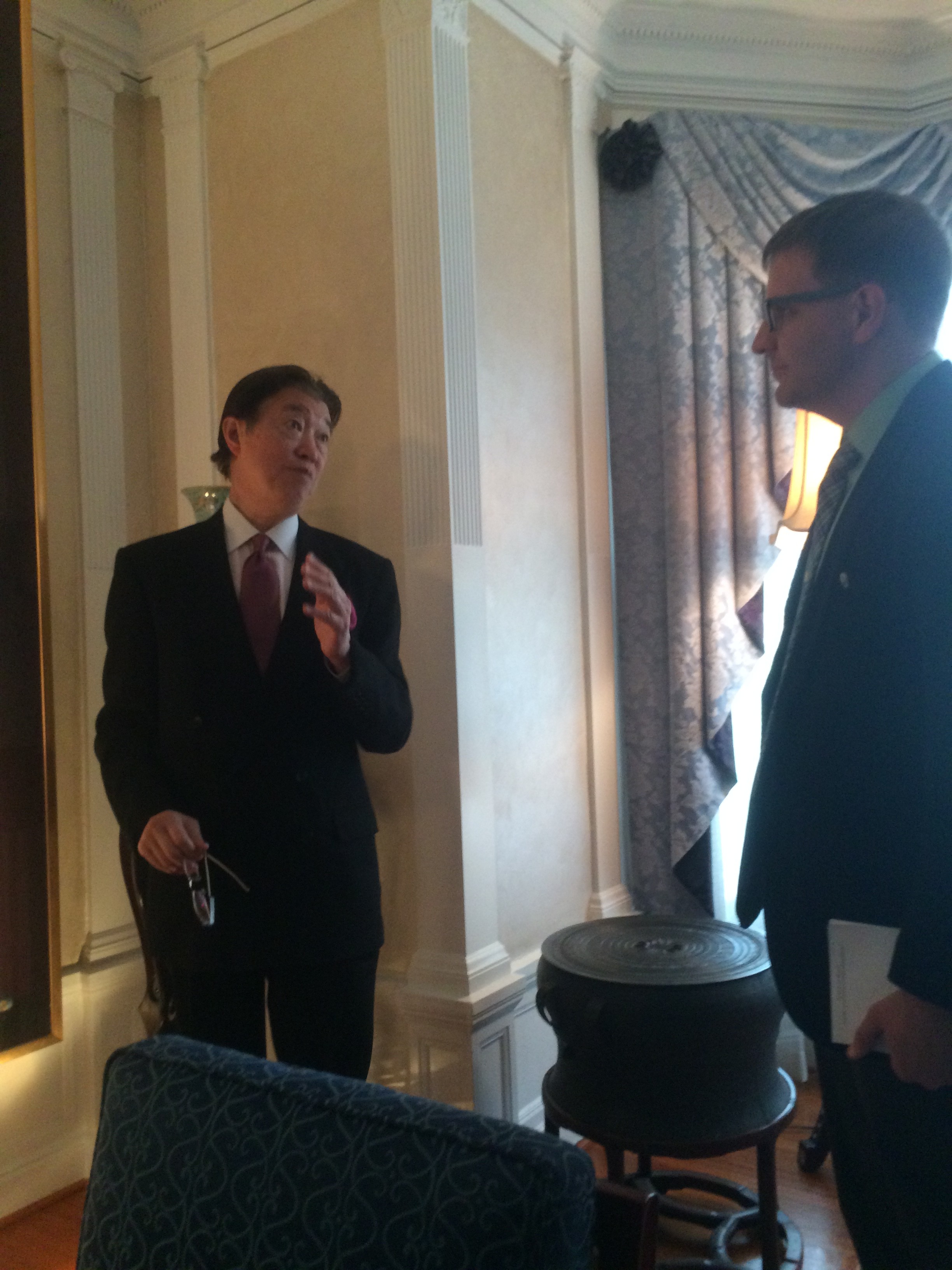
On April 11, students in Prof. Justin Jacobs’s modern Chinese history course (HIST 251) were treated to an exclusive audience with Ambassador Shen Lyu-shun of the Republic of China (Taiwan). Ambassador Shen and his attentive staff hosted approximately twenty AU students at the historic Twin Oaks estate in Woodley Park. The event began with an informative tour of the 26-room English Georgian Renaissance-style mansion, which was originally constructed in 1888 and once served as the summer residence of the founder of the National Geographic Society. Ambassador Shen personally granted access to rare works of art and explained their historical significance. After the tour, Prof. Jacobs and his students were served coffee, tea, and pastries while seated for a roundtable discussion of Chinese politics and history. Ambassador Shen was exceedingly generous with his time, spending nearly an hour and a half patiently answering questions about Taiwan’s place in world politics today and the legacies of modern Chinese history. This lively discussion touched upon the cultural identities of Taiwan and mainland China, simplified and traditional characters, Taiwan’s outsized economic footprint in the global economy, the legacy of Japanese rule in Taiwan, and the fate of antiquities in the National Palace Museum.

IMG_1645        IMG_1632

Reflecting on the event afterwards, Kaitlin Winterroll, a senior in political science, said that “It was especially interesting to listen to how the ambassador answered questions so candidly without much hesitation. It was an amazing experience and I thoroughly enjoyed the excursion.” John Tuttle, a junior in the School of Public Affairs, said that “events like the one today are the reason I wanted to study in DC.  There is nowhere else in the country I would’ve been able to have a similar experience.”

The History Department at AU would like to thank Ambassador Shen and his staff for providing such a wonderful educational opportunity to our students, and Prof. Jacobs looks forward to taking future students in his modern Chinese history course to Twin Oaks.