AU Cohort Returns to Italy for International Conference on Fear, Nuclear War, and Interfaith Dialogue

by Skylar Mattice, Communications & Intl. Relations BA Student
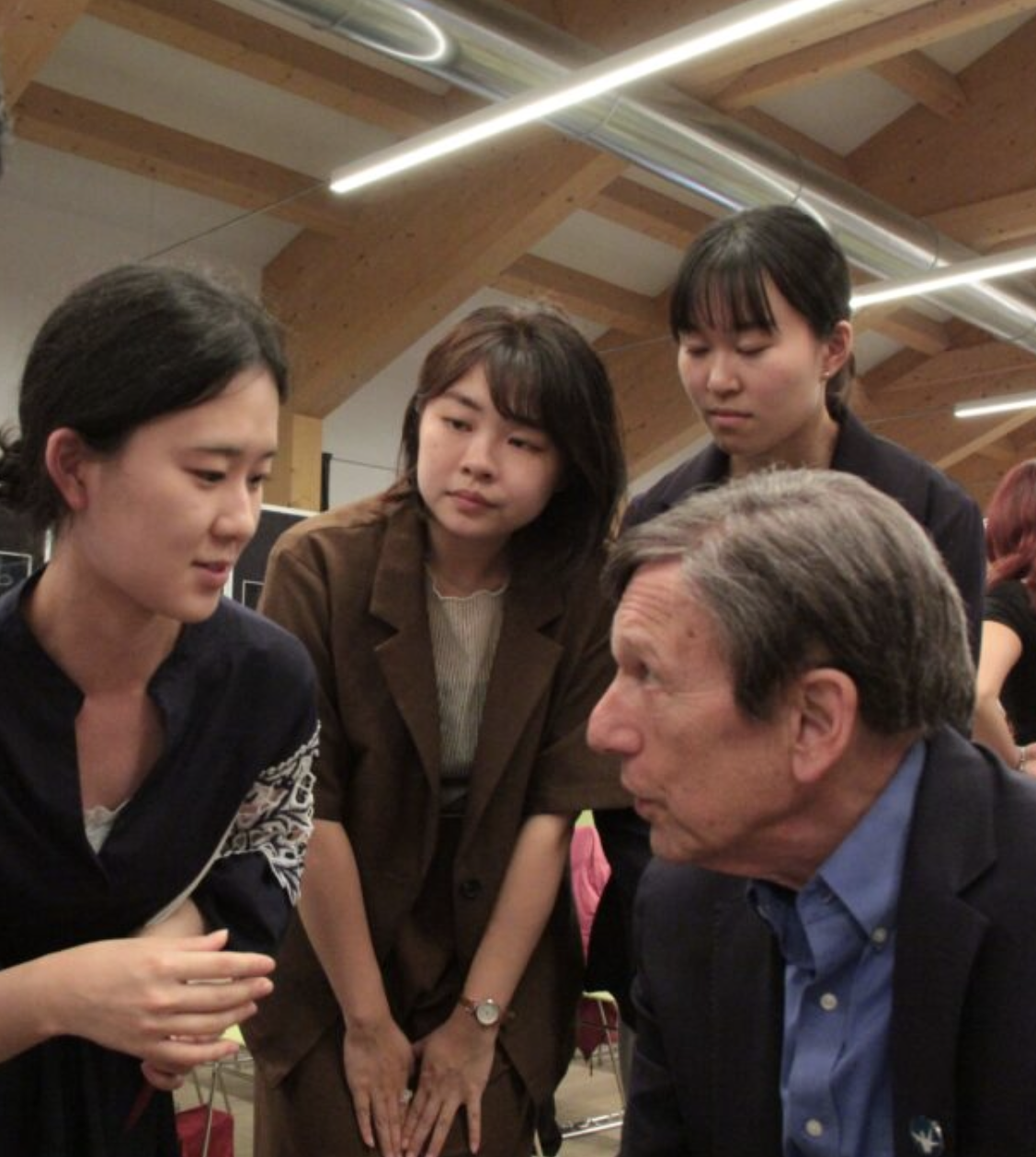
Prof. Peter Kuznick discussing the importance of interfaith dialogue with international students at Tonalestate University.

A new American University Nuclear Studies Institute cohort traveled to the Italian Alps this past August to participate in the annual Tonalestate International Summer University. Students, scholars, activists, religious leaders, and survivors were brought together to discuss some of the most pressing issues that face the world today. This year’s conference focused on fear, nuclear warfare, violence, nonviolence, education, and the importance of dialogue across political, religious, and cultural differences.

The conference opened with the message “don’t be afraid,” setting the tone for several days of difficult but hopeful discussions across different panels. Rather than allowing fear to divide people, participants were encouraged to see love as a force that brings people closer. AU History Professor Peter Kuznick returned to discuss one of the conference’s central subjects: the growing danger of nuclear war. He discussed the increasing proximity of the Doomsday Clock to midnight and argued that changing geopolitical relationships have created a very dangerous international environment. Former Palestinian Authority minister Anwar Abu-Eisheh also spoke about fear, reflecting on how fear can shape everyday life when people believe that danger could become reality at any moment. Rather than allowing fear to control him, Abu-Eisheh described it as something that can motivate people to continue fighting for what they believe in. His message was ultimately, “I will never lose my hope.” Another major theme was nonviolence. Sardinian activist and Christian pacifist Ottavio Scarpa discussed his experiences becoming involved in political activism at a young age and how that eventually led him to see humanity as “one human family.” He described how love can become a universal language even among people who do not speak the same language or share the same beliefs.
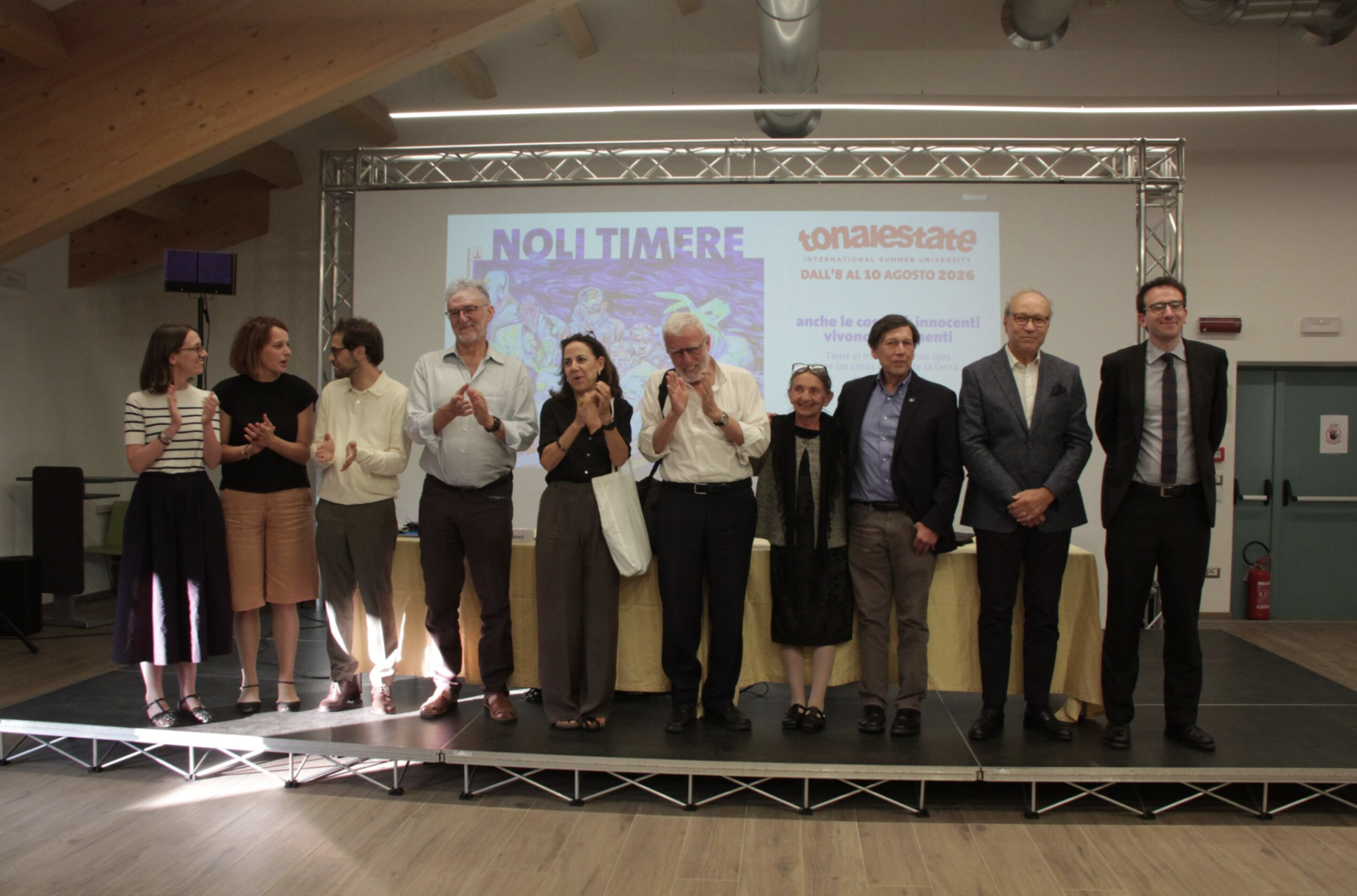
Speakers of the 2026 Tonalestate International Summer University.

The conference continued with discussions about war, international law, education, and the role of young people in creating social change. During a round table discussion, Kuznick questioned the continued use of nuclear weapons and spoke about their consequences in Iran and Gaza. Other speakers, such as Scarpa and Abu-Eisheh, focused on the importance of promoting a peaceful society. Students also had the pleasure of hearing from Katsumi Hashimoto, a witness to the Japanese occupation of Manchuria. The conference also consisted of a documentary film screening and a poetry reading from a Gazan poet. Themes of peace and human connection were central in these cultural evening sessions. Throughout the entire session, participants were encouraged to foster connections with international students as well.

Later discussions returned to the responsibility of students. Kuznick encouraged younger generations to approach issues of war, climate change, and immigration with urgency rather than treating them as distant problems. The conference repeatedly returned to the idea that students can become active participants in shaping their communities and futures. Ultimately, this year’s conference challenged participants to reconsider their fears and values. Students were encouraged to welcome differences in beliefs and celebrate them. The conference ended with a call to action, inspiring the younger generation to take part in the discussions rather than remain spectators.
AU History Major Shares Passion for Knowledge in U.S. Capitol Historical Society Internship

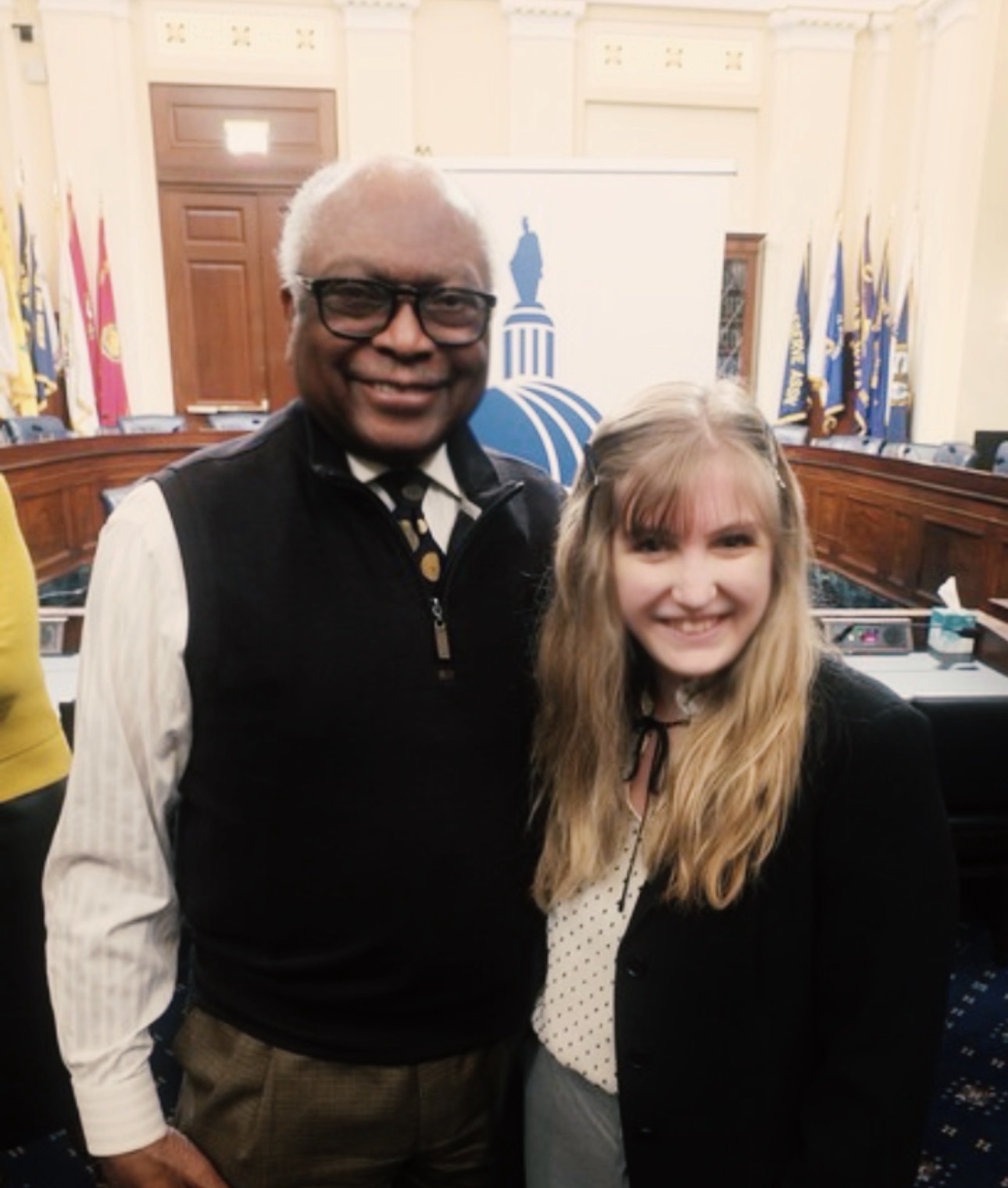
AU sophomore and History major Ava Slade with Rep. James E. Clyburn (D-South Carolina, 6th Dist.) during her internship for the U.S. Capitol Historical Society in Spring 2026.

While growing up in Chicago, sophomore Ava Slade always knew that she wanted to do something related to history one day. “I learned a lot from reading history books and they were a big part of how I matured as a human being,” she says. “I always loved reading Greek and Roman myths and taking in the lessons that they had. So it was kind of a no-brainer that I would continue to study history when I started college.” Slade, who is currently pursuing a double major in History and Physics, had the invaluable opportunity to serve as a History Research Intern for the U.S. Capitol Historical Society in Spring 2026. “I wasn’t really looking for an internship at the time,” she says, “I just really wanted to know more about the Capitol and its history. Then I stumbled upon their website, saw they were accepting applications for internships, and applied without thinking I would get in.” 

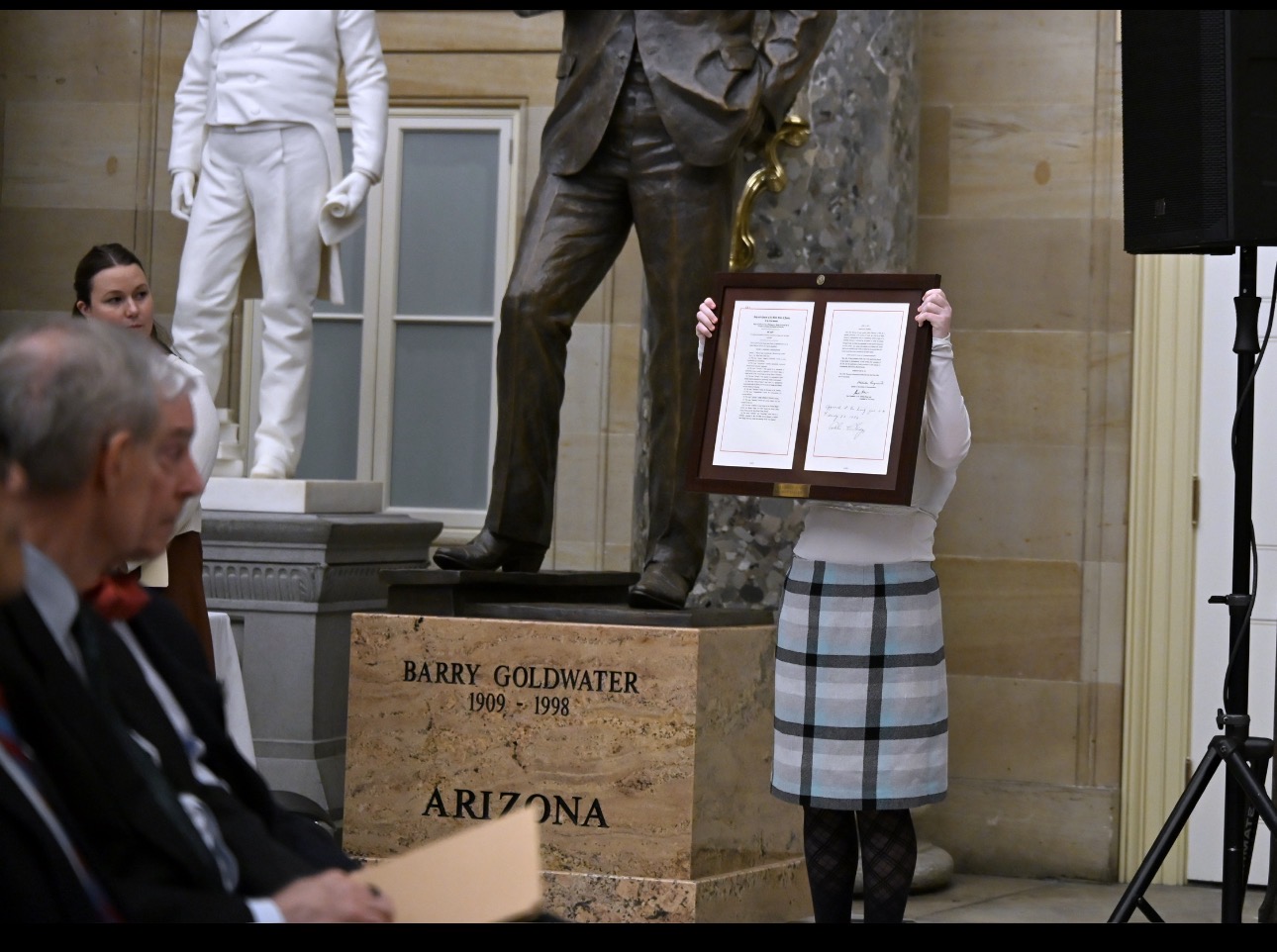
Slade presents a plaque for the Joint Committee of Taxation to commemorate its one hundredth anniversary.

Founded in 1962 and chartered by Congress in 1978, the U.S. Capitol Historical Society is dedicated to the fostering and increase of “an informed patriotism.” In her role as a History Research Intern, Slade helped with tours of Capitol Hill, undertook logistical arrangements for public events, and conducted historical research and wrote memos in response to media inquiries. During the course of her internship, Slade had many memorable experiences. One of them was the opportunity to meet Rep. James E. Clyburn (D-South Carolina, 6th Dist.) and talk to him about his daughters and the work he has done on behalf of college students and universities in his home state. Another was the honor of presenting a plaque for the Joint Committee of Taxation to commemorate its one hundredth anniversary. “It was a very cool thirty seconds,” Slade says of her role in the ceremony, “with lots of very accomplished tax lawyers.”

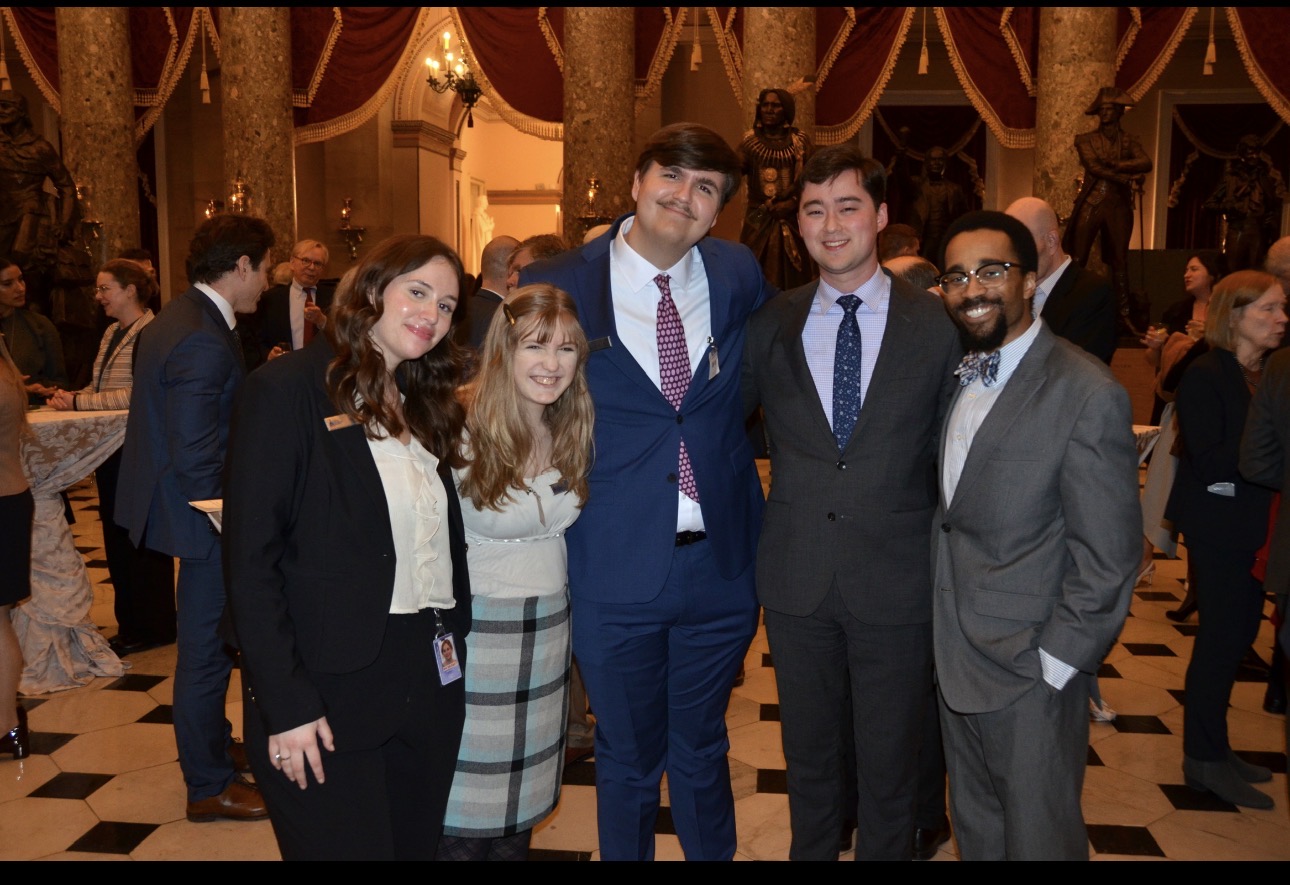
Slade with her colleagues at the U.S. Capitol Historical Society.

Reflecting on her internship, Slade says that it made her “realize just how lucky I am to be in D.C. It made me look at my classes with so much light in my eyes and reignited my passion for historical research.” As a result of her extensive involvement in U.S. Capitol Historical Society events, Slade no longer has any hesitation about approaching her professors on campus. “It really made me less scared to talk to my professors and ask them questions,” she says. “After being in a room that you previously would never be allowed to go into, you start to appreciate every other place you have the privilege to be in and an opportunity to learn.” Looking ahead, Slade hopes to use her internship experience and AU degree to foster a similar love of learning in others. “Whether in physics or history, I want to get people interested in learning and try to make knowledge more accessible, so that the general public has less of a fear of higher learning and dissecting complex issues.” 

AU Graduate Student Uncovers Women’s Labor in the Nation’s Capital

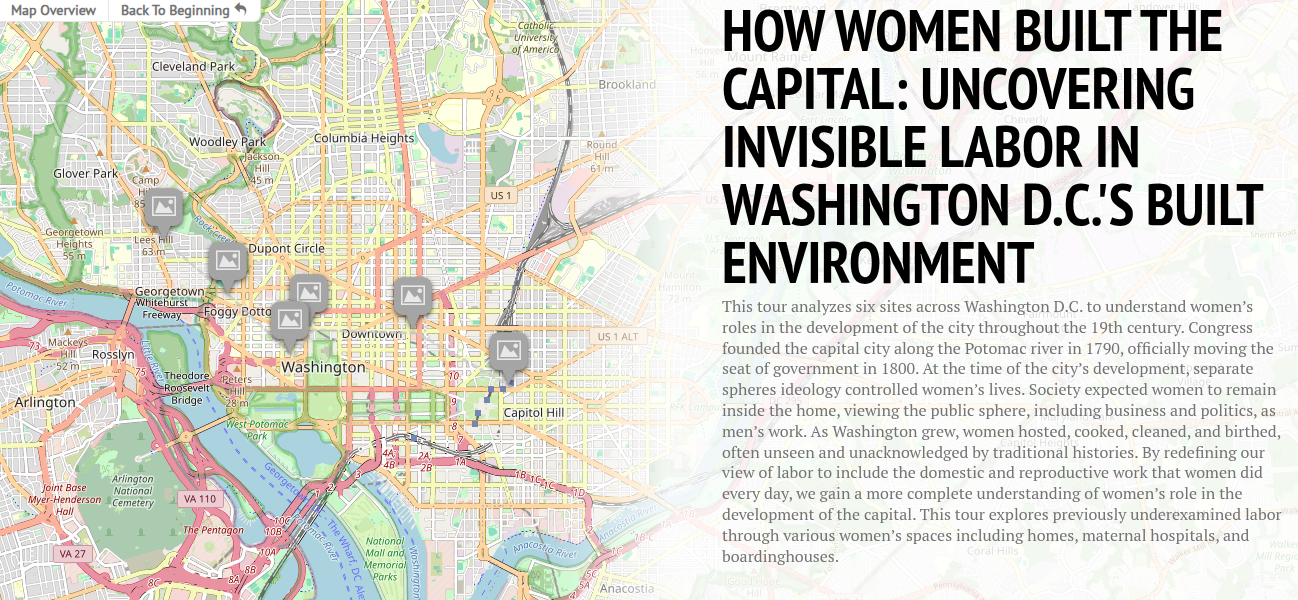
For a summer research project, AU Public History master’s student Meaghan Kelly created How Women Built the Capital, a fascinating tour through Washington, D.C. that introduces us to the women whose work helped build and sustain the capital city. This tour brings long-overlooked women’s labor into view—from raising children and practicing midwifery to running boardinghouses and hosting political gatherings. By tracing this often-invisible work through the places where it occurred, Kelly’s tour illuminates forms of labor that were essential to Washington’s development but have often been overlooked by historians. It also reveals how race, class, and legal status shaped the work women performed, how that work was valued, and whether it was preserved in the historical record. In this special feature, Meaghan Kelly sits down with Prof. Katharina Vester to discuss her work on this innovative tour: 

Prof. Vester: What inspired you to create this tour? How does it connect to your interests in the early United States and the history of women’s labor?

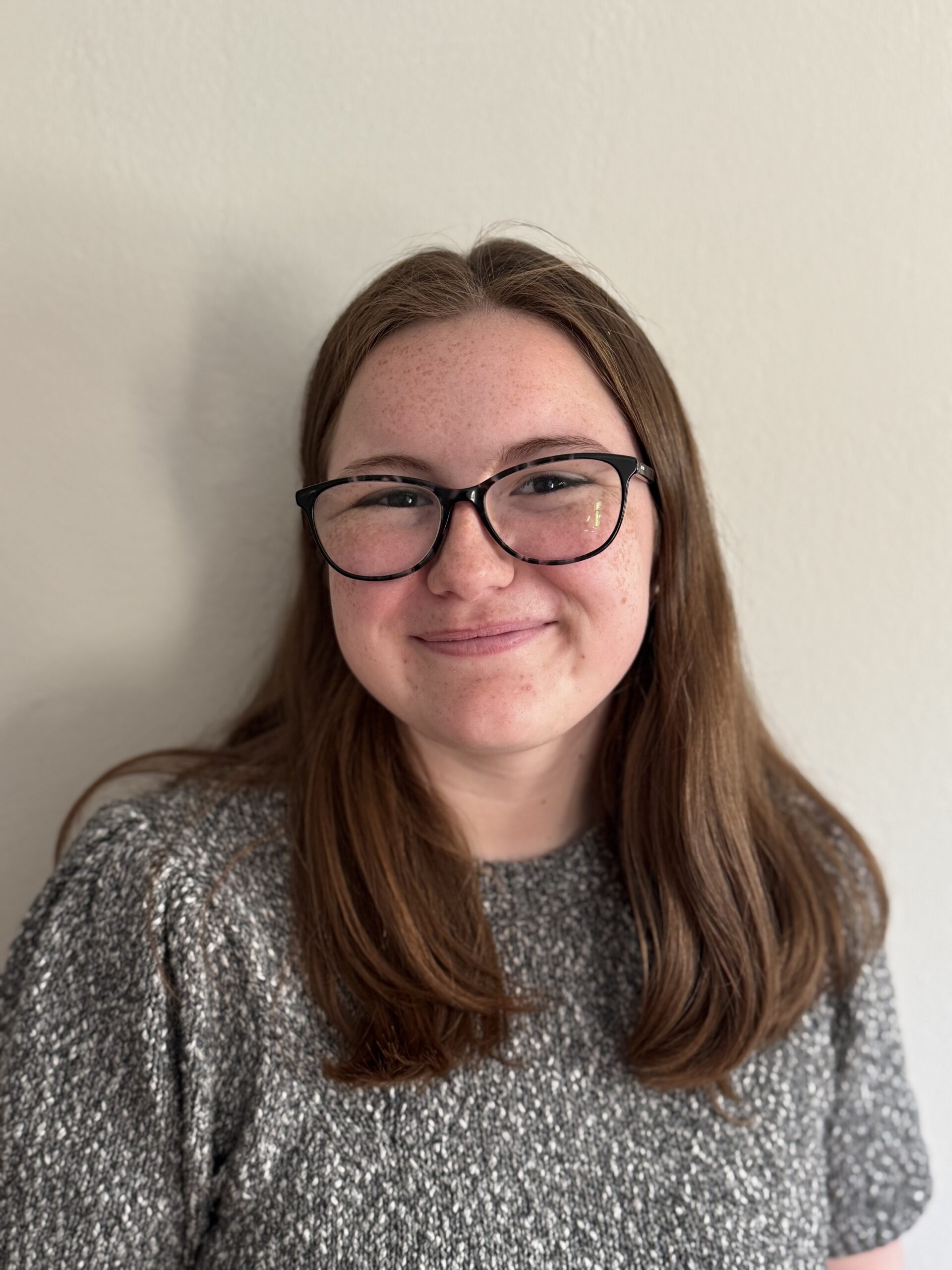
AU Public History master’s student Meaghan Kelly.

Kelly: This tour was a culmination of my research interests after my first year at American. I took Dr. Rymsza-Pawlowska’s D.C. History course in the spring, I loved it so much and was so excited to use what I learned as a jumping off point for this project. My research interests have always been focused on women’s history, but this tour was really inspired by ongoing conversations in my own life about the valuing of domestic labor, traditionally, women’s work. I wanted to apply broader ideas about the work women do to D.C. history to better understand how women were integral to the founding of the capital.  

Prof. Vester: Could you give us a brief overview of the tour? Which places and women will visitors encounter along the way?

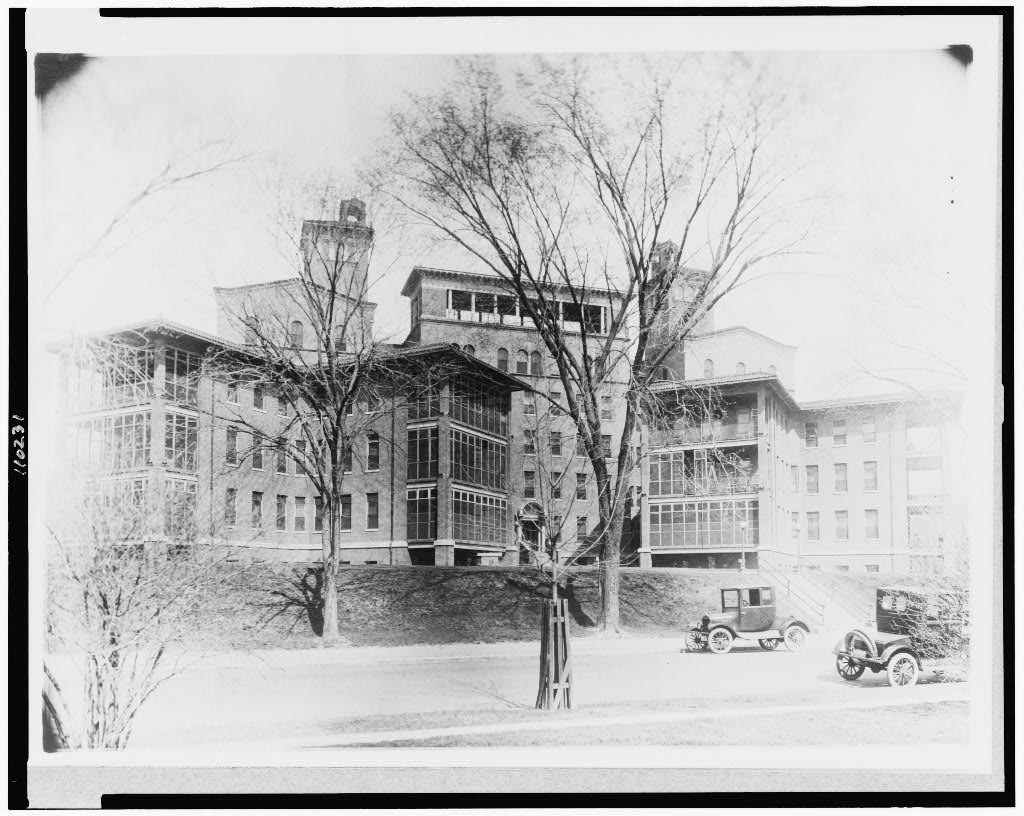
Kelly: The tour begins at Tudor Place in Georgetown with an introduction to D.C. in the early 19th century. It then goes to the former Columbia Hospital for Women, originally opened in 1866; unlike many other hospitals at the time, the Columbia Hospital was racially integrated from its founding and became a leader in maternal and infant medicine. Next are the Octagon House and the Decatur House, two house museums where the tour discusses hosting, politics, and slavery in the heart of the capital. The tour ends with the Mary Surratt Boardinghouse and the Belmont-Paul Women’s Equality National Monument, both exploring women’s experiences in the public sphere. One of my favorite women to learn about in doing research for the tour was Charlotte Dupuy, a woman who was enslaved at Decatur House and sued the man who owned her, Secretary of State Henry Clay, for her freedom. 

Prof. Vester: Your tour encourages visitors to think expansively about what counts as labor. Why was it important to include work such as childbirth, child-rearing, household management, and hosting alongside more readily recognized forms of employment?

Kelly: Including domestic work like household management and hosting was necessary to understand women’s lives in early American history. While some women have always worked for wages, every woman did unpaid domestic labor in her home, regardless of her class. I included child-rearing and birth to discuss both the female-dominated jobs that came with each, like nurses and midwives, but to also discuss the labor of motherhood. In my research, I found a messy line between cultural histories exploring motherhood and medical histories of childbirth. This tour allowed me to start to think about these ideas, but I’m eager to do more research on this in the future!

The former Columbia Hospital for Women, which originally opened in 1866 and was one of the few racially integrated hospitals at the time, is one of the stops on the tour.

Prof. Vester: What did your research reveal about how women’s labor was understood and valued in early Washington? Were there forms of work that were essential to the city but rarely acknowledged as labor?

Kelly: Enslaved women’s labor was unsurprisingly completely overlooked and devalued. Wealthy families went to great lengths to mask enslaved labor while hosting, hiding doors to servant stairs and building walls around their property to create a barrier between their house and the rest of the city. This labor was without a doubt integral to the growth of the city throughout the 19th century. Women were also involved in politics far before fighting for the right to vote. The wives and daughters of politicians played an important role in their family’s social lives, building alliances through the parties they hosted.

Prof. Vester: The lives of wealthy white women are often much better documented than those of Black women, particularly enslaved women. What challenges did you encounter while researching the lives and labor of enslaved women? What does including their experiences add to our understanding of Washington’s history?

Kelly: I was very lucky that a lot of incredible work has been done on enslaved women in D.C. I read Tamika Nunley’s work the first week of this project and it was foundational. My main struggle while making the tour was finding individual women’s stories to highlight. While every house I included had plenty of information about the elite white women who lived there and I had general information about the lives of enslaved women, it was rare to find exact names and stories. The stories of enslaved women like Charlotte Dupuy are so important for bringing history to life, but weren’t as readily available as the stories of women like Dolley Madison or Mary Surratt. 

Click here to access an interactive version of the tour online.

Prof. Fedyashin Guides History Students to Historic Sites Throughout DC-Area

by Emily Lefeber-Dotzler, Senior Administrative Assistant 

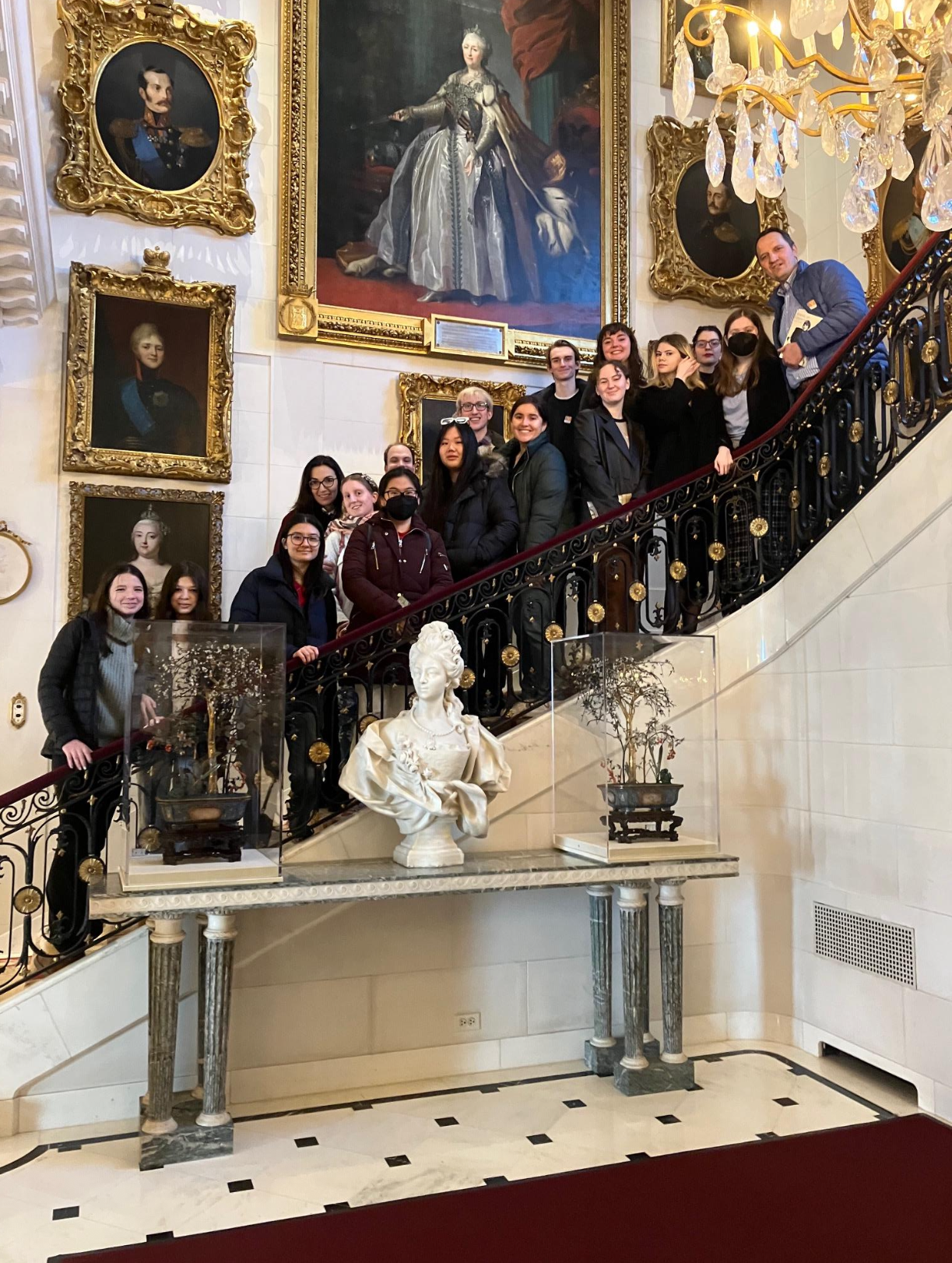
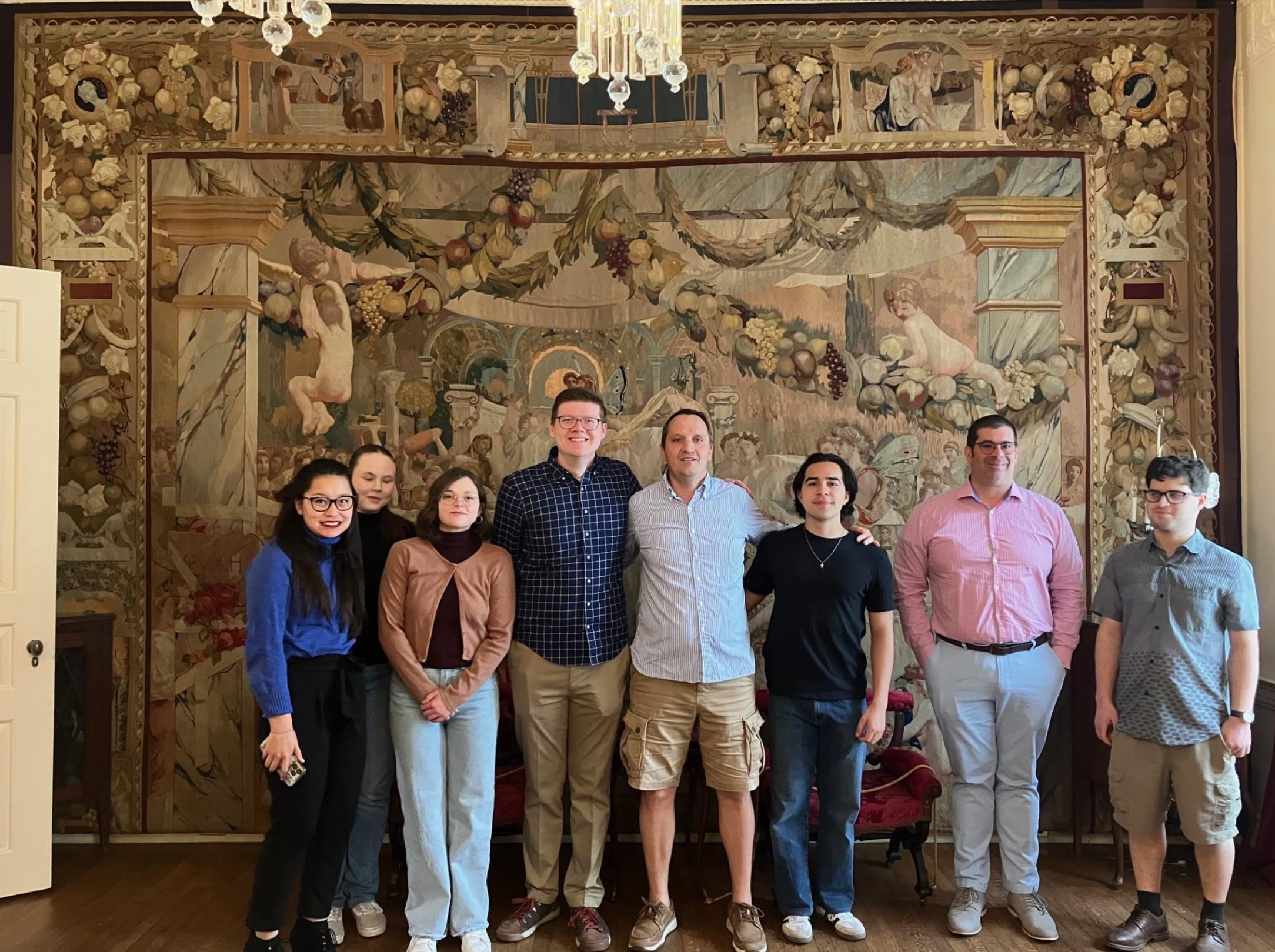
Prof. Fedyashin with AU History students at Hillwood Estate.

For many students, some of their most memorable lessons happen outside of the classroom. Thanks to Professor Anton Fedyashin, co-director of undergraduate studies for History and Director of the Carmel Institute of Russian History and Culture, AU History students have stepped into galleries, exhibitions, and cultural spaces that bring to life the history they learn in the classroom.  

Fedyashin first conceived of these trips as the world transitioned out of the COVID-19 pandemic to foster community among students and give them opportunities to explore the many museums and historical sites in Washington, D.C. What began as a few trips a semester has transformed into a weekly tradition of exploring history alongside AU history majors. Fedyashin begins planning his roster of visits several weeks before each semester, contacting museums, scheduling dates, and reserving restaurant space for the free lunches that follow each museum trip. By the first week of classes, he has a full schedule for every Saturday of the semester.  

As a Russian and Soviet historian, Fedyashin selects sites with connections to his own areas of research, often finding connections that students are not expecting. “Many students are surprised by how many connections D.C. historical sites have to Russian and Soviet history,” says Fedyashin. Over the last few years, he has taken students on visits to the National Gallery of Art, George Washington’s Mount Vernon, George C. Marshall’s Dodona Manor, Dumbarton Oaks Museum, the President Woodrow Wilson House, the International Spy Museum, and the National Air and Space Museum. In the next academic year, he plans to add the Museum of the Bible to his itinerary as an avenue to explore Russian Orthodoxy in the broader context of Christianity.  

Prof. Anton Fedyashin with AU History students at The President Woodrow Wilson House in 2025.

These weekly museum tours have been an immense success with history majors, serving as an opportunity for students to visit places they otherwise would not have or see familiar places in a new way. Samantha Barrett (CAS/BA ‘26) first joined one of Fedyashin’s museum trips after participating in the Carmel Institute’s summer trip to Istanbul. Barrett shared, “Professor Fedyashin truly brings history to life on these tours, allowing for awesome experiences.” According to student Sebastian Cardillo, “Being able to see the things I had learned about and get up close to them not only made the museum trips more impactful but also reinforced what I learned in class.”  

Yet the exhibits themselves are only part of what makes these excursions meaningful. As students travel together, discuss what they have seen, and explore history as a group, these museum trips have become an important space for community building. Fedyashin shared, “it’s about discovering new places and stories together and then bringing that knowledge back to the classroom. Students also get to meet their peers from other universities, establish relationships, and network, which is a great thing.” Cardillo says that these trips have been a great way to connect with his peers, noting that “it’s fun hearing everyone else’s perspectives on what we had seen.”   

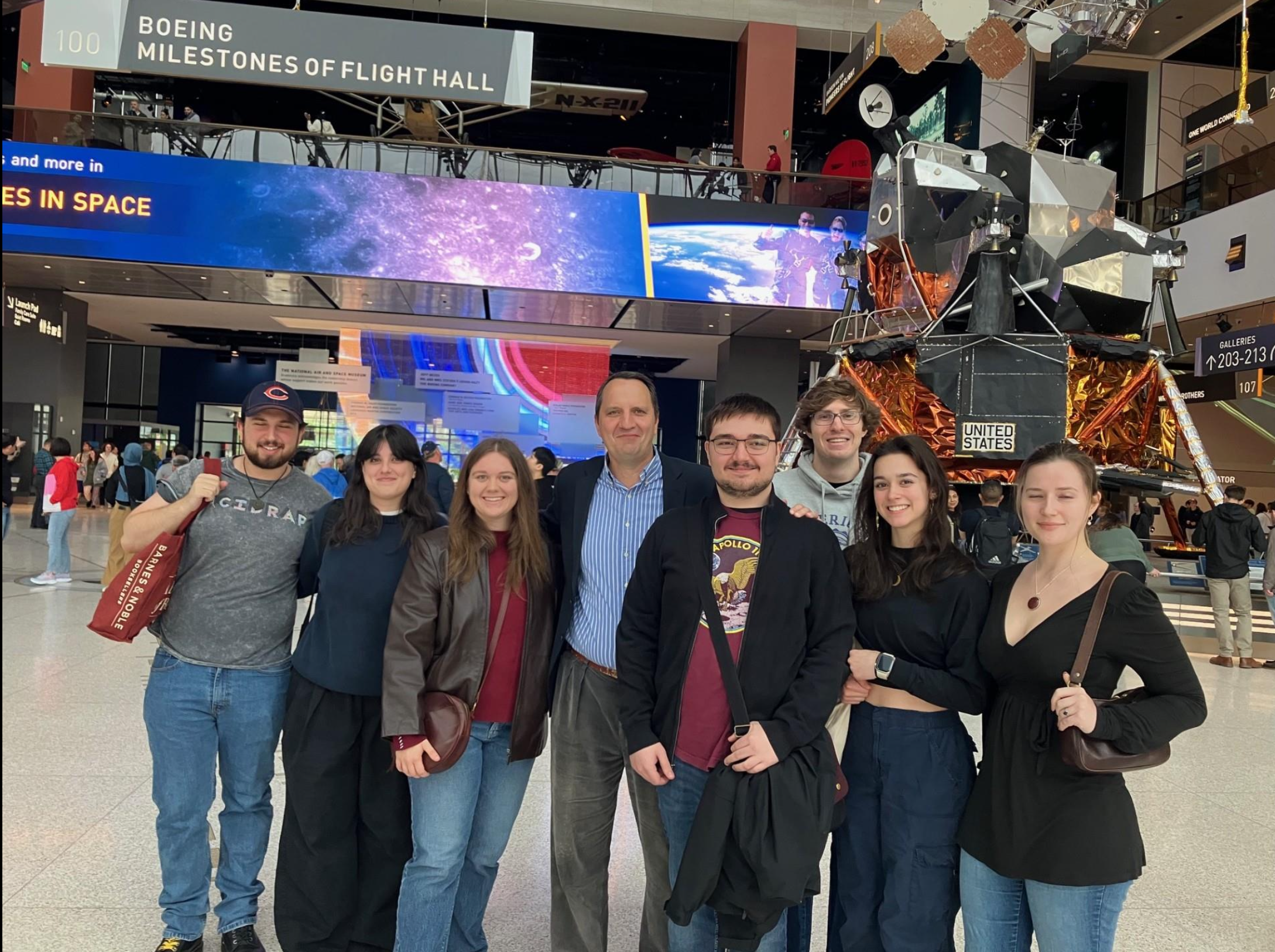
Prof. Fedyashin with AU History students at the Smithsonian’s National Air and Space Museum on the National Mall.

A common thread throughout students’ experiences is how much they enjoyed touring spaces with Fedyashin. Reflecting on her experience on a museum tour, Barrett shared that “the passion exhibited by Dr. Fedyashin is truly what inspires me the most about these visits.” Students often return for multiple museum trips – Cardillo shared that “Dr. Fedyashin always has something interesting to tell us about every place we visit” which reflects the care and attention that Fedyashin puts into planning each visit.  

For Fedyashin, these museum trips are about more than viewing exhibits. They are opportunities for undergraduates to engage directly with history and art while taking advantage of Washington, D.C.’s vibrant cultural landscape. By taking history majors out of the classroom, Fedyashin encourages them to connect their studies with the world beyond campus, creating unique and engaging experiences. As Fedyashin puts it, “it is as important to walk history as it is to read it.” 

AU History Major Serves as Press Intern with U.S. Senator

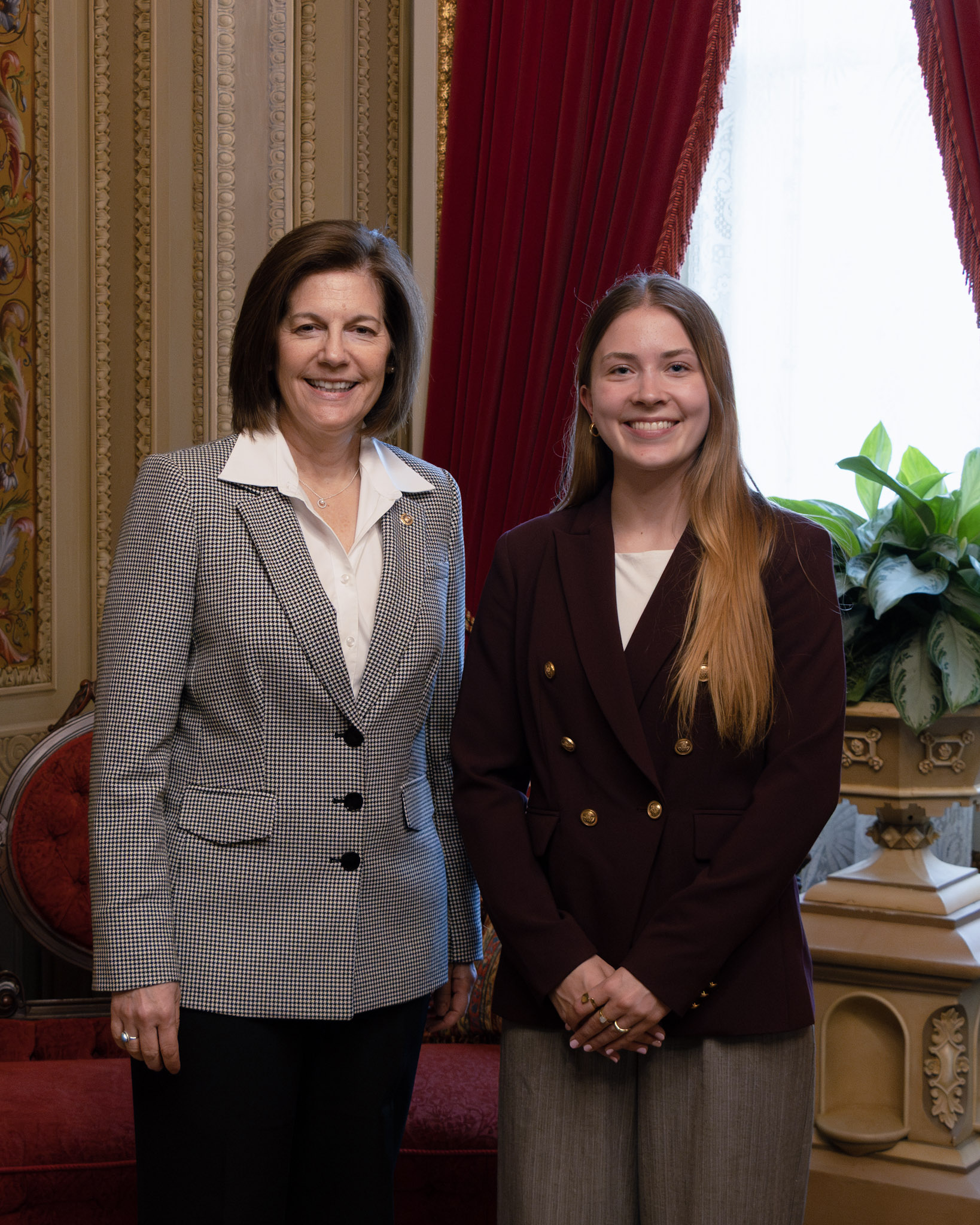
AU history major Jane Eidukas with US Senator Catherine Cortez Masto (D-Nevada).

For most students at AU, the search for an internship is an annual rite of passage. For Jane Eidukas, a junior history major, that search took her to Nevada—or, more specifically, to the office of US Senator Catherine Cortez Masto, a Democrat from Nevada. Though Eidukas grew up in Seattle, her mother was born and raised in Nevada, which provided a connection that enabled her to apply for an internship with Senator Masto in the heart of the nation’s capital. She just spent the Spring 2026 semester working as a press intern in the Hart Senate Office Building.

As a press intern, Eidukas worked three days per week, carrying out a variety of tasks such as answering the phones, speaking with constituents, and compiling press clippings about the senator and issues related to Nevada. “It’s really interesting to answer the phones and talk to constituents,” she says. “You have to listen carefully in order to figure out what sort of issues they care about. If they talk a lot about Lake Tahoe and a related bill, it’s my job to communicate that concern along to the senator.” Eidukas also helped organize the logistics for a weekly event known as “Battle Born Breakfast,” in which the two senators from Nevada gather for discussions and meetings with constituents.

Brushing shoulders with senators, staff, and constituents in the halls of the Hart Senate Office Building can be a heady experience. “When I was in high school I took AP government classes,” Eidukas says, “and now I get to be here and see it happen in person. It’s very cool and doesn’t quite feel real.” Eidukas credits many of the history courses she has taken at AU with helping her to develop the sort of skills necessary to carry out her responsibilities as a press intern. “Having to read lots of texts and understand the key parts is really helpful for handling press,” she says. “I learned in my history classes that you need to get to the main point quickly or else you’ll get bogged down.” 

In particular, Eidukas pointed to her experience in AMST 345: American Indian Law and Legacies (which is cross-listed with the History Department) as uniquely well suited to preparing her for this specific internship—in part because Senator Masto is a member of the Indian Affairs Committee. “Many of the same issues I learned about in that class are very important in Nevada,” she says. “I think that played a key part in how I got my internship.”    

History Majors Showcase Their Research in Annual “History Day” Event

On April 22, the AU History Department hosted its annual “History Day” event in which history majors present the results of their senior thesis research project. This year seventeen students presented on a wide range of historical topics, ranging from the Viking Age slave trade (Maria Guinle Serpa) to race and media in the American Basketball Association (Thomas Arensdorf). The full-day event brought more than fifty students and faculty in attendance, with presentations organized into four different panels defined by a distinct theme: “Imperialism and Commerce,” “Gender & Power,” “War & Politics,” and “Memory, Culture, and Community.” 

Eryn Mikulicz presents the results of her research on nostalgia for the German Democratic Republic among “the last East German generation” born in the 1970s.

One of the many highlights of the event was Eryn Mikulicz’s presentation during the fourth session, “Growing Up in the German Democratic Republic: Ostalgie in the Last East German Generation.” Drawing upon a wide range of memoirs written by authors of “the last East German generation” (i.e., those born in the 1970s) and working under the tutelage of Prof. Mary Frances Giandrea, Mikulicz was able to show a surprising degree of nostalgia for the oft-vilified German Democratic Republic in the decades after its dissolution. “I studied abroad in Berlin last spring, and that sparked my interest in all things East Germany,” Mikulicz said. “Given that German reunification is a relatively recent historical event, I really appreciated that Prof. Giandrea trusted me to work on the topic, especially since few Americans are familiar with the complicated memory politics in the former German Democratic Republic.” 

The third session featured five excellent presentations, including William Preston’s talk on “U.S.-Czechoslovak Relations: The 1918 September Declaration as a Turning Point.” Preston’s interest in the topic was originally inspired in part by a 2023 video game, Last Train Home, which catalogs the journey of the Czechoslovak Siberian Legion to Vladivostok during the Russian Civil War. Part of the challenge, Preston says, was finding a research angle on the Czech Legion that was both new and accessible through English-language archival material. Halfway through the research process, Preston realized he would need to pivot to a focus on U.S.-Czechoslovakian relations after World War I. “While this pivot definitely worried me at the time,” Preston recalls, “it turned out to be a great decision that let me dig into a topic I had no real concept of. That made it much more interesting when I eventually honed in on the September 3 declaration and how many of the sources I investigated seemed to revolve around it both before and after.”

William Preston presents his research on U.S.-Czechoslovak relations after World War I to an attentive audience in the Battelle-Tompkins Atrium.
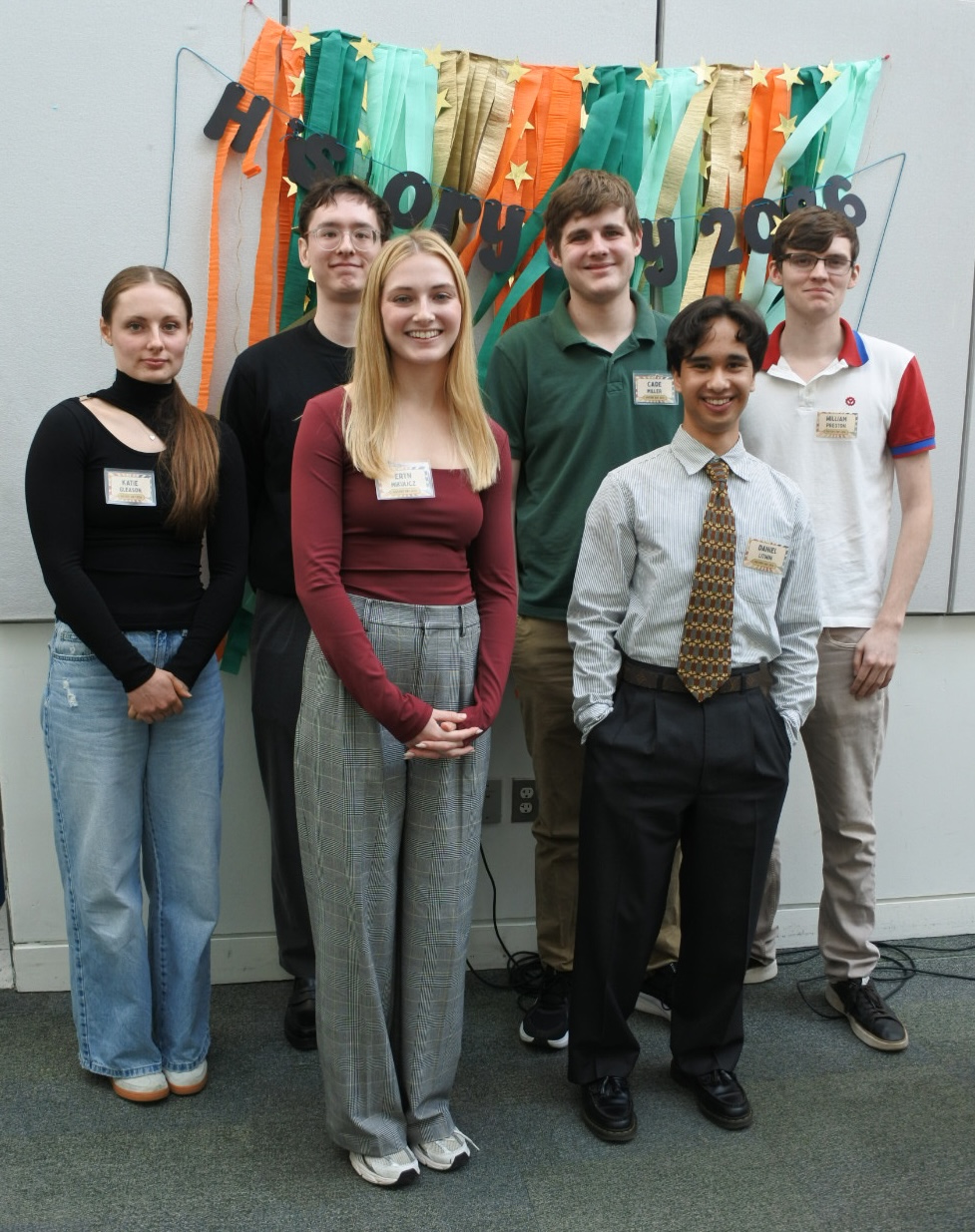
Presenters from Sessions 3 and 4 (from left): Katie Gleason, Thomas Arensdorf, Eryn Mikulicz, Cade Miller, Daniel Litwin, and William Preston.

Among the audience were many members of the AU faculty, who look forward every year to seeing the final results of intensive undergraduate research projects that often span several semesters and even years. According to department chair Max Paul Friedman, History Day represents the pinnacle of the undergraduate history experience. “For many students,” he said, “this is the high point of their college experience: not just absorbing history written by others, but conducting original research that adds to our knowledge of the past. I always learn so much each year! Their analytical and interpretive work is great preparation for a range of careers and graduate school too.”

Brandenburg Lecture and Awards Ceremony Celebrates 250 Years of American History

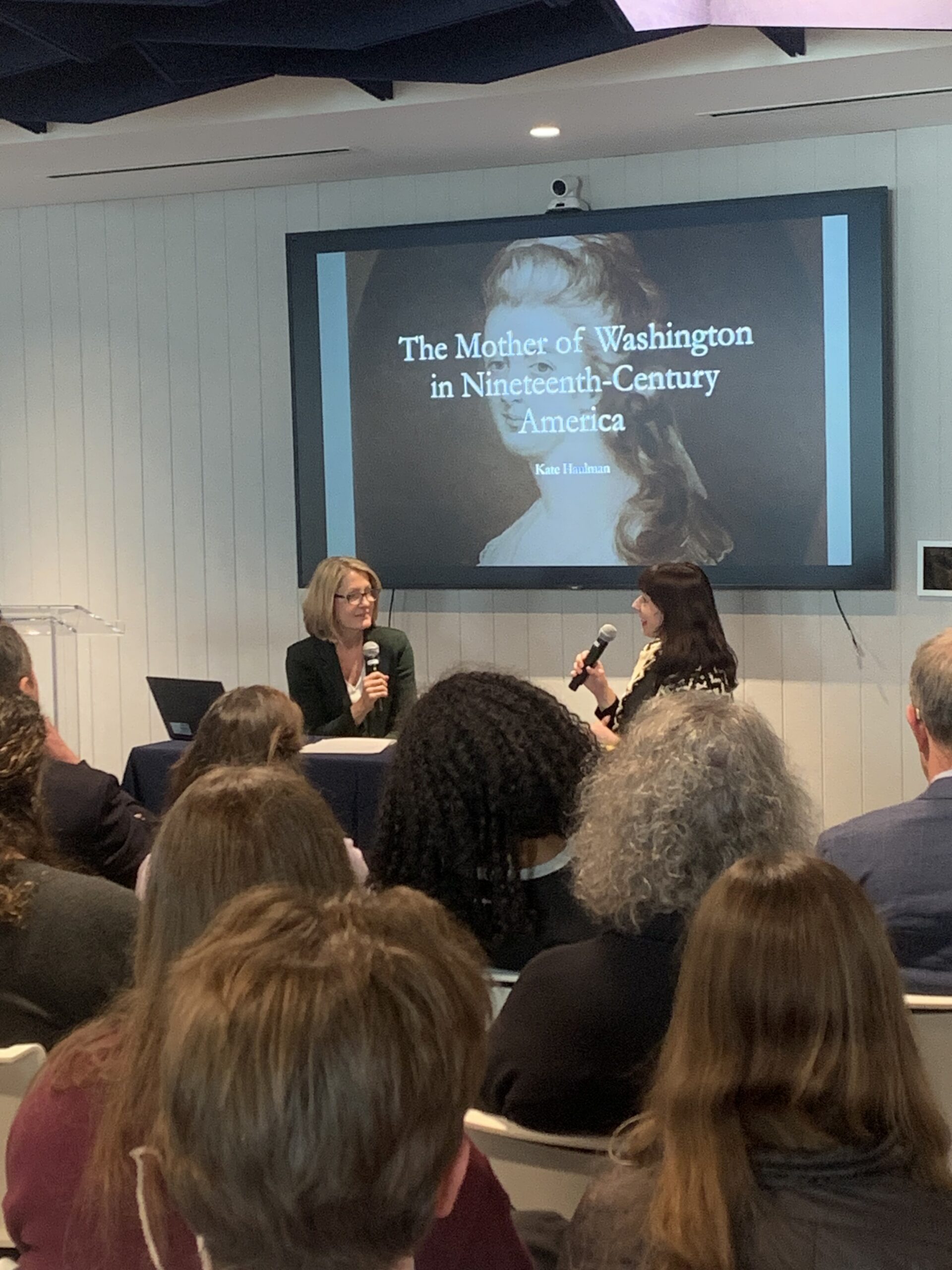
Profs. Kate Haulman and M.J. Rymsza-Pawlowska of the AU History Department engage in a lively discussion about the legacy of Mary Washington and the 250+ initiative.

by Osaevbie Samson

On April 8th, the Department of History hosted the annual Brandenburg Lecture and History Awards Ceremony. The awards ceremony honored new inductees to Phi Alpha Theta (the largest history honor society), recipients of the Anna Kasten Nelson Award for Excellence in History, and the two winners of the Dorothy Gondos Beers Scholarship: Julian Weiss and Scarlett Prendergast, who were recognized for their outstanding academic achievements and stellar GPAs. The Brandenburg Lecture is a part of 250+ at American, a campus-wide initiative that recognizes and celebrates 250 years of America through reflection and conversation. 

This year’s featured speaker was Kate Haulman, Professor of History at AU, who talked about her most recent book, The Mother of Washington in Nineteenth-Century America (Oxford University Press, 2025). Dr. Haulman’s research focuses on the history of early America, women’s and gender history, and public history. Her first book, The Politics of Fashion in Eighteenth-Century America (University of North Carolina Press, 2011), won the Berkshire Conference First Book Prize. The event also included a conversation with fellow AU history professor M.J. Rymsza-Pawlowska, a public historian of the 19th and 20th century and author of History Comes Alive: Public History and Popular Culture in the 1970s (University of North Carolina Press, 2017). Among the more than fifty attendees were a large number of AU students, whom Dr. Haulman paid tribute to during her opening remarks. “Among those who make this possible, of course, are our students,” she said. “They are really at the heart of what we do here.”

Rymsza-Pawlowska began the conversation that followed Haulman’s engaging presentation with a simple question: “Why Mary Washington?” Haulman explained that she initially considered writing a traditional biography but discovered that two biographies had already been published in recent years, and was also interested in the history of the Mary Washington Monument in Fredericksburg, Virginia. This caused her to move in the direction of how Mary’s story had been told over time, in her public memory. “There isn’t just one Mary Washington,” Haulman noted, pointing out that each version has expressed the cultural and political priorities of some groups  in which it was written, reflecting contests over motherhood. 

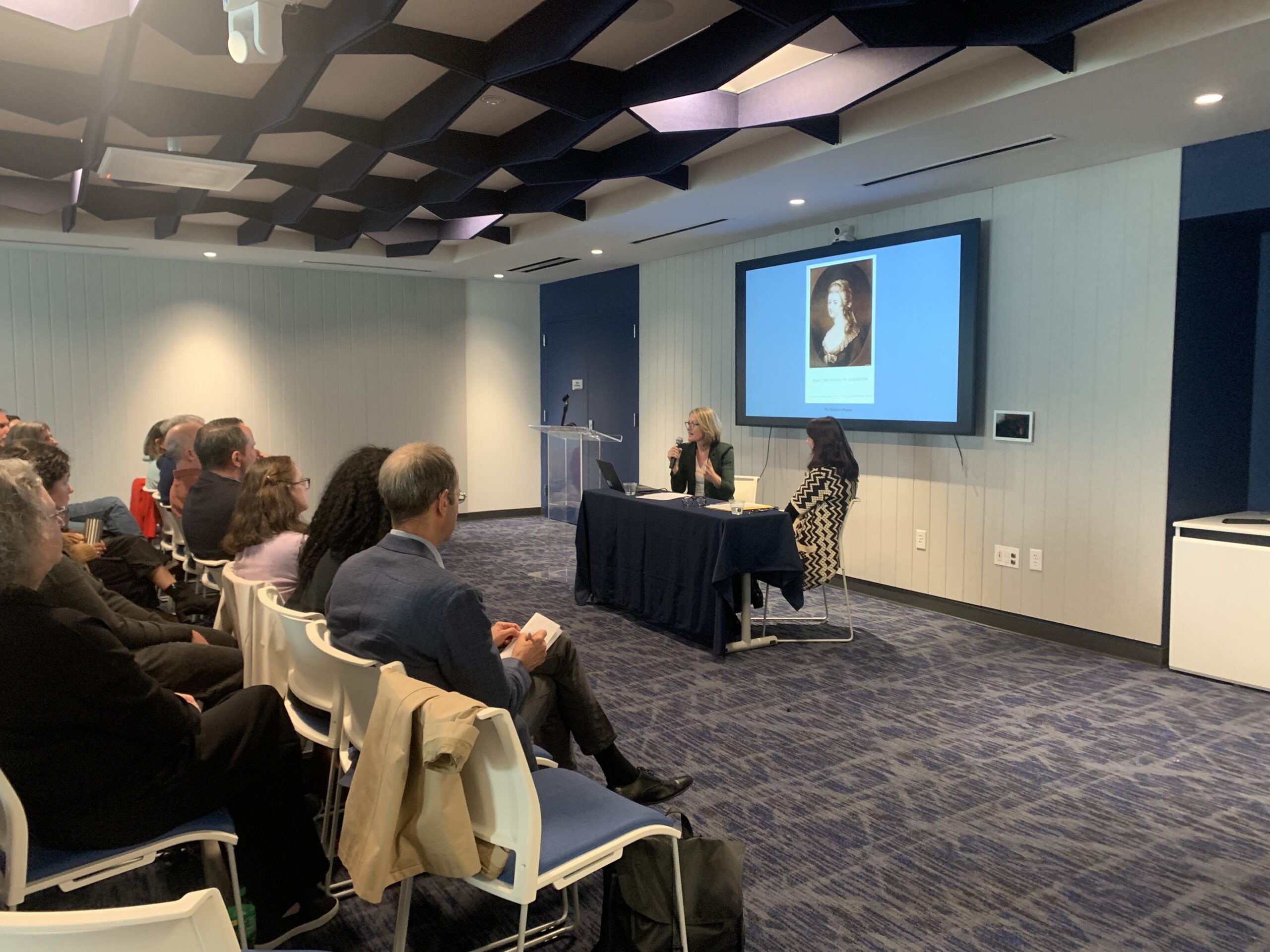
The Brandenburg Lecture and History Awards Ceremony had a stellar turnout, with more than fifty students, faculty, and alumni in attendance.

Throughout the conversation, Haulman also highlighted the broader implications of public memory, particularly through monuments and historical storytelling. She explained that monuments are not neutral representations of the past, but that they “reflect the values of the people who build them.” This insight offered a new way of viewing Mary Washington, whose legacy has been shaped by those seeking to define American identity, in part through certain visions and versions of motherhood. The discussion brought out the importance of questioning dominant historical narratives and recognizing the role of interpretation in our understanding of the past, challenging audiences to reconsider how and by whom history itself is constructed.

– Osaevbie Samson is a student communications assistant for the department and a freshman studying Political Science and Public Relations & Strategic Communications

AU History Major Explores Her Cuban Roots as a Smithsonian Intern

Martha Garcia, an AU history major who will graduate this spring, gained valuable hands-on experience organizing public outreach events, programs, and exhibits during her internship at the Smithsonian National Museum of American History.

Having been born and raised in Cuba until the age of seven, Martha Garcia has always had a strong interest in the history of revolutions, decolonial movements, and Latino culture. “Ever since I was young, my grandpa was really into history and I suppose that rubbed off on me,” she says. In Fall 2026, Garcia, who will graduate with a degree in history this semester, had the invaluable opportunity to work as an intern in the Program in Latino History and Culture, Audience Development, at the Smithsonian National Museum of American History (NMAH). Under the guidance of Magdalena Mieri, director of the Program in Latino History and Culture, Garcia assisted with the development of new museum exhibits and activities that added Latino histories and stories to the Center’s current and upcoming exhibits. “My job was basically to try and connect Latino religious trends to tangible and visible activities at the museum, in order to show that religion is everywhere.” 

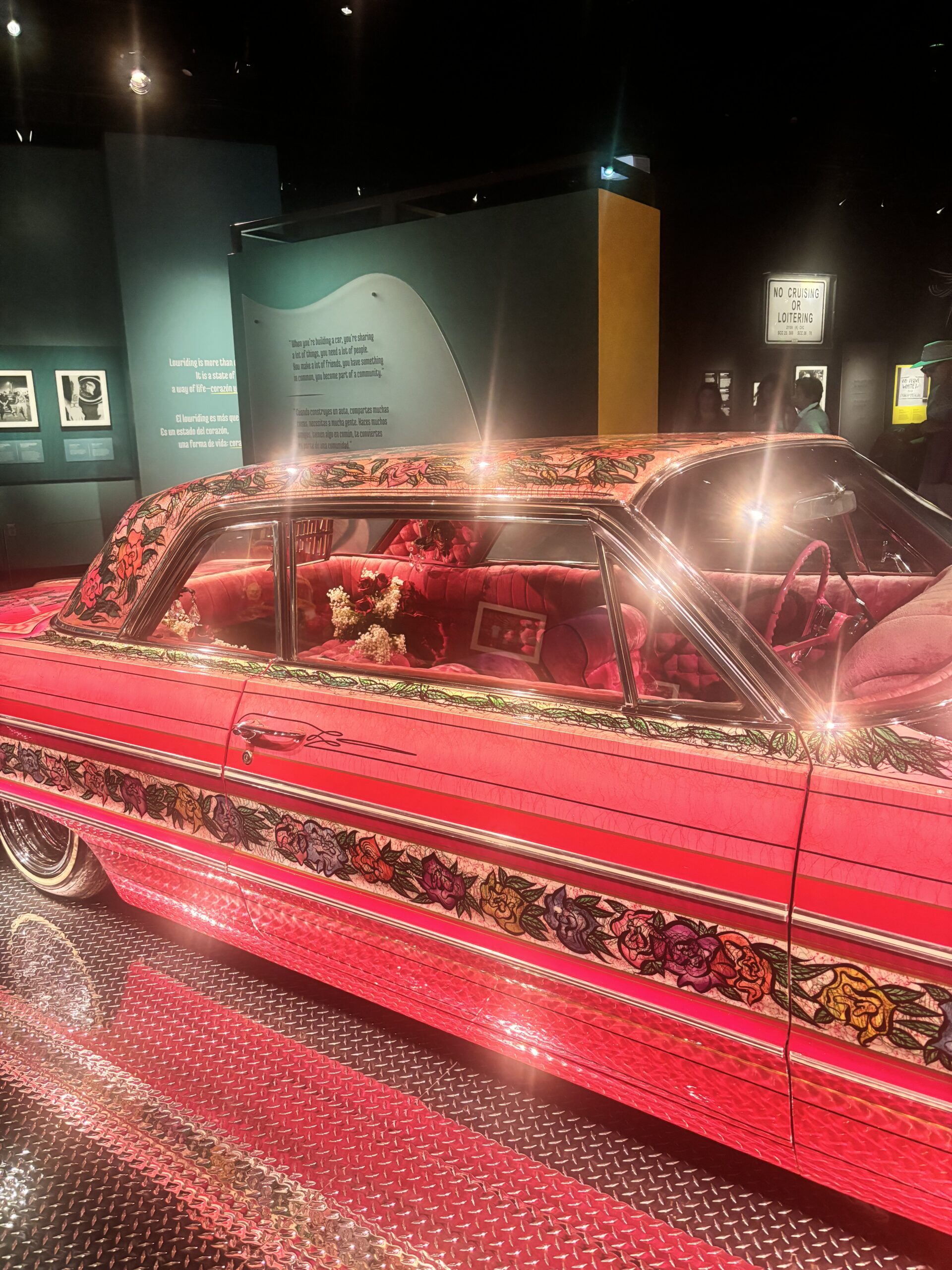
One of the programs Garcia helped organize and run was the “Lowriding Family Festival” in September 2025.

Working around her schedule of classes at AU, Garcia spent approximately 16-20 hours per week at the NMAH, helping out with events such as the “Lowriding Family Festival,” which showcased the artistic expression, technological innovations, and storytelling of Latino lowriders in American culture. Later, she undertook significant research on the syncretic Afro-Caribbean religion of Santería in hopes of laying the groundwork for a future museum program that would incorporate the sacred rhythms of the distinctive drummers who feature in its religious ceremonies. “I reached out to local drummers and connected them with Magdalena,” Garcia says. “In the future my hope is that the museum might be able to bring them in for an exhibit that will engage a public audience through a drumming performance.” Garcia had nothing but praise for her colleagues and supervisors at NMAH. “They really cared for the interns that they were working with and wanted to connect us with as many people as possible.” 

Garcia admits that she was never particularly interested in the study of religion until she started taking AU history courses that focused on the religious aspects of history, such as those taught by Prof. Partovi (Islam and the Middle East) and Prof. Fedyashin (Russian Orthodoxy). She also singles out Prof. Stockreiter’s courses on Africa and her close attention to sources and material culture. “She always had us looking at primary sources and really helped guide us in the research process,” Garcia says. One of her most memorable projects was to visit a Smithsonian museum and examine the cultural artifacts up close, attempting to place them in their appropriate cultural and political contexts. “That experience really helped when I later had to go into the museum’s archives during my internship to look at religious artifacts, see when they were produced, how they were used, and what they meant to society at the time.” Being able to take such a wide variety of history classes at AU, Garcia says, “allowed me to find my passion in history and center my internship in topics that interested me.” 

AU Doctoral Student and Smithsonian Archivist Publishes New Book on Native American Anthropologists

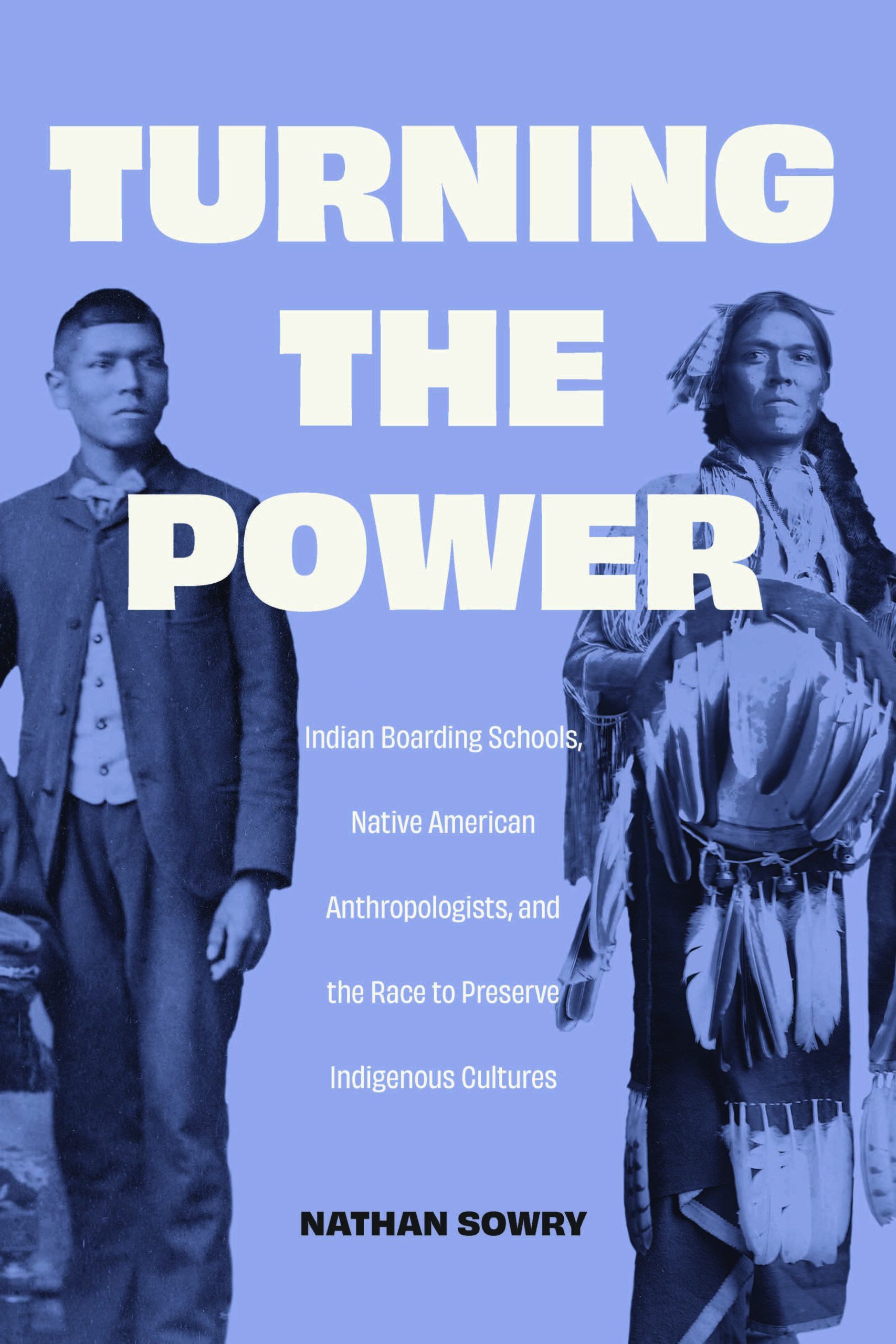
Nathan Sowry first began his doctoral studies in AU’s History Department in Fall 2015, working under the tutelage of Profs. Dan Kerr, Kate Haulman, and Malgorzata Rymsza-Pawlowska. Just one decade later—a quick turnaround time in this field—the fascinating results of his research have been published in a new book: Turning the Power: Indian Boarding Schools, Native American Anthropologists, and the Race to Preserve Indigenous Cultures (University of Nebraska Press, 2025). In this intriguing study, Sowry examines the lives of some ten little-known Native American figures who were forced into the assimilationist boarding school system of early twentieth-century America, only to emerge later as key informants for some of the first anthropological treatments of their Indigenous cultures. “All of them faced racism and abuse in Indian boarding schools that taught them to abandon their cultures,” Sowry said. “Then later all of them to varying degrees of success attempted to embrace and popularize the beauty of their cultures but were written out of the literature. I wanted to do what I could to tell their stories, which haven’t been told before.”

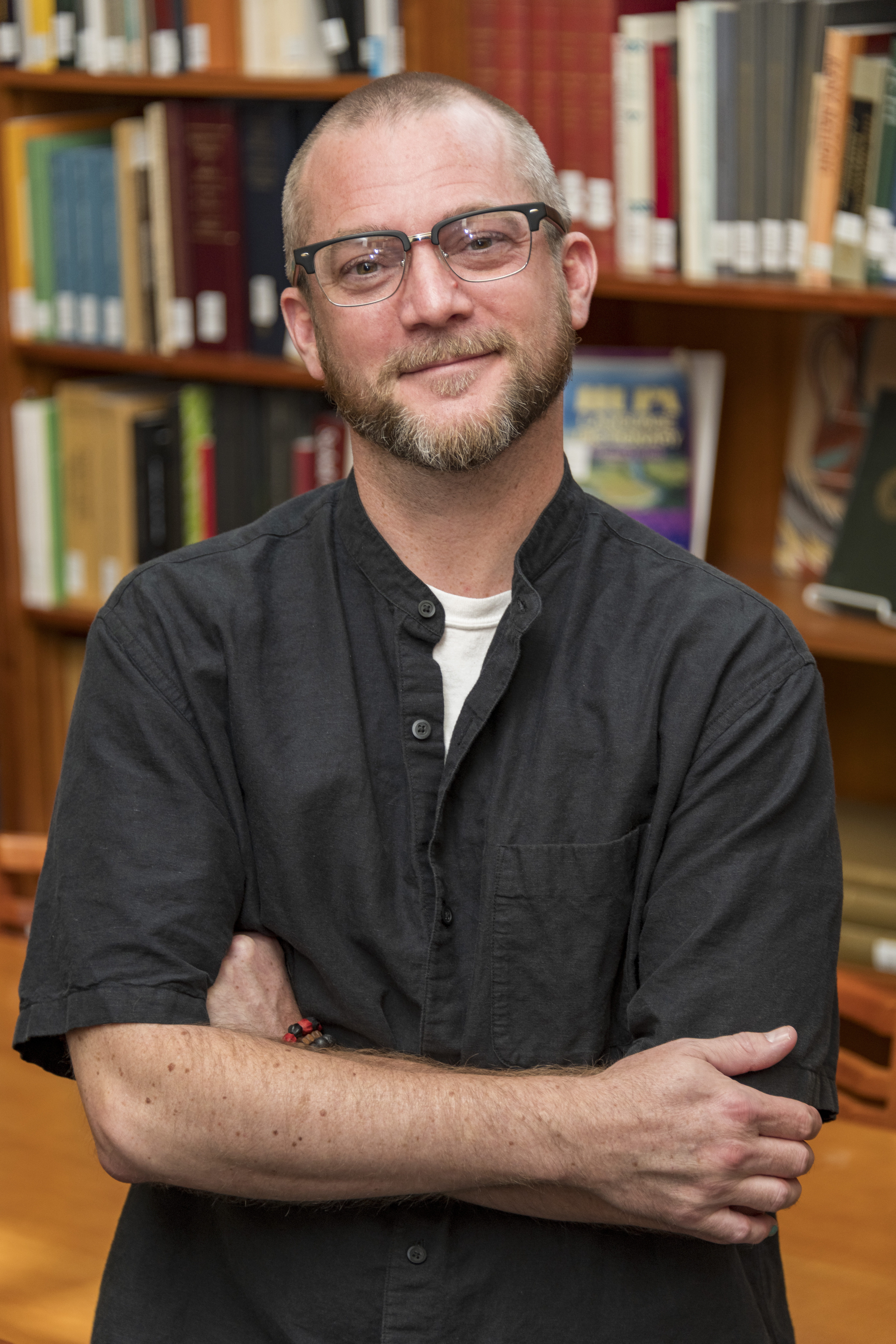
Nathan Sowry, who completed his doctoral degree in history at AU, now works as a reference archivist at the National Museum of the American Indian.

Like many students, Sowry viewed AU as an attractive place to pursue his studies due to its stellar faculty and close proximity to many of the nation’s premier museums and archives. Sowry has long enjoyed working in the world of museums and archives, first at the Smithsonian Museum of African Art on the National Mall and now in the archives of the National Museum of the American Indian in Suitland, Maryland. As a reference archivist, Sowry works mostly behind the scenes helping to identify, preserve, and facilitate access to objects in the collection. “I thought that archives would involve working in a dusty basement full of cobwebs everywhere, and that’s sort of what I was hoping it would be,” he says. “But my job is much more public-facing than I thought it would be, and I’ve really come to enjoy that aspect of the work.” In addition to working with researchers who visit the archives, Sowry also helps Native American visitors who come to the facility to interact with the cultural belongings of their ancestors. “I thought I was an introvert and wanted to hide from everyone, but the public liaison part of my job has turned out to be really rewarding.” 

Sowry’s own research has provided new and valuable perspectives on the lives of Native American intermediaries in the early twentieth century who found themselves caught between two worlds. One particularly intriguing profile that Sowry analyzes in Turning the Power focuses on Florence and Louis Shotridge, a Tlingit couple from Alaska. “I think Florence represents a really unique case because there were so few female Native anthropologists,” he says, “and there were so few opportunities that existed for Native peoples off of reservations.” In order to advocate for their community and preserve what remained of their culture, Florence and her husband made the difficult decision to dress up in Plains Indian clothing during public engagement sessions in Pennsylvania and Los Angeles—not what Alaska Natives wore, but rather what the general public expected “real Indians” to wear. “It’s almost bittersweet to get their perspectives on how they had to portray Native peoples just to get an audience and be able to get out there and talk about their culture, for better or worse.”

AU History Professor Undertakes Environmental History Research Near Cologne, Germany

Editor’s Note: In this fascinating post, AU History Professor Andrew Demshuk discusses his recent experiences conducting research on the environmental history of so-called “lost cities” in Germany.

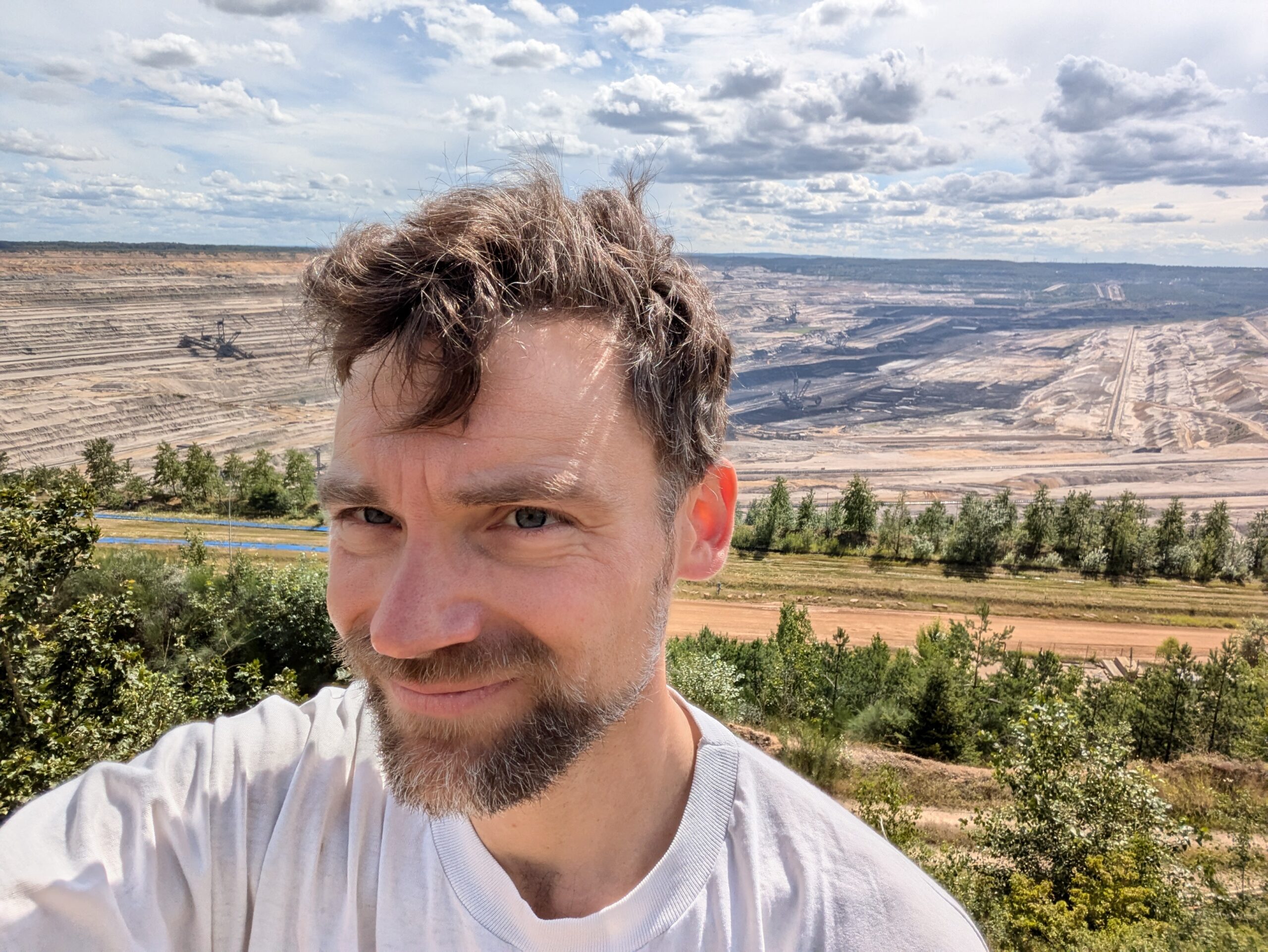
Prof. Demshuk visits the Hambach Brown Coal Pit Mine (450 meters deep!) west of Cologne

This academic year I am enjoying a twelve-month fellowship from the Heinrich-Hertz-Foundation, which fosters scholarship in the humanities that is related to the German state of North-Rhine-Westphalia. It is exciting to be in Cologne: an ancient and fascinating city! My research actually concerns an area just west of Cologne, where enormous craters (as deep as 450 meters) are getting carved out by dinosaur-sized machines so that the industrial economy has access to brown coal. This has been going on for decades, in particular to fuel a chemical industry that has polluted some of the streams, notably a little creek called the Duffesbach. 

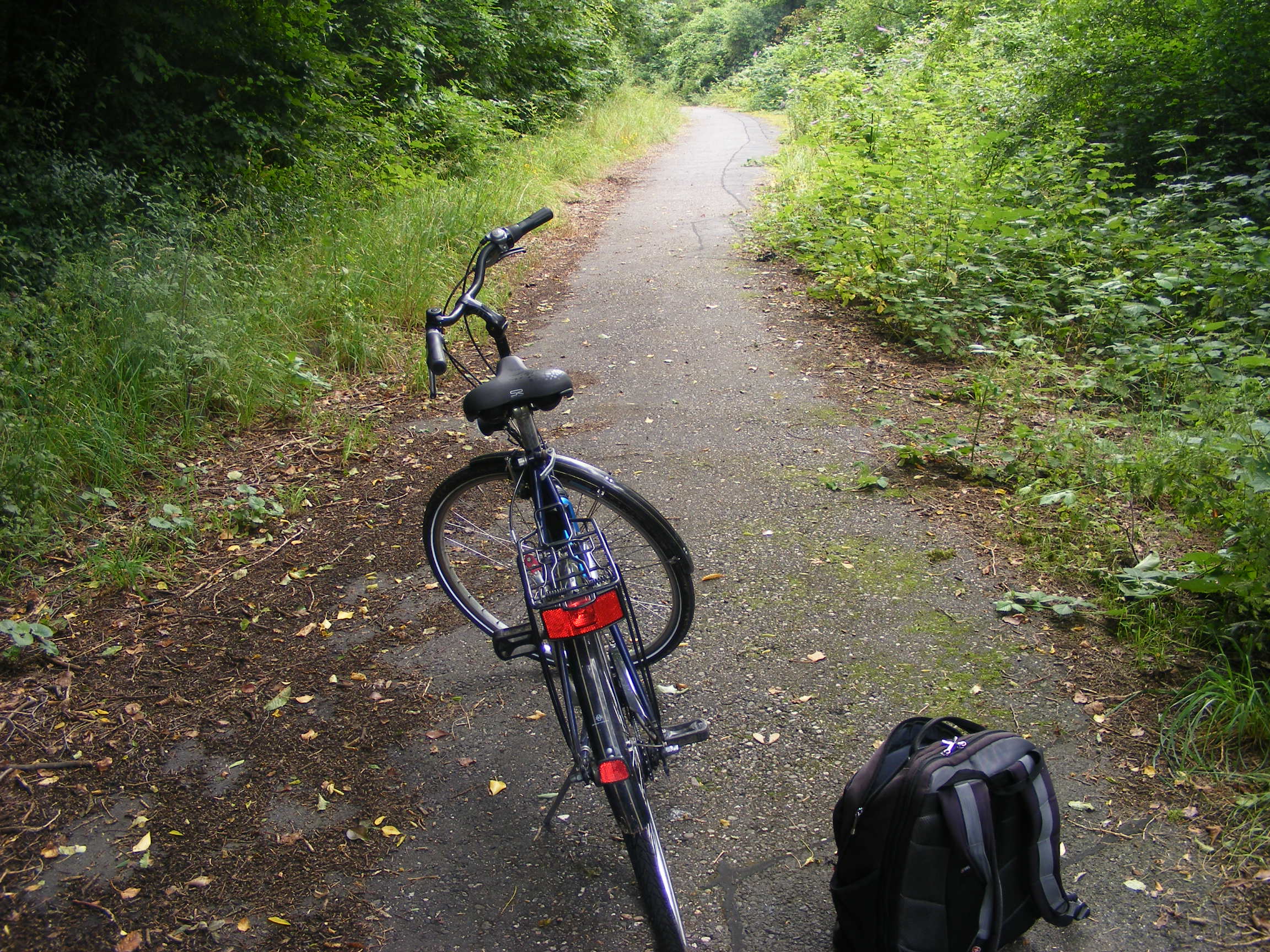
This is a “zombie creek,” as we might call it, because since the 1960s it has been canalized and hidden, even though it was the only waterway to go through Cologne’s city walls and power medieval mills in the old town before going into the Rhine. Bicycling along the former route of the creek was somewhat depressing. There is just cement in the city. Then in the first suburbs, you start to see a biologically dead canal here and there, until it ends at a chemical plant. The village next to that chemical plant—called Knapsack—disappeared in the early 1970s. It was torn down and evacuated, because the pollution was so bad. I had the chance in recent years to talk to many of the industrial workers and last surviving residents who knew what that place was like. The former village cemetery is still hidden behind some warehouses on old village land, because no one wanted to pay to move the graves. It’s a peaceful and somewhat surreal “lost place.” 

Prof. Demshuk’s bike ‘Siegfried von Weidenhausen’ on a street in the center of the vanished village of Knapsack near Cologne

Knapsack turned into a case study that I compared with a village south of Leipzig in East Germany that was also slated for destruction because of the same industries. Why did the West German village get destroyed? Why did the East German one survive? What does this tell us about the relationship between citizens and the state in each place? Between the local, the national, and the global? I’m honored that the Journal of Modern History wants to move ahead with my article. Most recently, I have been commuting by train up to the state archive in Duisburg to see troves of files. I’ve also visited county archives, city archives, and materials people have stowed in their attics. The history I am writing about the creation of these coal pits, the devastation of villages, the attempts to recultivate brave new landscapes, the fraught memory cultures, and evolving protest movements against coal devastation are all juxtaposed against the story in former East Germany south of Leipzig: a devastated cultural landscape I know intimately well after twenty years of research there on various projects, and where the same dirty fuel was excavated with the same technologies from a moonscape of coal pits. 

Indeed, simultaneous to this enormous environmental history project on the politics of coal pits in East and West Germany, I’m also writing a new history of the 1989 Revolution and “Wende” transformations of the 1990s from the perspective of Leipzig—the “capital” of the Peaceful Revolution before the Fall of the Wall—with emphases on environmental movements and the restoration of devastated urban spaces. This story of urban patriotism and revolution needs to get completed this year so that it can come out with an academic press in time for 2029—the 40th anniversary of the revolution—and 80 years after the founding of East Germany. After experiencing the outbreak of revolutions in Tbilisi in Fall 2024 and watching the rise and fall of revolutions elsewhere against tyranny, the historical context, progression, and outcome of 1989 looms large, as does the historical “uses” of it, often by those who spin 1989 and the 1990s as something of a tragedy today, rather than an overcoming of repression. To that end, a great deal of my research is exploring the 1990s and 2000s. The time is ripe to study these decades, because the witnesses are retiring, even dying out, and their materials are seldom going into archives, even though especially in post-communist states this was the era I which the “world we live in now” was being made. 

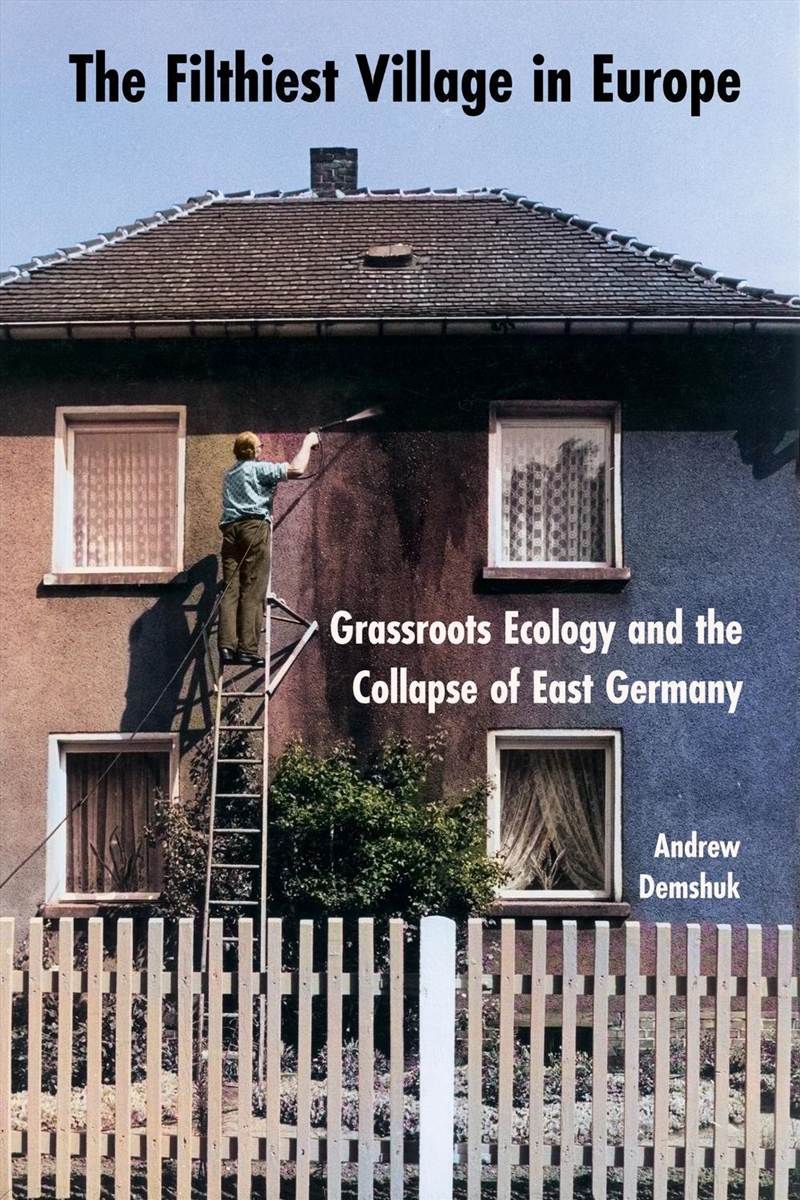
The cover of Prof. Demshuk’s most recent book, The Filthiest Village in Europe: Grassroots Ecology and the Collapse of East Germany (Cornell University Press, 2026).

This was an experience I also appreciated when I researched my book The Filthiest Village in Europe: Grassroots Ecology and the Collapse of East Germany, which just came out with Cornell University Press! As an outsider exploring these eras and having a chance to interact with witnesses who have never been questioned before, I was able to gather unique materials for that project that broke down stereotypes to show how East Germans and West Germany creatively worked together to build a better world after 1989. Ordinary people in often obscure retirement places often have remarkable materials, and I feel deeply grateful for this time to immerse. Right now I’m off to Berlin for two days to meet colleagues and enter the home of a retired architect who has 86 binders of photos, blueprints, and photos about a failed project to create the ecological urban garden of tomorrow in immediate post-1989 Leipzig. He was a West German. His partners were East German. The story narrates much about what was possible but also sometimes risky in the 1990s, based on the ambitions and sometimes frailties of complicated human beings. History gets messy at the biographical level. But it really comes to life too!