Editor’s Note: In this fascinating post, AU History Professor Andrew Demshuk discusses his recent experiences conducting research on the environmental history of so-called “lost cities” in Germany.
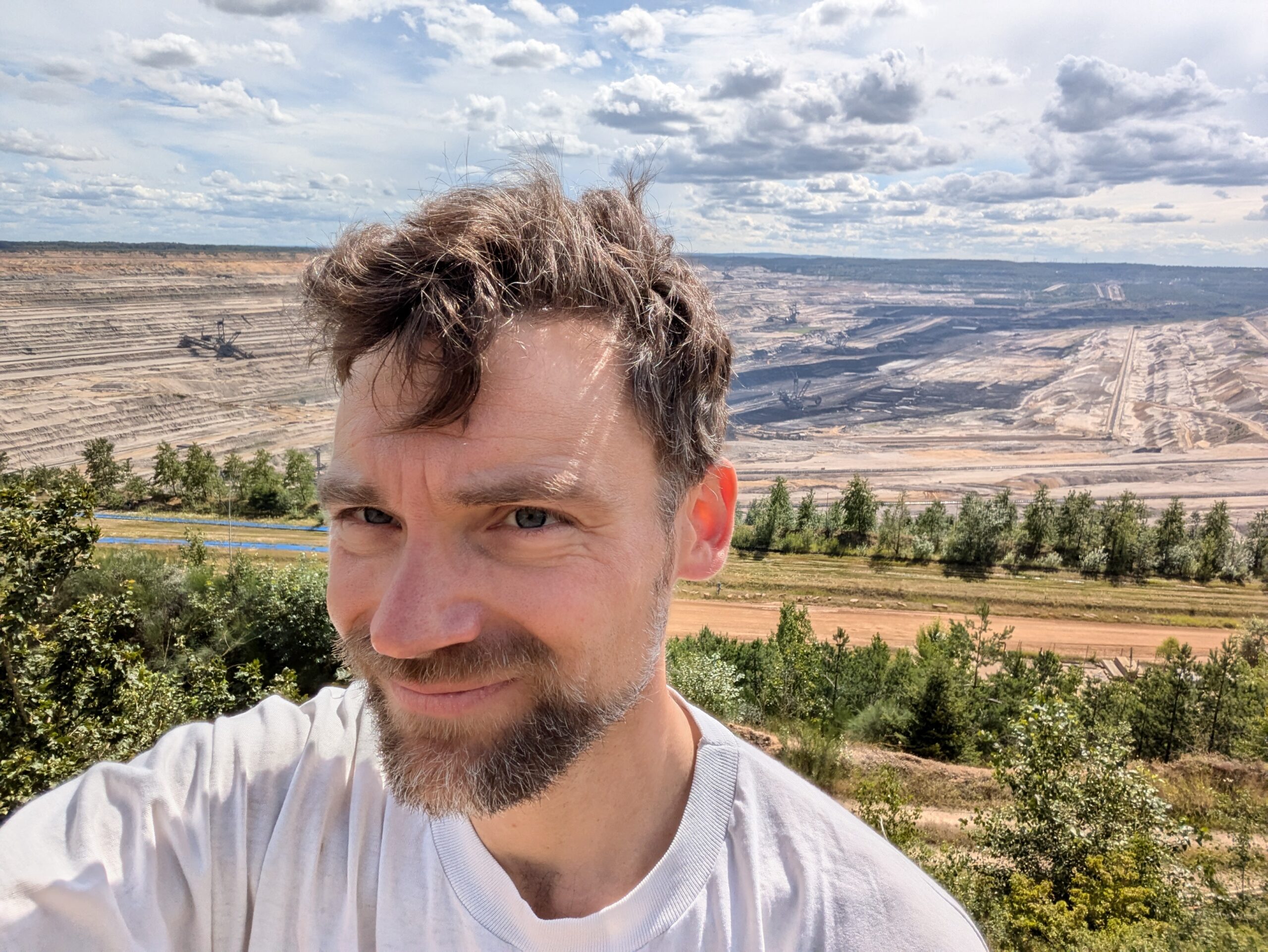
This academic year I am enjoying a twelve-month fellowship from the Heinrich-Hertz-Foundation, which fosters scholarship in the humanities that is related to the German state of North-Rhine-Westphalia. It is exciting to be in Cologne: an ancient and fascinating city! My research actually concerns an area just west of Cologne, where enormous craters (as deep as 450 meters) are getting carved out by dinosaur-sized machines so that the industrial economy has access to brown coal. This has been going on for decades, in particular to fuel a chemical industry that has polluted some of the streams, notably a little creek called the Duffesbach.
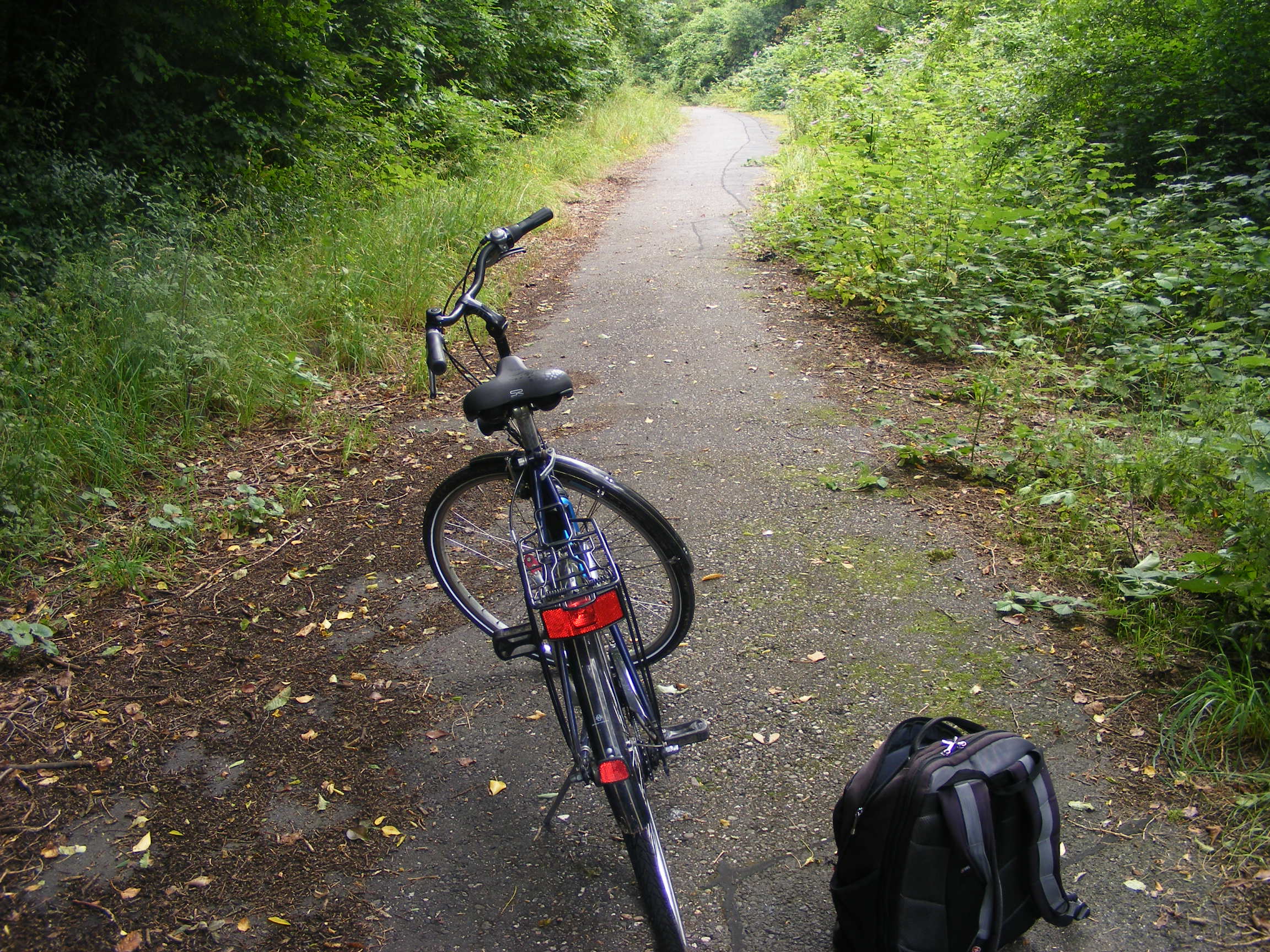
This is a “zombie creek,” as we might call it, because since the 1960s it has been canalized and hidden, even though it was the only waterway to go through Cologne’s city walls and power medieval mills in the old town before going into the Rhine. Bicycling along the former route of the creek was somewhat depressing. There is just cement in the city. Then in the first suburbs, you start to see a biologically dead canal here and there, until it ends at a chemical plant. The village next to that chemical plant—called Knapsack—disappeared in the early 1970s. It was torn down and evacuated, because the pollution was so bad. I had the chance in recent years to talk to many of the industrial workers and last surviving residents who knew what that place was like. The former village cemetery is still hidden behind some warehouses on old village land, because no one wanted to pay to move the graves. It’s a peaceful and somewhat surreal “lost place.”
Knapsack turned into a case study that I compared with a village south of Leipzig in East Germany that was also slated for destruction because of the same industries. Why did the West German village get destroyed? Why did the East German one survive? What does this tell us about the relationship between citizens and the state in each place? Between the local, the national, and the global? I’m honored that the Journal of Modern History wants to move ahead with my article. Most recently, I have been commuting by train up to the state archive in Duisburg to see troves of files. I’ve also visited county archives, city archives, and materials people have stowed in their attics. The history I am writing about the creation of these coal pits, the devastation of villages, the attempts to recultivate brave new landscapes, the fraught memory cultures, and evolving protest movements against coal devastation are all juxtaposed against the story in former East Germany south of Leipzig: a devastated cultural landscape I know intimately well after twenty years of research there on various projects, and where the same dirty fuel was excavated with the same technologies from a moonscape of coal pits.
Indeed, simultaneous to this enormous environmental history project on the politics of coal pits in East and West Germany, I’m also writing a new history of the 1989 Revolution and “Wende” transformations of the 1990s from the perspective of Leipzig—the “capital” of the Peaceful Revolution before the Fall of the Wall—with emphases on environmental movements and the restoration of devastated urban spaces. This story of urban patriotism and revolution needs to get completed this year so that it can come out with an academic press in time for 2029—the 40th anniversary of the revolution—and 80 years after the founding of East Germany. After experiencing the outbreak of revolutions in Tbilisi in Fall 2024 and watching the rise and fall of revolutions elsewhere against tyranny, the historical context, progression, and outcome of 1989 looms large, as does the historical “uses” of it, often by those who spin 1989 and the 1990s as something of a tragedy today, rather than an overcoming of repression. To that end, a great deal of my research is exploring the 1990s and 2000s. The time is ripe to study these decades, because the witnesses are retiring, even dying out, and their materials are seldom going into archives, even though especially in post-communist states this was the era I which the “world we live in now” was being made.
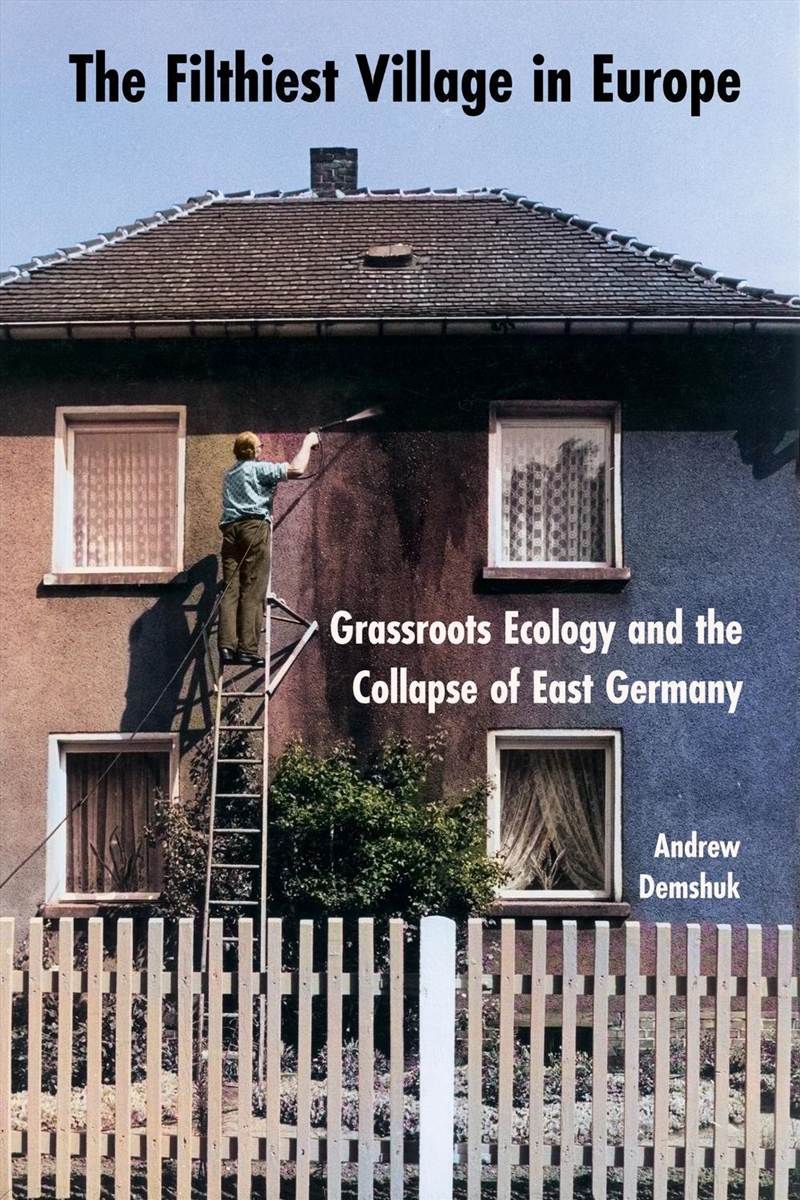
This was an experience I also appreciated when I researched my book The Filthiest Village in Europe: Grassroots Ecology and the Collapse of East Germany, which just came out with Cornell University Press! As an outsider exploring these eras and having a chance to interact with witnesses who have never been questioned before, I was able to gather unique materials for that project that broke down stereotypes to show how East Germans and West Germany creatively worked together to build a better world after 1989. Ordinary people in often obscure retirement places often have remarkable materials, and I feel deeply grateful for this time to immerse. Right now I’m off to Berlin for two days to meet colleagues and enter the home of a retired architect who has 86 binders of photos, blueprints, and photos about a failed project to create the ecological urban garden of tomorrow in immediate post-1989 Leipzig. He was a West German. His partners were East German. The story narrates much about what was possible but also sometimes risky in the 1990s, based on the ambitions and sometimes frailties of complicated human beings. History gets messy at the biographical level. But it really comes to life too!