History Majors Showcase Their Research in Annual “History Day” Event

On April 22, the AU History Department hosted its annual “History Day” event in which history majors present the results of their senior thesis research project. This year seventeen students presented on a wide range of historical topics, ranging from the Viking Age slave trade (Maria Guinle Serpa) to race and media in the American Basketball Association (Thomas Arensdorf). The full-day event brought more than fifty students and faculty in attendance, with presentations organized into four different panels defined by a distinct theme: “Imperialism and Commerce,” “Gender & Power,” “War & Politics,” and “Memory, Culture, and Community.” 

Eryn Mikulicz presents the results of her research on nostalgia for the German Democratic Republic among “the last East German generation” born in the 1970s.

One of the many highlights of the event was Eryn Mikulicz’s presentation during the fourth session, “Growing Up in the German Democratic Republic: Ostalgie in the Last East German Generation.” Drawing upon a wide range of memoirs written by authors of “the last East German generation” (i.e., those born in the 1970s) and working under the tutelage of Prof. Mary Frances Giandrea, Mikulicz was able to show a surprising degree of nostalgia for the oft-vilified German Democratic Republic in the decades after its dissolution. “I studied abroad in Berlin last spring, and that sparked my interest in all things East Germany,” Mikulicz said. “Given that German reunification is a relatively recent historical event, I really appreciated that Prof. Giandrea trusted me to work on the topic, especially since few Americans are familiar with the complicated memory politics in the former German Democratic Republic.” 

The third session featured five excellent presentations, including William Preston’s talk on “U.S.-Czechoslovak Relations: The 1918 September Declaration as a Turning Point.” Preston’s interest in the topic was originally inspired in part by a 2023 video game, Last Train Home, which catalogs the journey of the Czechoslovak Siberian Legion to Vladivostok during the Russian Civil War. Part of the challenge, Preston says, was finding a research angle on the Czech Legion that was both new and accessible through English-language archival material. Halfway through the research process, Preston realized he would need to pivot to a focus on U.S.-Czechoslovakian relations after World War I. “While this pivot definitely worried me at the time,” Preston recalls, “it turned out to be a great decision that let me dig into a topic I had no real concept of. That made it much more interesting when I eventually honed in on the September 3 declaration and how many of the sources I investigated seemed to revolve around it both before and after.”

William Preston presents his research on U.S.-Czechoslovak relations after World War I to an attentive audience in the Battelle-Tompkins Atrium.
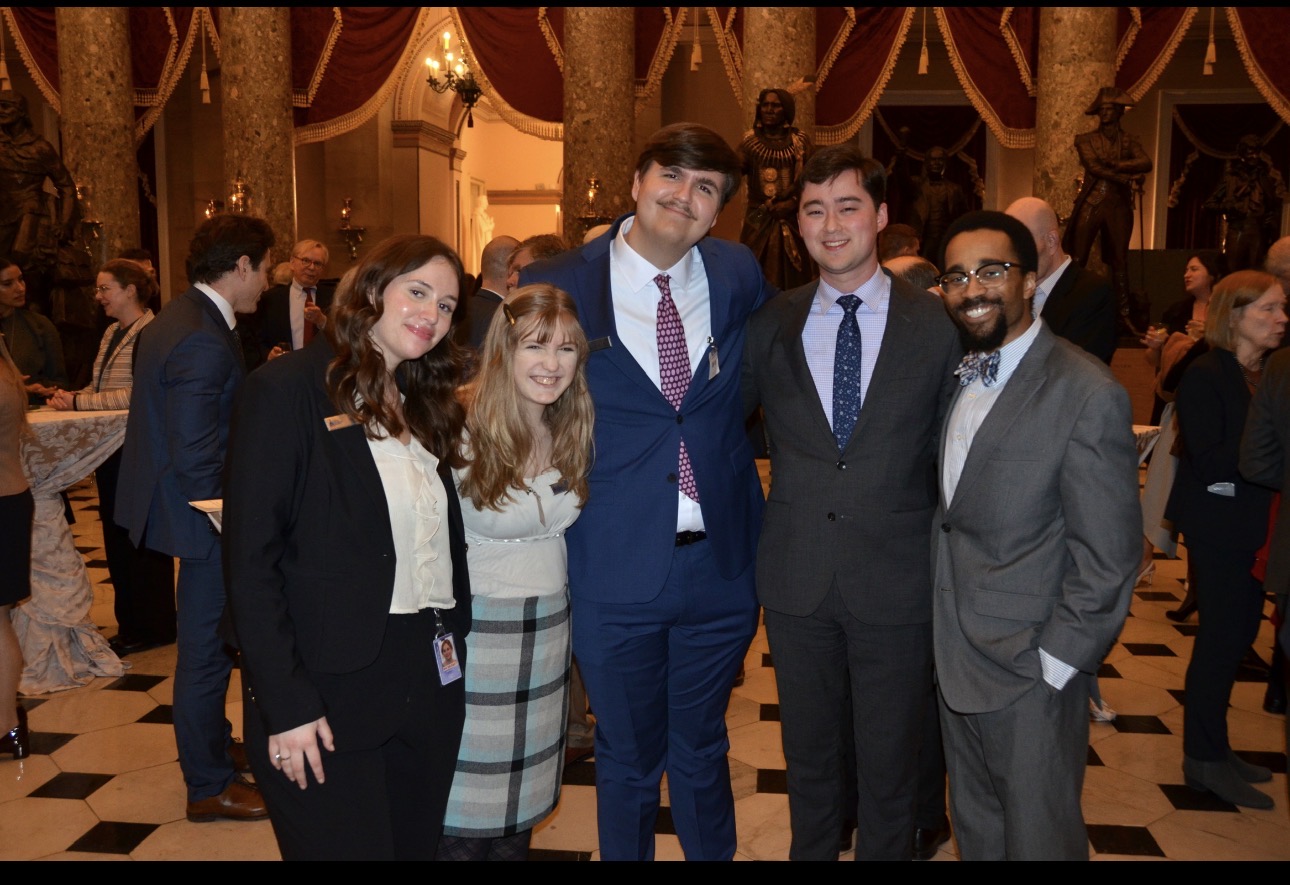
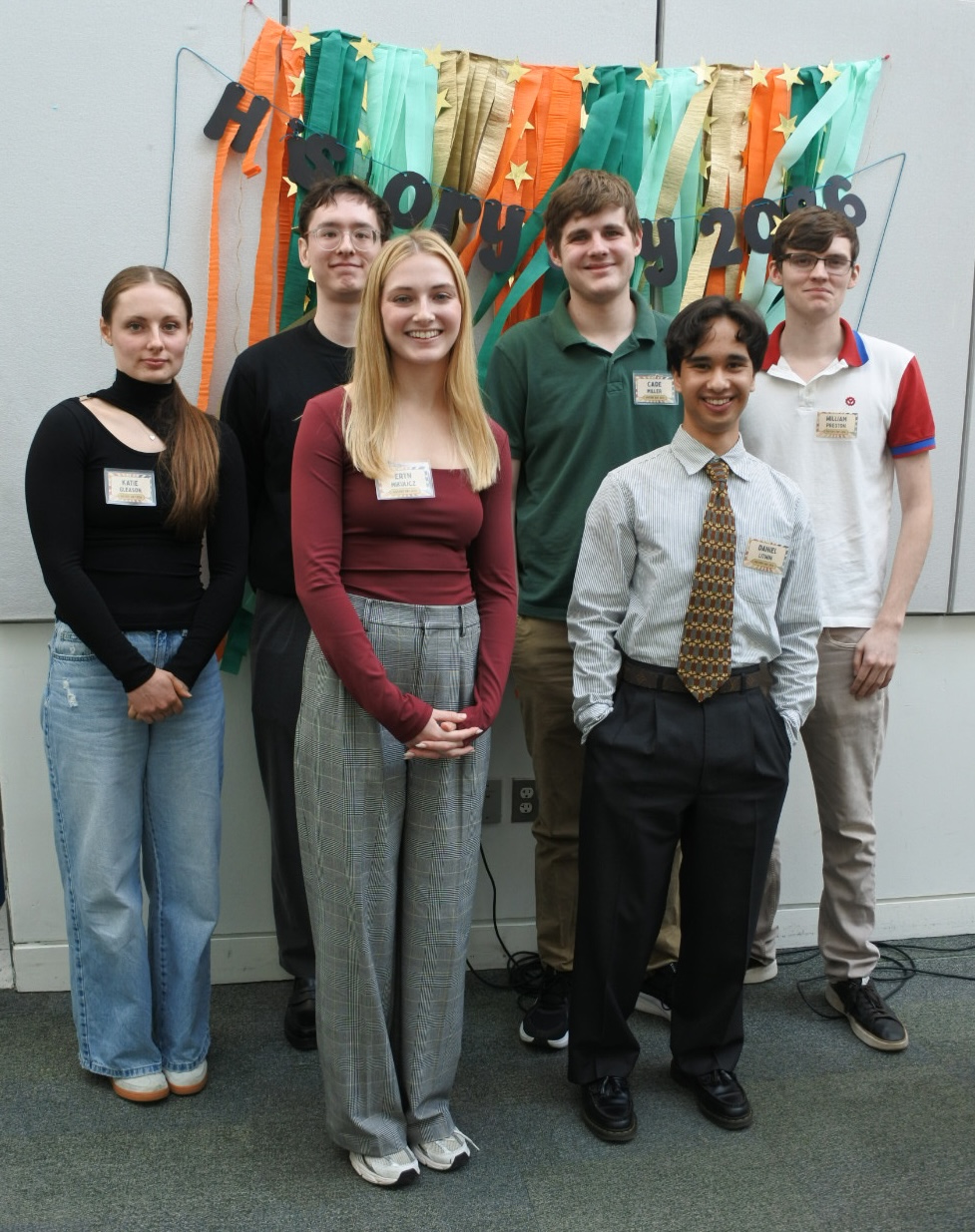
Presenters from Sessions 3 and 4 (from left): Katie Gleason, Thomas Arensdorf, Eryn Mikulicz, Cade Miller, Daniel Litwin, and William Preston.

Among the audience were many members of the AU faculty, who look forward every year to seeing the final results of intensive undergraduate research projects that often span several semesters and even years. According to department chair Max Paul Friedman, History Day represents the pinnacle of the undergraduate history experience. “For many students,” he said, “this is the high point of their college experience: not just absorbing history written by others, but conducting original research that adds to our knowledge of the past. I always learn so much each year! Their analytical and interpretive work is great preparation for a range of careers and graduate school too.”

Brandenburg Lecture and Awards Ceremony Celebrates 250 Years of American History

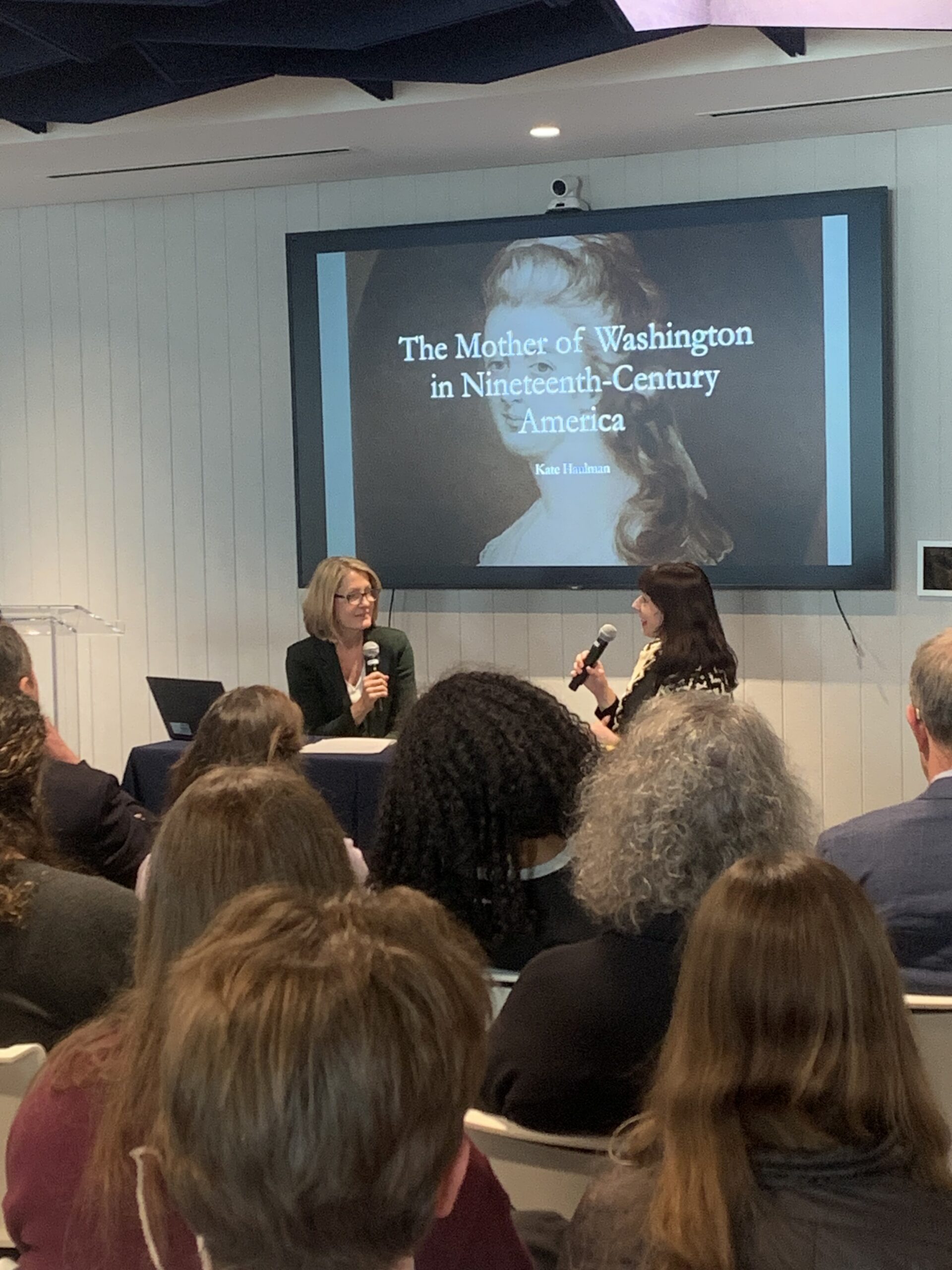
Profs. Kate Haulman and M.J. Rymsza-Pawlowska of the AU History Department engage in a lively discussion about the legacy of Mary Washington and the 250+ initiative.

by Osaevbie Samson

On April 8th, the Department of History hosted the annual Brandenburg Lecture and History Awards Ceremony. The awards ceremony honored new inductees to Phi Alpha Theta (the largest history honor society), recipients of the Anna Kasten Nelson Award for Excellence in History, and the two winners of the Dorothy Gondos Beers Scholarship: Julian Weiss and Scarlett Prendergast, who were recognized for their outstanding academic achievements and stellar GPAs. The Brandenburg Lecture is a part of 250+ at American, a campus-wide initiative that recognizes and celebrates 250 years of America through reflection and conversation. 

This year’s featured speaker was Kate Haulman, Professor of History at AU, who talked about her most recent book, The Mother of Washington in Nineteenth-Century America (Oxford University Press, 2025). Dr. Haulman’s research focuses on the history of early America, women’s and gender history, and public history. Her first book, The Politics of Fashion in Eighteenth-Century America (University of North Carolina Press, 2011), won the Berkshire Conference First Book Prize. The event also included a conversation with fellow AU history professor M.J. Rymsza-Pawlowska, a public historian of the 19th and 20th century and author of History Comes Alive: Public History and Popular Culture in the 1970s (University of North Carolina Press, 2017). Among the more than fifty attendees were a large number of AU students, whom Dr. Haulman paid tribute to during her opening remarks. “Among those who make this possible, of course, are our students,” she said. “They are really at the heart of what we do here.”

Rymsza-Pawlowska began the conversation that followed Haulman’s engaging presentation with a simple question: “Why Mary Washington?” Haulman explained that she initially considered writing a traditional biography but discovered that two biographies had already been published in recent years, and was also interested in the history of the Mary Washington Monument in Fredericksburg, Virginia. This caused her to move in the direction of how Mary’s story had been told over time, in her public memory. “There isn’t just one Mary Washington,” Haulman noted, pointing out that each version has expressed the cultural and political priorities of some groups  in which it was written, reflecting contests over motherhood. 

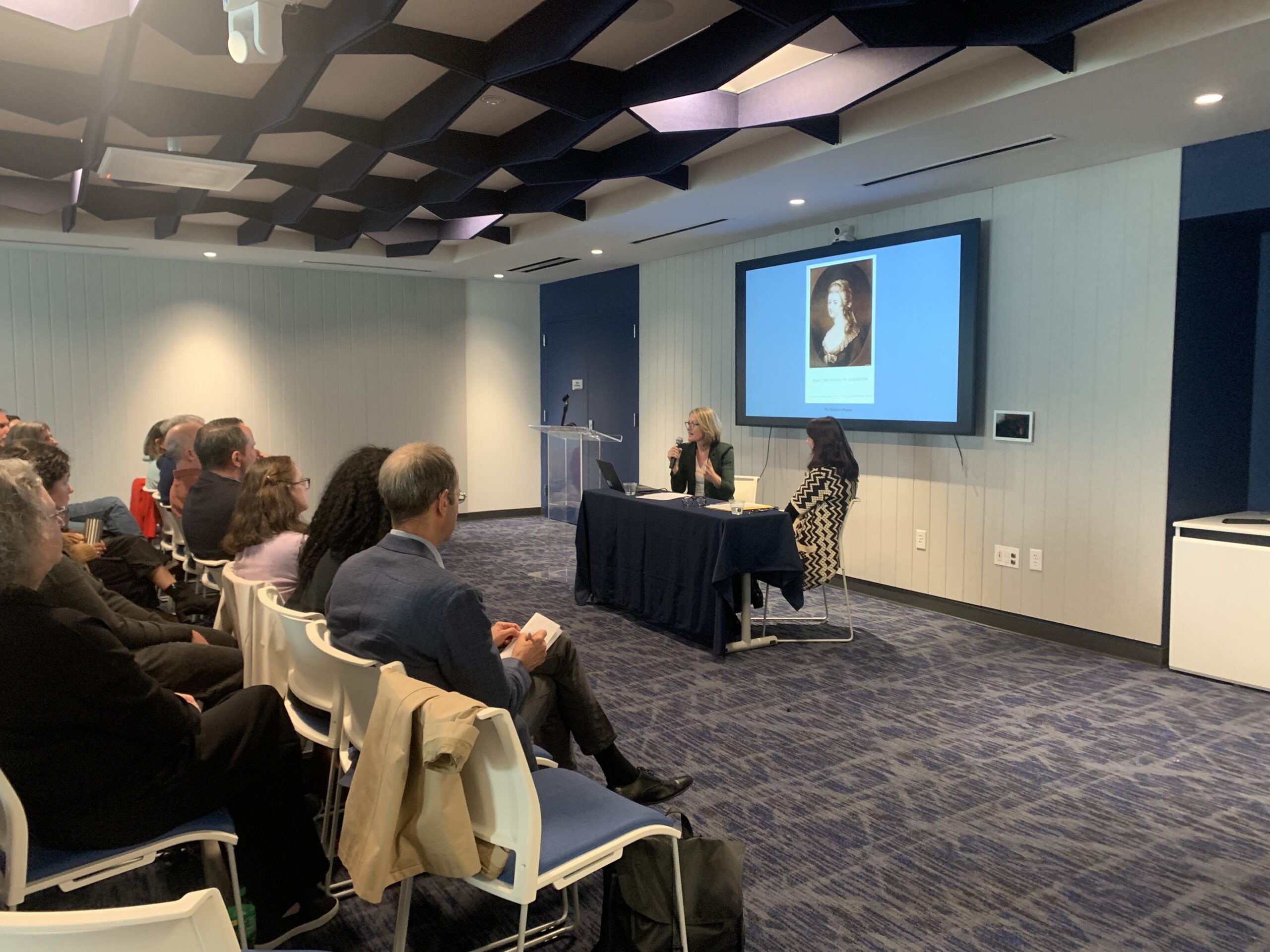
The Brandenburg Lecture and History Awards Ceremony had a stellar turnout, with more than fifty students, faculty, and alumni in attendance.

Throughout the conversation, Haulman also highlighted the broader implications of public memory, particularly through monuments and historical storytelling. She explained that monuments are not neutral representations of the past, but that they “reflect the values of the people who build them.” This insight offered a new way of viewing Mary Washington, whose legacy has been shaped by those seeking to define American identity, in part through certain visions and versions of motherhood. The discussion brought out the importance of questioning dominant historical narratives and recognizing the role of interpretation in our understanding of the past, challenging audiences to reconsider how and by whom history itself is constructed.

– Osaevbie Samson is a student communications assistant for the department and a freshman studying Political Science and Public Relations & Strategic Communications

AU History Major Explores Her Cuban Roots as a Smithsonian Intern

Martha Garcia, an AU history major who will graduate this spring, gained valuable hands-on experience organizing public outreach events, programs, and exhibits during her internship at the Smithsonian National Museum of American History.

Having been born and raised in Cuba until the age of seven, Martha Garcia has always had a strong interest in the history of revolutions, decolonial movements, and Latino culture. “Ever since I was young, my grandpa was really into history and I suppose that rubbed off on me,” she says. In Fall 2026, Garcia, who will graduate with a degree in history this semester, had the invaluable opportunity to work as an intern in the Program in Latino History and Culture, Audience Development, at the Smithsonian National Museum of American History (NMAH). Under the guidance of Magdalena Mieri, director of the Program in Latino History and Culture, Garcia assisted with the development of new museum exhibits and activities that added Latino histories and stories to the Center’s current and upcoming exhibits. “My job was basically to try and connect Latino religious trends to tangible and visible activities at the museum, in order to show that religion is everywhere.” 

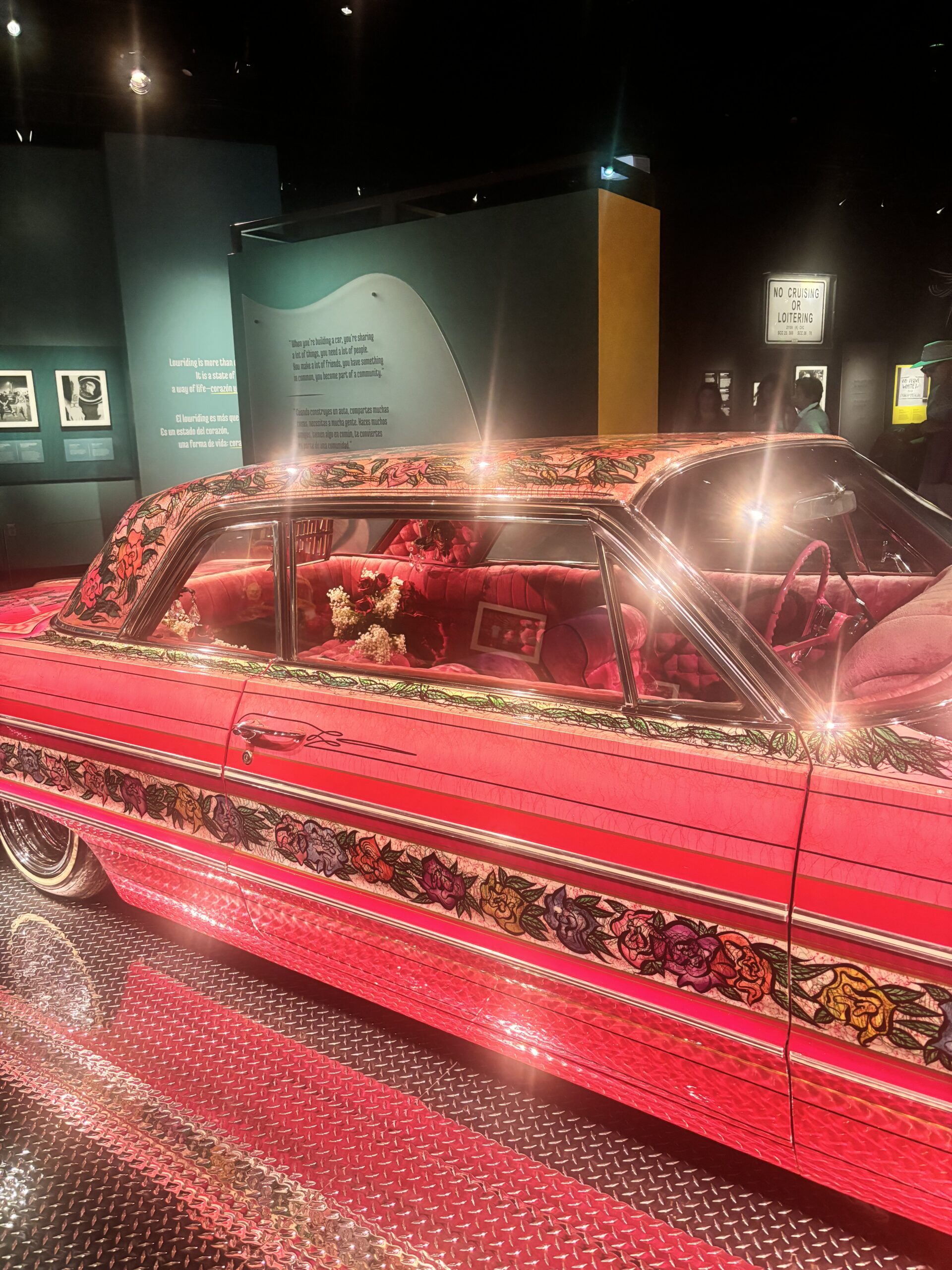
One of the programs Garcia helped organize and run was the “Lowriding Family Festival” in September 2025.

Working around her schedule of classes at AU, Garcia spent approximately 16-20 hours per week at the NMAH, helping out with events such as the “Lowriding Family Festival,” which showcased the artistic expression, technological innovations, and storytelling of Latino lowriders in American culture. Later, she undertook significant research on the syncretic Afro-Caribbean religion of Santería in hopes of laying the groundwork for a future museum program that would incorporate the sacred rhythms of the distinctive drummers who feature in its religious ceremonies. “I reached out to local drummers and connected them with Magdalena,” Garcia says. “In the future my hope is that the museum might be able to bring them in for an exhibit that will engage a public audience through a drumming performance.” Garcia had nothing but praise for her colleagues and supervisors at NMAH. “They really cared for the interns that they were working with and wanted to connect us with as many people as possible.” 

Garcia admits that she was never particularly interested in the study of religion until she started taking AU history courses that focused on the religious aspects of history, such as those taught by Prof. Partovi (Islam and the Middle East) and Prof. Fedyashin (Russian Orthodoxy). She also singles out Prof. Stockreiter’s courses on Africa and her close attention to sources and material culture. “She always had us looking at primary sources and really helped guide us in the research process,” Garcia says. One of her most memorable projects was to visit a Smithsonian museum and examine the cultural artifacts up close, attempting to place them in their appropriate cultural and political contexts. “That experience really helped when I later had to go into the museum’s archives during my internship to look at religious artifacts, see when they were produced, how they were used, and what they meant to society at the time.” Being able to take such a wide variety of history classes at AU, Garcia says, “allowed me to find my passion in history and center my internship in topics that interested me.” 

AU Doctoral Student and Smithsonian Archivist Publishes New Book on Native American Anthropologists

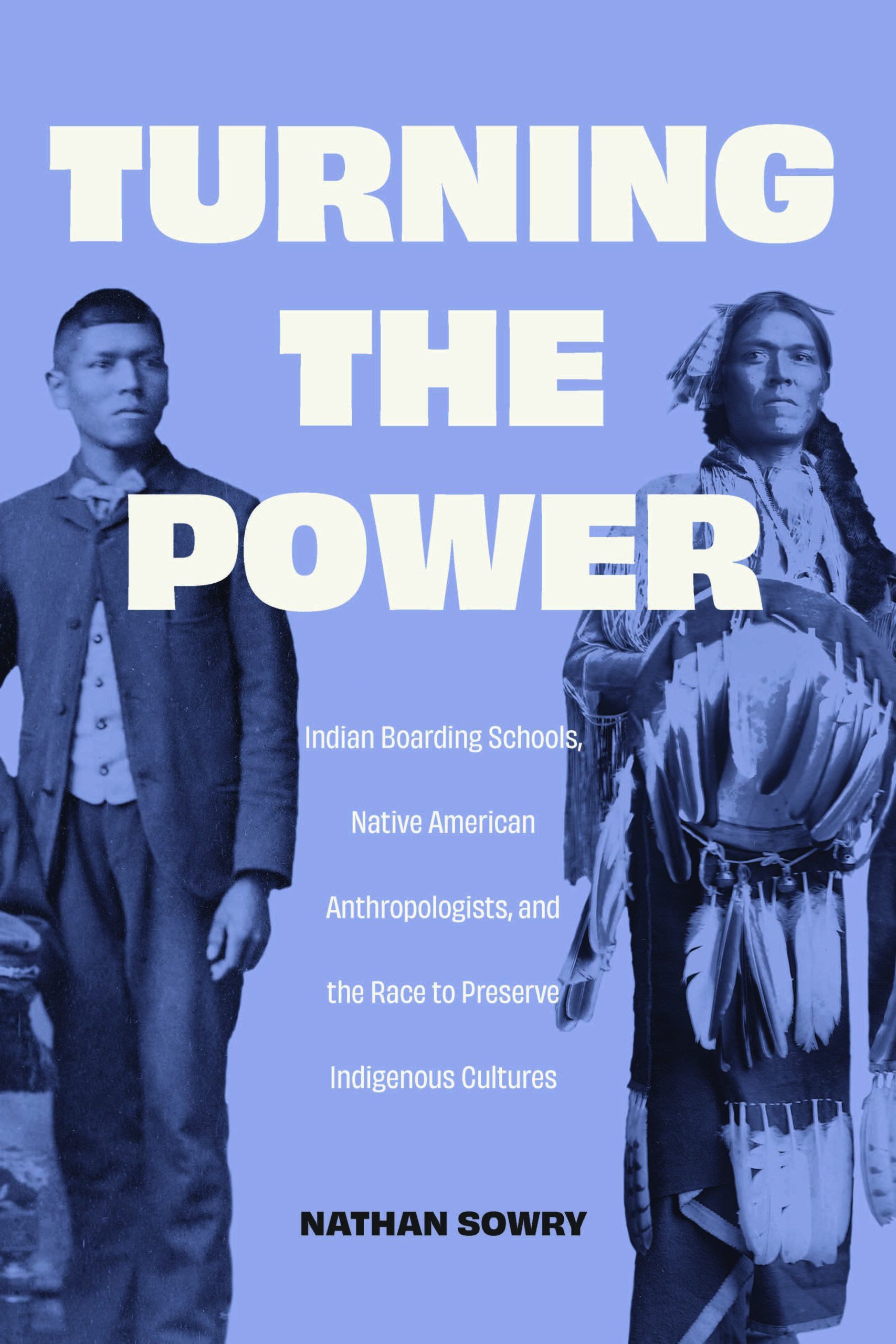
Nathan Sowry first began his doctoral studies in AU’s History Department in Fall 2015, working under the tutelage of Profs. Dan Kerr, Kate Haulman, and Malgorzata Rymsza-Pawlowska. Just one decade later—a quick turnaround time in this field—the fascinating results of his research have been published in a new book: Turning the Power: Indian Boarding Schools, Native American Anthropologists, and the Race to Preserve Indigenous Cultures (University of Nebraska Press, 2025). In this intriguing study, Sowry examines the lives of some ten little-known Native American figures who were forced into the assimilationist boarding school system of early twentieth-century America, only to emerge later as key informants for some of the first anthropological treatments of their Indigenous cultures. “All of them faced racism and abuse in Indian boarding schools that taught them to abandon their cultures,” Sowry said. “Then later all of them to varying degrees of success attempted to embrace and popularize the beauty of their cultures but were written out of the literature. I wanted to do what I could to tell their stories, which haven’t been told before.”

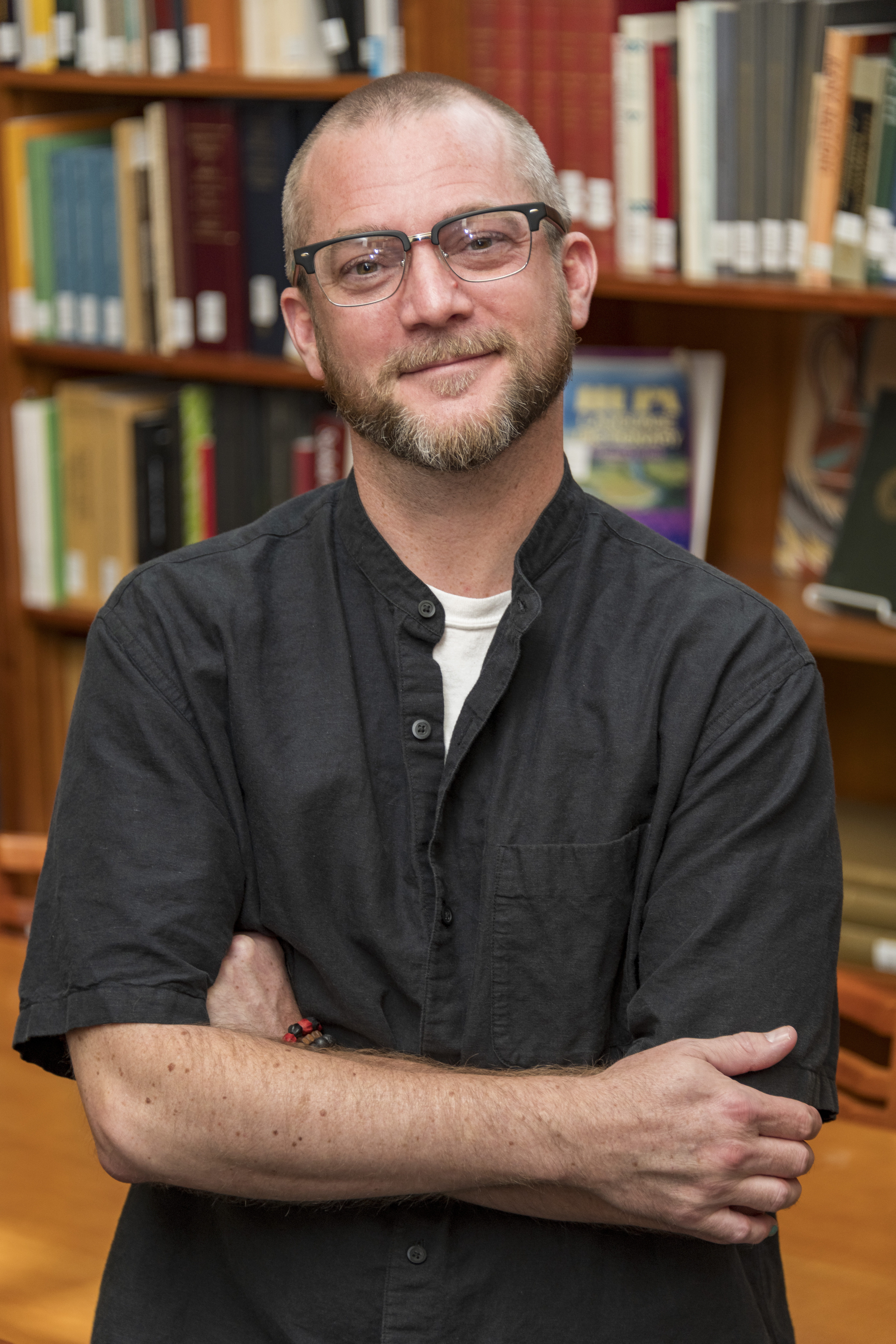
Nathan Sowry, who completed his doctoral degree in history at AU, now works as a reference archivist at the National Museum of the American Indian.

Like many students, Sowry viewed AU as an attractive place to pursue his studies due to its stellar faculty and close proximity to many of the nation’s premier museums and archives. Sowry has long enjoyed working in the world of museums and archives, first at the Smithsonian Museum of African Art on the National Mall and now in the archives of the National Museum of the American Indian in Suitland, Maryland. As a reference archivist, Sowry works mostly behind the scenes helping to identify, preserve, and facilitate access to objects in the collection. “I thought that archives would involve working in a dusty basement full of cobwebs everywhere, and that’s sort of what I was hoping it would be,” he says. “But my job is much more public-facing than I thought it would be, and I’ve really come to enjoy that aspect of the work.” In addition to working with researchers who visit the archives, Sowry also helps Native American visitors who come to the facility to interact with the cultural belongings of their ancestors. “I thought I was an introvert and wanted to hide from everyone, but the public liaison part of my job has turned out to be really rewarding.” 

Sowry’s own research has provided new and valuable perspectives on the lives of Native American intermediaries in the early twentieth century who found themselves caught between two worlds. One particularly intriguing profile that Sowry analyzes in Turning the Power focuses on Florence and Louis Shotridge, a Tlingit couple from Alaska. “I think Florence represents a really unique case because there were so few female Native anthropologists,” he says, “and there were so few opportunities that existed for Native peoples off of reservations.” In order to advocate for their community and preserve what remained of their culture, Florence and her husband made the difficult decision to dress up in Plains Indian clothing during public engagement sessions in Pennsylvania and Los Angeles—not what Alaska Natives wore, but rather what the general public expected “real Indians” to wear. “It’s almost bittersweet to get their perspectives on how they had to portray Native peoples just to get an audience and be able to get out there and talk about their culture, for better or worse.”

AU History Professor Undertakes Environmental History Research Near Cologne, Germany

Editor’s Note: In this fascinating post, AU History Professor Andrew Demshuk discusses his recent experiences conducting research on the environmental history of so-called “lost cities” in Germany.

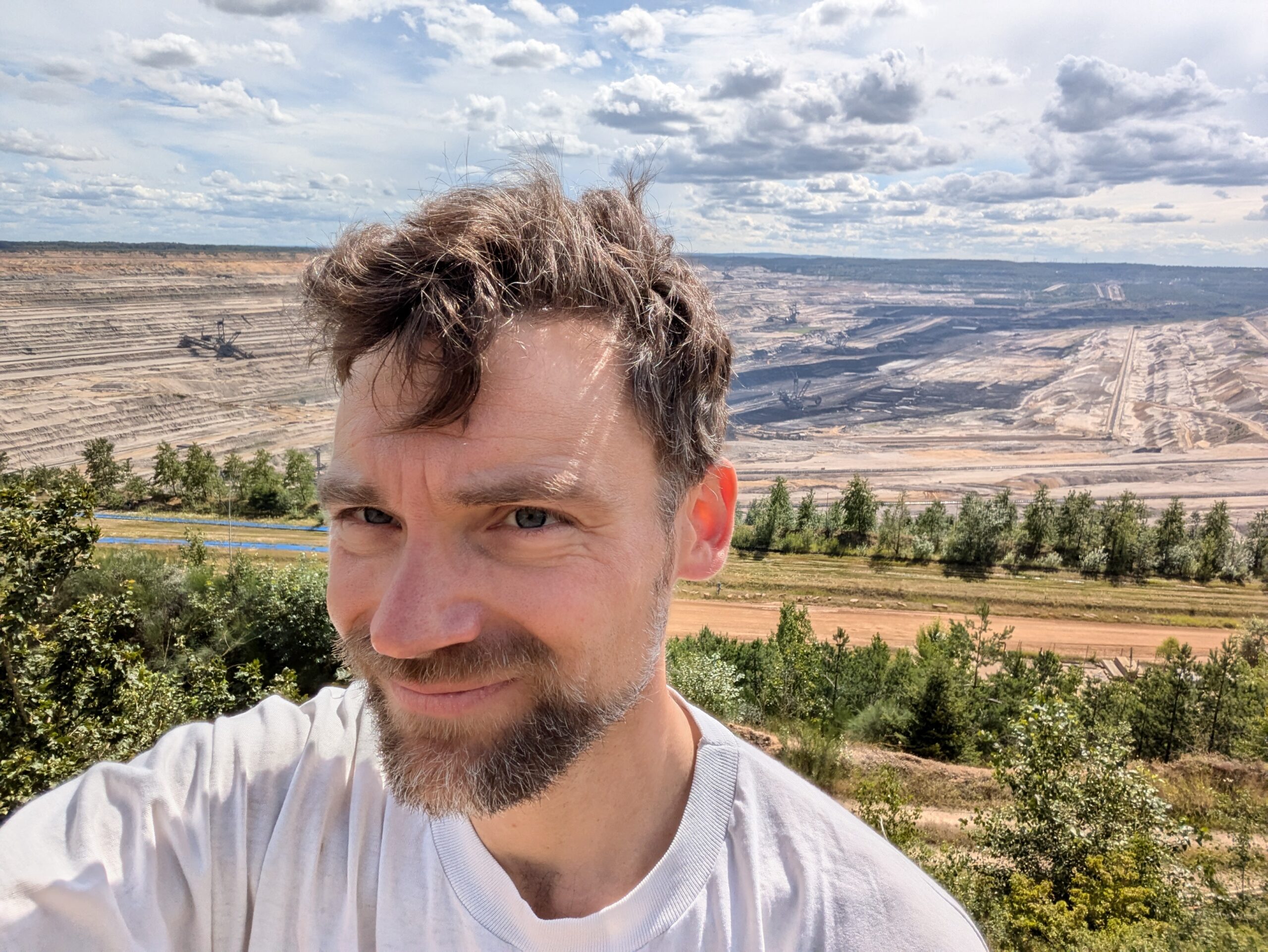
Prof. Demshuk visits the Hambach Brown Coal Pit Mine (450 meters deep!) west of Cologne

This academic year I am enjoying a twelve-month fellowship from the Heinrich-Hertz-Foundation, which fosters scholarship in the humanities that is related to the German state of North-Rhine-Westphalia. It is exciting to be in Cologne: an ancient and fascinating city! My research actually concerns an area just west of Cologne, where enormous craters (as deep as 450 meters) are getting carved out by dinosaur-sized machines so that the industrial economy has access to brown coal. This has been going on for decades, in particular to fuel a chemical industry that has polluted some of the streams, notably a little creek called the Duffesbach. 

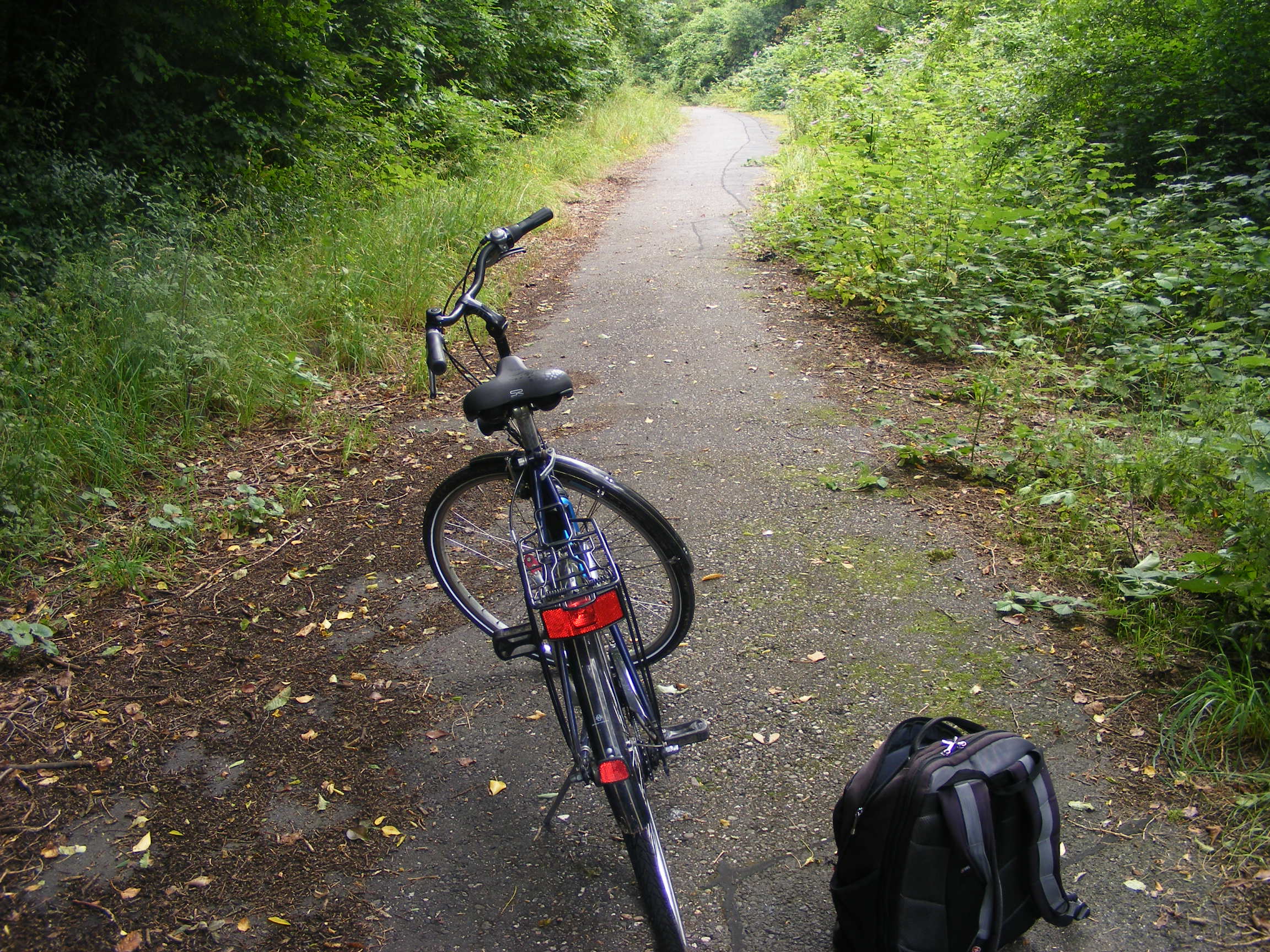
This is a “zombie creek,” as we might call it, because since the 1960s it has been canalized and hidden, even though it was the only waterway to go through Cologne’s city walls and power medieval mills in the old town before going into the Rhine. Bicycling along the former route of the creek was somewhat depressing. There is just cement in the city. Then in the first suburbs, you start to see a biologically dead canal here and there, until it ends at a chemical plant. The village next to that chemical plant—called Knapsack—disappeared in the early 1970s. It was torn down and evacuated, because the pollution was so bad. I had the chance in recent years to talk to many of the industrial workers and last surviving residents who knew what that place was like. The former village cemetery is still hidden behind some warehouses on old village land, because no one wanted to pay to move the graves. It’s a peaceful and somewhat surreal “lost place.” 

Prof. Demshuk’s bike ‘Siegfried von Weidenhausen’ on a street in the center of the vanished village of Knapsack near Cologne

Knapsack turned into a case study that I compared with a village south of Leipzig in East Germany that was also slated for destruction because of the same industries. Why did the West German village get destroyed? Why did the East German one survive? What does this tell us about the relationship between citizens and the state in each place? Between the local, the national, and the global? I’m honored that the Journal of Modern History wants to move ahead with my article. Most recently, I have been commuting by train up to the state archive in Duisburg to see troves of files. I’ve also visited county archives, city archives, and materials people have stowed in their attics. The history I am writing about the creation of these coal pits, the devastation of villages, the attempts to recultivate brave new landscapes, the fraught memory cultures, and evolving protest movements against coal devastation are all juxtaposed against the story in former East Germany south of Leipzig: a devastated cultural landscape I know intimately well after twenty years of research there on various projects, and where the same dirty fuel was excavated with the same technologies from a moonscape of coal pits. 

Indeed, simultaneous to this enormous environmental history project on the politics of coal pits in East and West Germany, I’m also writing a new history of the 1989 Revolution and “Wende” transformations of the 1990s from the perspective of Leipzig—the “capital” of the Peaceful Revolution before the Fall of the Wall—with emphases on environmental movements and the restoration of devastated urban spaces. This story of urban patriotism and revolution needs to get completed this year so that it can come out with an academic press in time for 2029—the 40th anniversary of the revolution—and 80 years after the founding of East Germany. After experiencing the outbreak of revolutions in Tbilisi in Fall 2024 and watching the rise and fall of revolutions elsewhere against tyranny, the historical context, progression, and outcome of 1989 looms large, as does the historical “uses” of it, often by those who spin 1989 and the 1990s as something of a tragedy today, rather than an overcoming of repression. To that end, a great deal of my research is exploring the 1990s and 2000s. The time is ripe to study these decades, because the witnesses are retiring, even dying out, and their materials are seldom going into archives, even though especially in post-communist states this was the era I which the “world we live in now” was being made. 

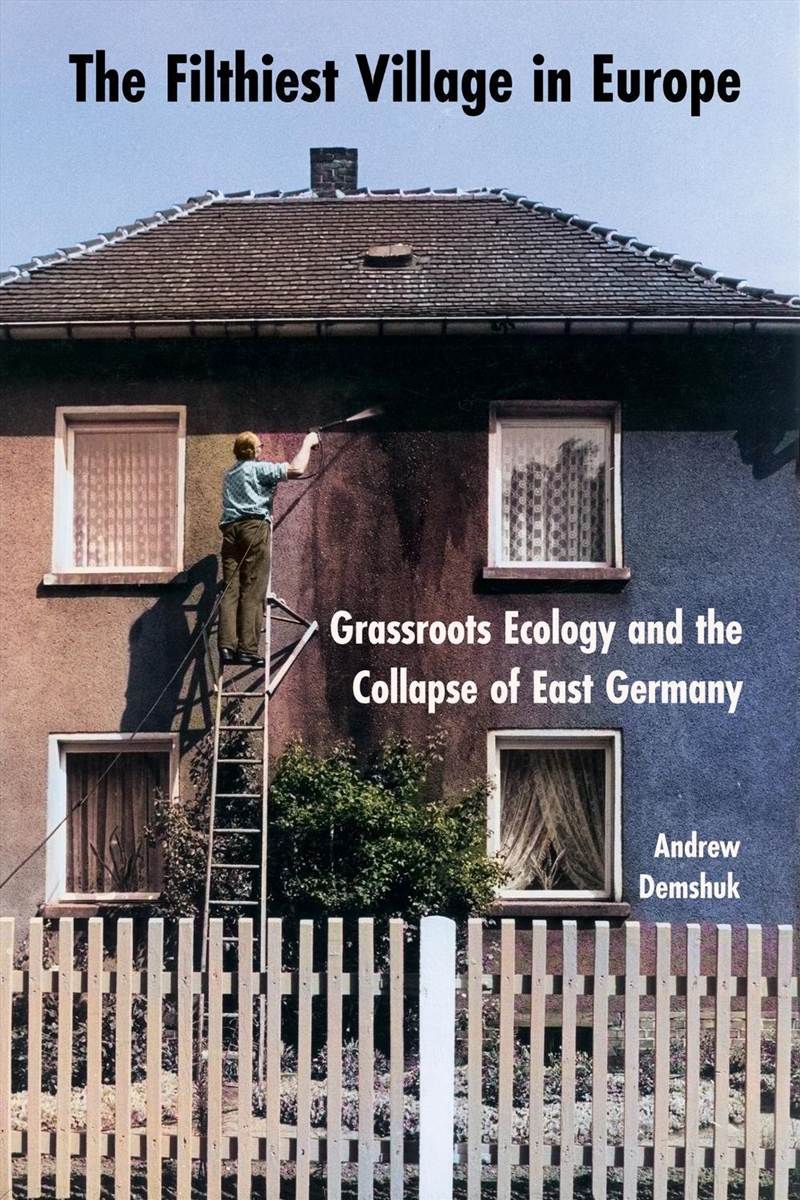
The cover of Prof. Demshuk’s most recent book, The Filthiest Village in Europe: Grassroots Ecology and the Collapse of East Germany (Cornell University Press, 2026).

This was an experience I also appreciated when I researched my book The Filthiest Village in Europe: Grassroots Ecology and the Collapse of East Germany, which just came out with Cornell University Press! As an outsider exploring these eras and having a chance to interact with witnesses who have never been questioned before, I was able to gather unique materials for that project that broke down stereotypes to show how East Germans and West Germany creatively worked together to build a better world after 1989. Ordinary people in often obscure retirement places often have remarkable materials, and I feel deeply grateful for this time to immerse. Right now I’m off to Berlin for two days to meet colleagues and enter the home of a retired architect who has 86 binders of photos, blueprints, and photos about a failed project to create the ecological urban garden of tomorrow in immediate post-1989 Leipzig. He was a West German. His partners were East German. The story narrates much about what was possible but also sometimes risky in the 1990s, based on the ambitions and sometimes frailties of complicated human beings. History gets messy at the biographical level. But it really comes to life too!

Student-Run Historical Journal Making An Impact at AU

The cover of the Fall 2025 issue of Khaldun, which features five fascinating articles researched and written by AU undergraduate students.

Lovers of history will be delighted to learn about a new scholarly journal run almost entirely by a dedicated group of AU undergraduate students: The Khaldun Journal of Historical Studies. Originally founded by AU history major Riley Wells in 2024 as the William H. Carney Historical Review, the journal has since been renamed after Ibn Khaldun, a prominent 14th-century Arab and Muslim scholar and philosopher. According to AU junior Sri Vellakkat, who currently serves as editor-in-chief of Khaldun, “he represents a global-minded perspective that is appropriate for a global-minded school, and it is important to pay homage to those who came before us, especially those who have not been truly acknowledged in popular culture.” 

Sri Vellakkat, a junior SIS major, currently serves as editor-in-chief of Khaldun.

Though grounded in history, Khaldun boasts a diverse editorial staff with a wide range of intellectual interests, as is evident from the fact that Vellakkat himself is an SIS major who studies American foreign policy and national security. “CAS and SIS should be interconnected much more than they are,” Vellakkat says, “since there is so much overlap with history that people in both disciplines need to be aware of. Not only that, but they work together in brilliant ways.” Apart from Vellakkat, many of the journal’s lead editors are history majors, such as Martha Garcia, who currently serves as business editor. “I’ve always been a really curious person,” Garcia says, “and I like to get out of my sphere of knowledge to get new perspectives on topics I hadn’t thought about before. Just being in a space with other people who enjoy history, regardless of their background, is really nice.”

Martha Garcia, a senior history major, currently serves as business editor of Khaldun.

The editors of Khaldun welcome submissions from any AU student with a passion for history—March 22 is the deadline for Spring 2026 submissions. Each submission undergoes a rigorous process of review, led by a lead editor and a small group of 3-4 staff members. The editor-in-chief assigns each group a submission to review, along with a preferred timeline. “Each member of the group will then read the submission and discuss what sort of suggestions, comments, and edits we want to send back to the author,” says Garcia. “This process eventually enables us to determine which articles we want to move forward with.” The number of submissions has begun to grow in recent months, which Vellakkat sees as a promising sign of the journal’s visibility. “This upcoming issue will be the first in which we will publish articles by students that none of the editors know personally,” he says. 

The journal pays tribute to Ibn Khaldun, a prominent 14th-century Arab and Muslim scholar and philosopher.

Most of the editorial work of producing the journal is done asynchronously, which allows for greater flexibility with everyone’s busy schedules. Vellakkat estimates that he typically spends about 1-2 hours on the journal per week, but this can spike dramatically during the production crunch, reaching anywhere between 10-20 hours. Among the many tasks that have to be handled by Khaldun’s editorial staff are page layout and graphics, copyediting, and communication with the printer in downtown D.C. When all is said and done, about 125 copies of the print journal are distributed for free throughout campus. Issues are also available in electronic format on the journal’s website

In addition to the many students who bring each issue of Khaldun to fruition, Prof. Anton Fedyashin in the History Department serves as faculty advisor. “Dr. Fedyashin has been incredible to work with and always has time to meet with me and answer my questions,” Vellakkat says. As faculty advisor, Dr. Fedyashin has been a sounding board about strategic decisions at the journal. “I meet with Sri regularly and a lot of the staff have either been or are currently in my classes,” Fedyashin says. “But the students do everything by themselves, and the journal is entirely their achievement. The latest issue is so beautifully done that we have been handing out copies to prospective AU students and their parents during New Eagle events—that’s how proud the Department is of the students’ accomplishment.”

AU History Major Teaches High School Students How to Talk About the Holocaust

AU history major and graduating senior Annalise Vezina talks to Rose-Helene Spreiregen, a Holocaust survivor.

Having grown up in the Washington, D.C. area surrounded by many of the world’s premier museums, AU graduating senior Annalise Vezina always knew that she wanted to study history one day. “I went into college already knowing that I wanted to major in history,” she says. “There are just so many things to learn about, and the deeper you go you realize there is even more to learn.” Fluent in French, Vezina developed a passion for European history and the history of the Holocaust, which eventually led to a fascinating internship at the U.S. Holocaust Memorial Museum. “There are so few Holocaust survivors nowadays,” Vezina says. “You get to know them in a different way than you would just listening to testimony and writing papers about it.” Since June 2024, Vezina has worked as an intern for both the museum’s Youth and Community Programs and its Social Team. In this dual capacity, she leads weekend classes for high school students while also helping to create content for the museum’s social media platforms, among other responsibilities. 

As part of the “Bringing the Lessons Home” program at the U.S. Holocaust Memorial Museum, Vezina teaches high school students how to give a two-hour tour of the museum’s Permanent Exhibition.

One of her favorite programs is called “Bringing the Lessons Home,” in which she teaches high school students how to give a two-hour tour of the museum’s Permanent Exhibition, the same program she went through in ninth grade. “You can’t just inundate them with information, which can be very depressing,” Vezina says. “You have to be able to make a personal connection with them and find a way to get to the emotion of the topic at hand. Otherwise you will lose your audience.” The more she learns about the Holocaust, the harder it is to fit everything she wants to say into a two-hour tour. “Every year my tour of the Permanent Exhibition gets longer and longer because I learn more stories and contextualizing details that I want to tell. Then suddenly my tour was three hours long!”

Vezina’s duties with the Social Team include researching and writing content for the Museum’s social media accounts, such as Instagram and Facebook. “I love this type of work because it is very historically grounded and every piece of content goes through multiple rounds of review,” she says. The impact of her work can feel very different depending on the audience. With the museum’s social media accounts, Vezina’s work can reach a global audience. “The museum has about three million followers across all platforms,” she says, “so three million people or more will read whatever you’re posting.” In the classroom, however, Vezina works with approximately fifty high school students, spending five hours per day once a week over the course of fourteen weeks. Though her audience is smaller, the impact is more personal. “You can see the reactions of the students firsthand and watch them grow.” 

One of the many exhibits at the U.S. Holocaust Memorial Museum that Vezina integrates into her tours.

AU History Professor Awarded Guggenheim Fellowship

Laura Beers, a professor of modern British history in AU’s History Department, was awarded a Guggenheim Fellowship in 2025, one of many prestigious awards that her work has garnered in recent years. The Guggenheim Fellowship, which is highly selective, is intended to provide accomplished mid-career professionals with the financial support and freedom to work on projects that are meaningful to them. This is certainly the case with Prof. Beers, who is using her time as a Guggenheim fellow to work on her next book on the politics of assisted reproduction and surrogacy since the birth of the world’s first in-vitro fertilization (IVF) baby in Oldham, Britain in July 1978. Prof. Beers has written about her own personal experience with IVF and is widely sought out in media circles as an expert commentator on public debates about assisted reproductive technology, abortion, and perceptions of womanhood. 

The visibility of these issues and importance of Prof. Beers’ research on the history of public debates over IVF procedures has only grown in recent years. In 2023, it was estimated that twelve million children had been born via IVF worldwide, with nearly two percent of all live births in the United States the result of IVF and other artificial reproductive technologies. IVF is particularly common here in Washington, DC, where 1 in 15 babies born are conceived via IVF. Yet, as Beers notes, “policymakers have failed to come to terms with the ethical and social implications of assisted reproduction. The prominence of debates over IVF funding and the status of unborn embryos in recent years underscores the ongoing uncertainty about what role technologies like IVF, surrogacy, egg freezing and genetic testing should play in 21st century society.”

Prof. Beers’ Guggenheim Fellowship joins a long list of honors and recognitions that has been garnered by her groundbreaking work. Her latest book, Orwell’s Ghosts: Wisdom and Warnings for the Twenty-First Century (WW Norton), won the 45th Los Angeles Times Book Prize for Biography and was also named as one of the New Yorker’s “Best Books of 2024.” It was inspired in part by Prof. Beers’ own experience in the classroom with AU undergraduate students in her course HIST 235: “The West in Crisis, 1900–1945,” where Orwell’s texts and ideas constituted a major portion of intellectual debate and discussion. Orwell’s Ghosts is Prof. Beers’ third book, which follows up on the success of Red Ellen: The Life of Ellen Wilkinson, Socialist, Feminist, Internationalist (Harvard University Press, 2016), which received the Stansky Award for best book published in field of modern British history. 

Public History Student Curates Exhibits about AU’s Past

Sophia Moody, a second-year student in the Public History MA program at AU, has curated three fascinating exhibits during her time as an Outreach Fellow for the University Library’s Archives and Special Collections. Visitors to the first floor of Bender Library can take in 100 Years of Undergrad, which documents various aspects of AU student life during the first year of undergraduate classes in 1925–26. During the course of her research, Moody discovered that the first graduating class of undergrads a century ago consisted of just six students, who paid two hundred dollars a year for tuition. 

Second-year Public History MA student Sophia Moody in front of her 100 Years of Undergrad exhibit in Bender Library.

The exhibit she assembled for display includes precious mementos of their era, including an “Instructor’s Class Card,” an admissions application, and the original “Marshal’s Mace” used in the graduation ceremonies. Besides these fascinating artifacts, during the course of her research Moody also discovered a series of letters which revealed that AU’s chancellor had initially opposed admitting African-American students to the new undergraduate program. Through this research, she had to learn “how to present difficult aspects of an institution’s history,” Moody said. “I believe it is essential to present history in its full complexity—even when it reflects uncomfortable truths about an institution’s past.”

The exhibit also reveals what some members of the Class of 1926 did after graduation: Claude Hunter became an engineer with the Maryland State Roads Commission, Dorothea McDowell became the Executive Director of the YWCA in Syria and Lebanon, and Dorothy Quincy Smith became an avid world traveler. “I have truly enjoyed working as an Outreach Fellow,” Moody said. “I believe that I have learned a great deal about how to research and design an exhibit. I am passionate about making history accessible to the public and have learned much about how to use thematic design to bring an era or narrative to life for the visitor.”

Replicas of an AU “Instructor’s Class Card” from January 1926.

Those who spend time in the Spring Valley Building can also catch Moody’s second exhibit, Reading During a Revolution: A Look at 18th Century Literature, which was developed around the theme of the nation’s 250-year anniversary. By examining the books held in AU’s archives that were originally published between 1770 to 1780, Moody provides an analytical snapshot of American reading tastes two and a half centuries ago. “My first exhibit used an array of textual documents presented in a traditional case,” Moody said, “but my next exhibit was solely focused on books, and I had to learn how to properly display these artifacts so as not to damage the covers.” 

Most recently, Moody has also curated a digitally forward exhibit, Broadcasting Live, which details the long history of student-run radio and television at AU. By exploring the various student-run radio and television stations on campus, Moody’s third exhibit will soon be displayed in Bender Library to highlight the dedication of past students to pursuing campus-based broadcasting media as an extracurricular activity or as a step towards a future career. The exhibit was built around audio-visual material. Therefore, Moody was “challenged to present the materials in yet another format and ultimately decided to display clips from the students’ original television shows in the 1980s.” She is now beginning research for a new exhibit on AU’s archives in conjunction with the university’s events for the nation’s 250th anniversary.

Looking ahead, Moody has recently started an internship with the National Museum of American History, where she assists several curators in the Office of Curatorial Affairs with updating their collection records in the database. Having made the most of these invaluable opportunities to put her public history studies into practice, Moody hopes to work in museums in the D.C. area after graduation. “I had never independently created an exhibit before,” she said, “but after completing my first exhibit I was so proud and excited that I knew for certain that I had chosen the right career for me. I am very grateful to AU for the opportunities to learn how to design and curate exhibits and am devoted to continuing to promote the university’s archives throughout the remainder of my fellowship.”

AU Alum Keeps Memory of Holocaust Alive

Eisen is frequently invited to give public speeches about the Holocaust and her own experiences growing up as the child of a Holocaust survivor.

The first time Anna Salton Eisen ever heard her father speak about his experiences in a Nazi concentration camp was in an AU history class. In the early 1980s, Eisen took a course taught by retired professor Richard Breitman on Nazi Germany and the Holocaust. “That was the beginning of a personal journey of discovery that has continued to the present day,” Eisen said. When she told Prof. Breitman her father was a Holocaust survivor, Breitman invited him to come and speak to the class. “I had never heard my father speak about the Holocaust before,” she said. “It always seemed like something forbidden to talk about in my childhood. But I think he was waiting to be asked.”

After she graduated from AU in 1984 with a degree in public communications and a minor in history, Eisen moved to the Dallas-Ft. Worth area and quickly became a pioneer in the field of Holocaust public education. In the nearly four decades since taking Prof. Breitman’s course, Eisen has found her voice as the child of a Holocaust survivor. “There aren’t many Holocaust survivors left anymore,” she said. “So we in the second generation, as the children of survivors, are trying to figure out what our responsibility is to educate and inform the public.” In 2002, Eisen helped her father write The 23rd Psalm: A Holocaust Memoir (2002), which has just been reissued in a 20th anniversary edition. She is currently producing a documentary, In My Father’s Words, which also draws from her most recent book, Pillar of Salt: A Daughter’s Life in the Shadow of the Holocaust, released in May 2022.

Eisen was invited to the White House to attend a Hanukkah celebration in December 2022.

Working to maintain awareness of the experiences of Holocaust survivors forces Eisen to confront a disturbing set of challenges. In the course of public speaking engagements at schools, commemorative events, and in the media, Eisen often has to endure personal threats to both her own safety and that of her family and friends. In January 2022, an Islamist terrorist took hostage four members of the Congregation Beth Israel, which Eisen helped found. Though the crisis was resolved without injury to the hostages, it serves as a constant reminder of anti-Semitism and its devastating consequences. “This used to be history, but now it is current events,” she said. With the re-emergence of anti-Semitist beliefs into popular media discourse, peddled by a small number of influential celebrities and other social media influencers, Eisen’s work is even more urgent than before. “I don’t know if what we’re doing is working or not,” she says, “but bullying not confronted becomes empowered.”