
Having been born and raised in Cuba until the age of seven, Martha Garcia has always had a strong interest in the history of revolutions, decolonial movements, and Latino culture. “Ever since I was young, my grandpa was really into history and I suppose that rubbed off on me,” she says. In Fall 2026, Garcia, who will graduate with a degree in history this semester, had the invaluable opportunity to work as an intern in the Program in Latino History and Culture, Audience Development, at the Smithsonian National Museum of American History (NMAH). Under the guidance of Magdalena Mieri, director of the Program in Latino History and Culture, Garcia assisted with the development of new museum exhibits and activities that added Latino histories and stories to the Center’s current and upcoming exhibits. “My job was basically to try and connect Latino religious trends to tangible and visible activities at the museum, in order to show that religion is everywhere.”
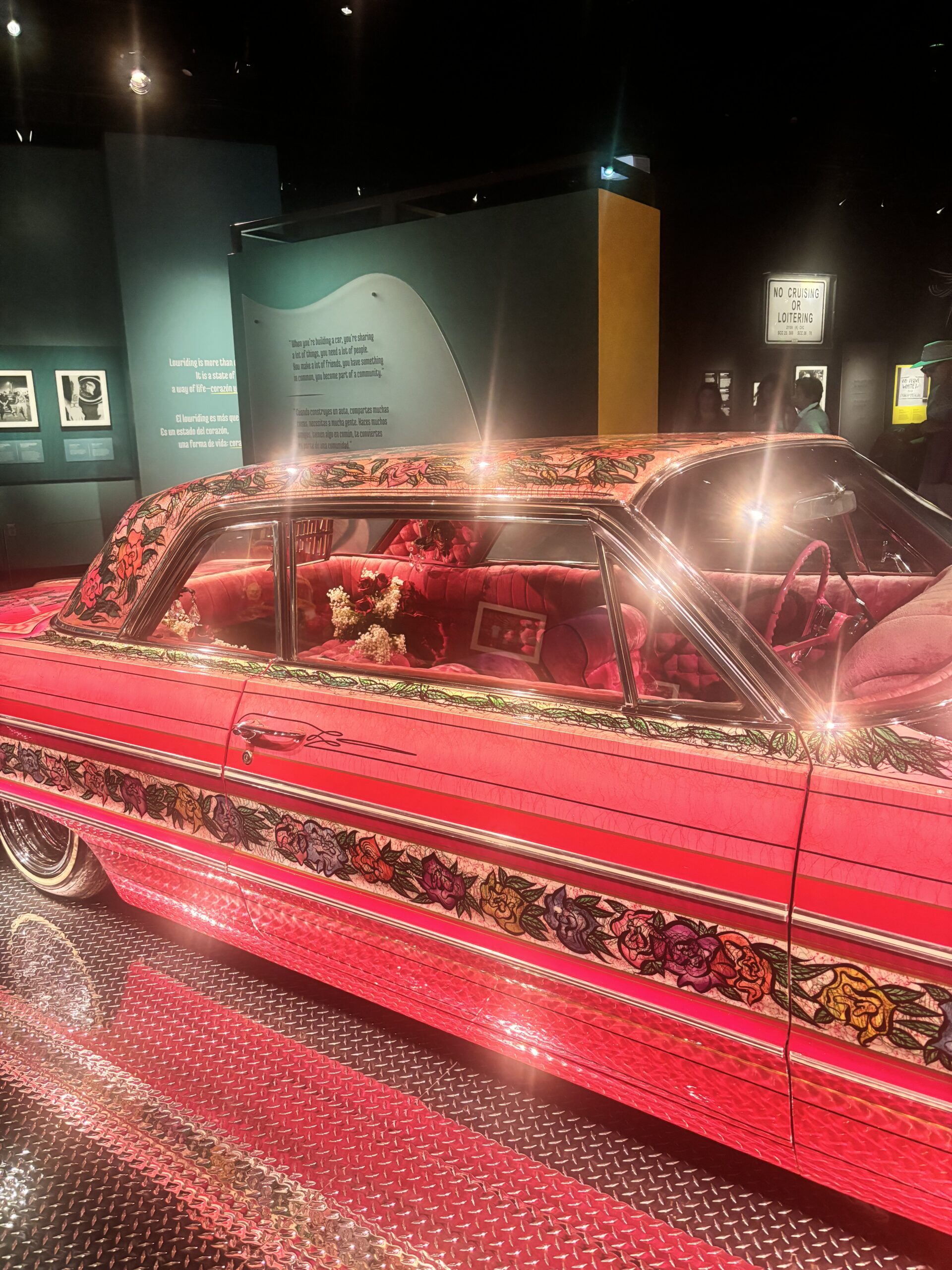
Working around her schedule of classes at AU, Garcia spent approximately 16-20 hours per week at the NMAH, helping out with events such as the “Lowriding Family Festival,” which showcased the artistic expression, technological innovations, and storytelling of Latino lowriders in American culture. Later, she undertook significant research on the syncretic Afro-Caribbean religion of Santería in hopes of laying the groundwork for a future museum program that would incorporate the sacred rhythms of the distinctive drummers who feature in its religious ceremonies. “I reached out to local drummers and connected them with Magdalena,” Garcia says. “In the future my hope is that the museum might be able to bring them in for an exhibit that will engage a public audience through a drumming performance.” Garcia had nothing but praise for her colleagues and supervisors at NMAH. “They really cared for the interns that they were working with and wanted to connect us with as many people as possible.”
Garcia admits that she was never particularly interested in the study of religion until she started taking AU history courses that focused on the religious aspects of history, such as those taught by Prof. Partovi (Islam and the Middle East) and Prof. Fedyashin (Russian Orthodoxy). She also singles out Prof. Stockreiter’s courses on Africa and her close attention to sources and material culture. “She always had us looking at primary sources and really helped guide us in the research process,” Garcia says. One of her most memorable projects was to visit a Smithsonian museum and examine the cultural artifacts up close, attempting to place them in their appropriate cultural and political contexts. “That experience really helped when I later had to go into the museum’s archives during my internship to look at religious artifacts, see when they were produced, how they were used, and what they meant to society at the time.” Being able to take such a wide variety of history classes at AU, Garcia says, “allowed me to find my passion in history and center my internship in topics that interested me.”