Eastman Johnson, Negro Life at the South, 1859, Oil on Linen.
Eastman Johnson’s Negro Life at the Southdepicts an enslaved community home located on a back street in Washington, D.C. Commonly mislabeled as Old Kentucky Home, Johnson’s depiction of enslaved life in the Capital city separates his figures into stereotypes of African Americans. The nickname Old Kentucky Home, comes from a misconception that the image depicted slavery in Kentucky, and not the American utopia that was perceived as Washington D.C.A range of domestic activities can be seen, men playing the banjo are present, and a variety of racial ancestry is shown. Despite the typical stereotypes presented, Johnson’s work gives contemporary viewers a look into an enslaved person’s life in Washington, D.C. in the nineteenth century.
Edward Savage, The Washington Family, 1789-1796, Oil on Canvas.
In Edward Savage’s The Washington Family, the couple and their adopted grandchildren ponder over a map of the plans for Washington, D.C., of which the president himself was an avid advocate. In the right corner, one of the people enslaved by Washington lingers in the background, while none of the family members look at him. The inclusion of the enslaved individual reminds the viewer of who would actually complete the manual labor for Washington’s blueprint of the Capital. The Washington Family has become a symbol of D.C. pride because it plays into this fictitious narrative of mythical founding fathers who planned the nation and the District on an ideal of liberties that did not apply to everyone.
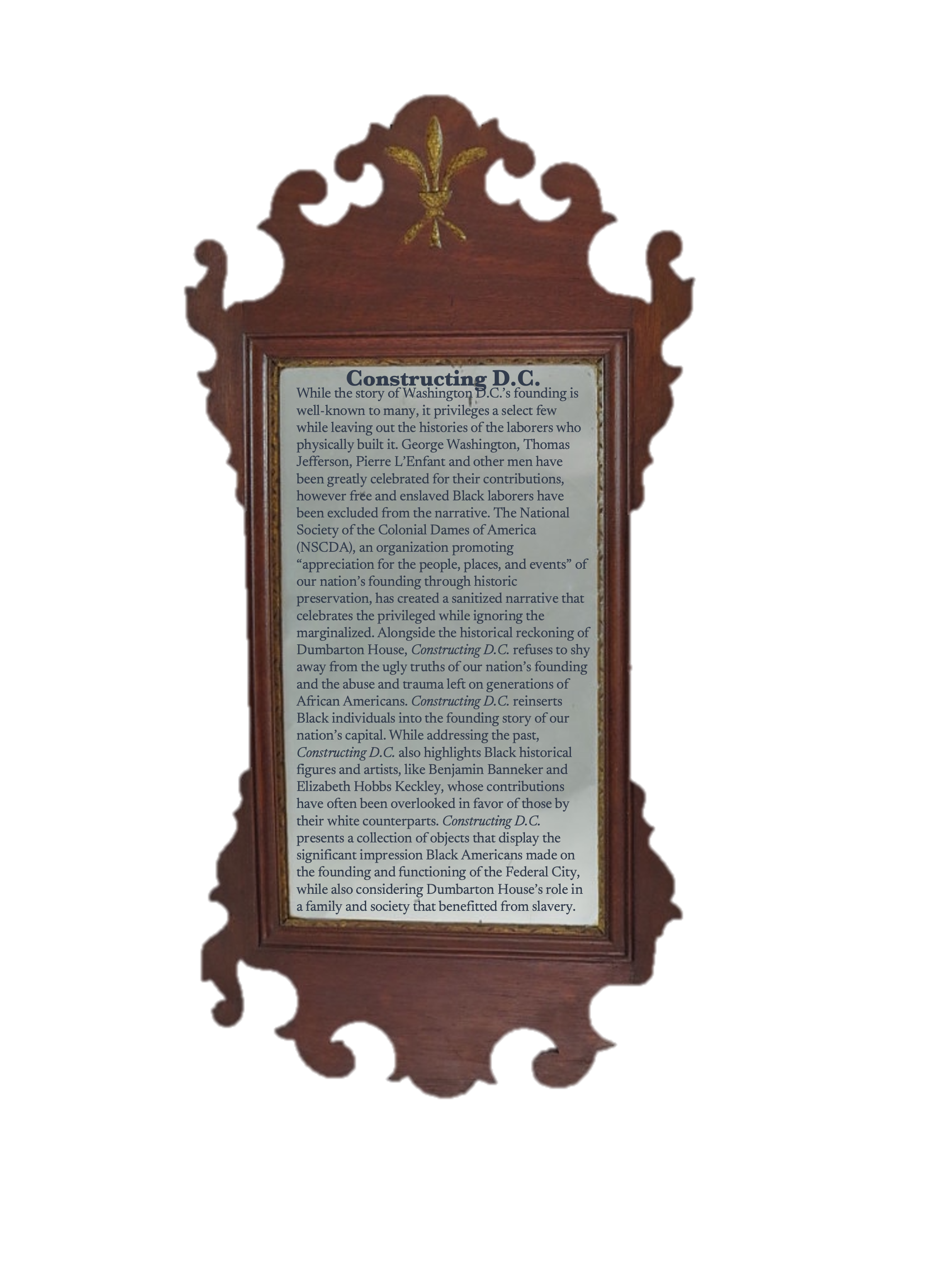
Tim Davis, Life Vest, 2016, Acrylic on canvas.
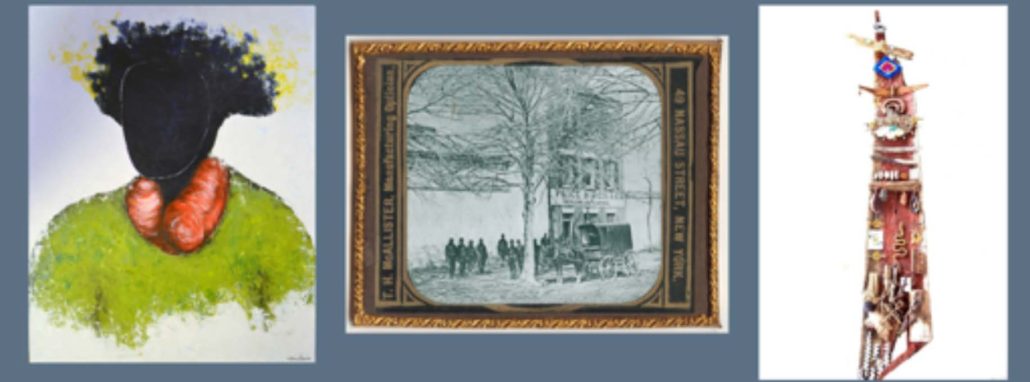
Matthew Brady, Thomas H. McCallister; Lantern slide of the slave dealers, Birch & Co., in Alexandria, Virginia; 1862; albumen, sodium chloride, silver nitrate, glass, metal, ink on paper, adhesive.
Anne Bouie, Which Way Out No. 1, 2017, Mixed media.
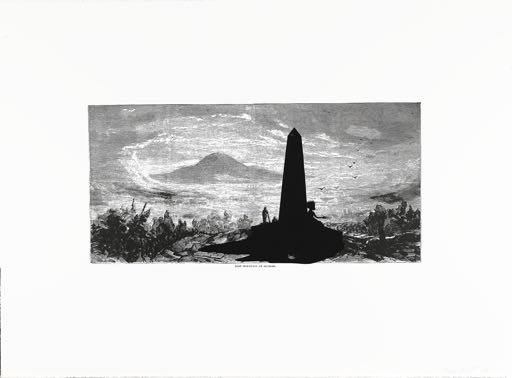
Kara Walker, Lost Mountain at Sunrise, from the portfolio Harper’s Pictorial History of the Civil War (Annotated), 2005, print.
Kara Walker’s contemporary series is responding to the Harper’s Weekly Pictorial History publication from 1866 that summarizes the Civil War. The solid dark silhouettes interrupt the District of Columbia skyline with the haunting reality of the oppression, violence, and forced labor endured by enslaved Black Americans in these landscapes. Walker overlays her own cutouts of African American figures over the original publication of Civil War battle landscapes. Walker’s work is a contemporary perspective on the realities of constructing the landscape and the collective memory of slavery.