Student-Run Historical Journal Making An Impact at AU

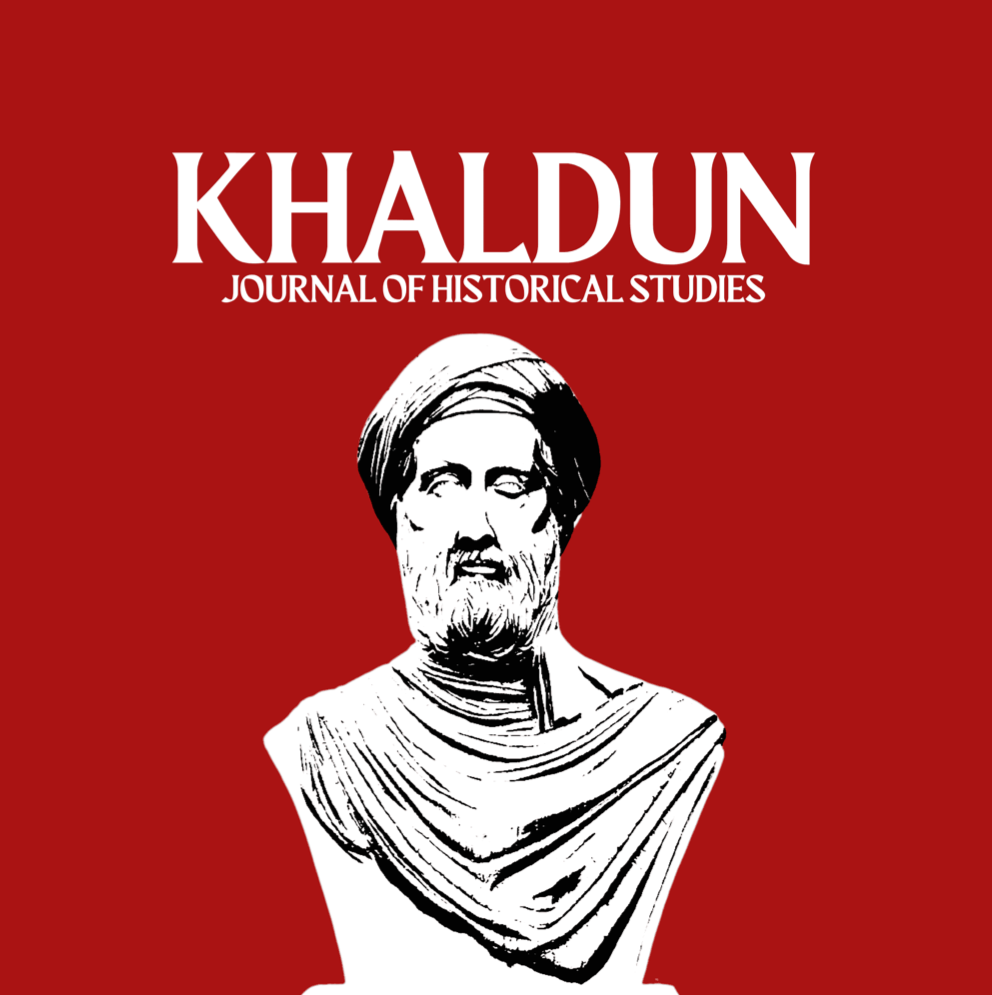
The cover of the Fall 2025 issue of Khaldun, which features five fascinating articles researched and written by AU undergraduate students.

Lovers of history will be delighted to learn about a new scholarly journal run almost entirely by a dedicated group of AU undergraduate students: The Khaldun Journal of Historical Studies. Originally founded by AU history major Riley Wells in 2024 as the William H. Carney Historical Review, the journal has since been renamed after Ibn Khaldun, a prominent 14th-century Arab and Muslim scholar and philosopher. According to AU junior Sri Vellakkat, who currently serves as editor-in-chief of Khaldun, “he represents a global-minded perspective that is appropriate for a global-minded school, and it is important to pay homage to those who came before us, especially those who have not been truly acknowledged in popular culture.” 

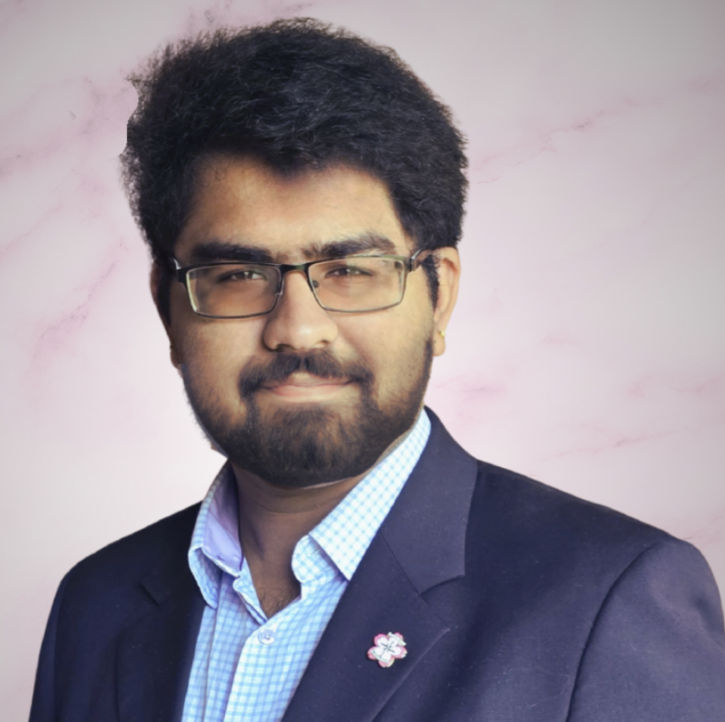
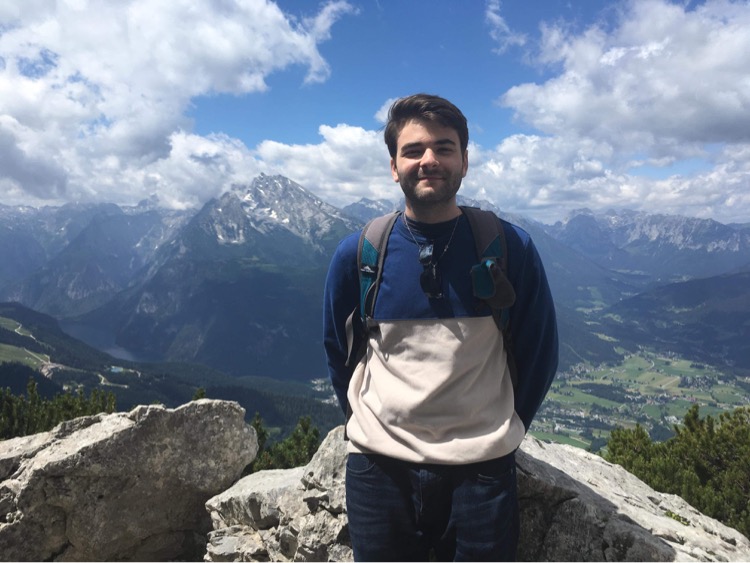
Sri Vellakkat, a junior SIS major, currently serves as editor-in-chief of Khaldun.

Though grounded in history, Khaldun boasts a diverse editorial staff with a wide range of intellectual interests, as is evident from the fact that Vellakkat himself is an SIS major who studies American foreign policy and national security. “CAS and SIS should be interconnected much more than they are,” Vellakkat says, “since there is so much overlap with history that people in both disciplines need to be aware of. Not only that, but they work together in brilliant ways.” Apart from Vellakkat, many of the journal’s lead editors are history majors, such as Martha Garcia, who currently serves as business editor. “I’ve always been a really curious person,” Garcia says, “and I like to get out of my sphere of knowledge to get new perspectives on topics I hadn’t thought about before. Just being in a space with other people who enjoy history, regardless of their background, is really nice.”

Martha Garcia, a senior history major, currently serves as business editor of Khaldun.

The editors of Khaldun welcome submissions from any AU student with a passion for history—March 22 is the deadline for Spring 2026 submissions. Each submission undergoes a rigorous process of review, led by a lead editor and a small group of 3-4 staff members. The editor-in-chief assigns each group a submission to review, along with a preferred timeline. “Each member of the group will then read the submission and discuss what sort of suggestions, comments, and edits we want to send back to the author,” says Garcia. “This process eventually enables us to determine which articles we want to move forward with.” The number of submissions has begun to grow in recent months, which Vellakkat sees as a promising sign of the journal’s visibility. “This upcoming issue will be the first in which we will publish articles by students that none of the editors know personally,” he says. 

The journal pays tribute to Ibn Khaldun, a prominent 14th-century Arab and Muslim scholar and philosopher.

Most of the editorial work of producing the journal is done asynchronously, which allows for greater flexibility with everyone’s busy schedules. Vellakkat estimates that he typically spends about 1-2 hours on the journal per week, but this can spike dramatically during the production crunch, reaching anywhere between 10-20 hours. Among the many tasks that have to be handled by Khaldun’s editorial staff are page layout and graphics, copyediting, and communication with the printer in downtown D.C. When all is said and done, about 125 copies of the print journal are distributed for free throughout campus. Issues are also available in electronic format on the journal’s website

In addition to the many students who bring each issue of Khaldun to fruition, Prof. Anton Fedyashin in the History Department serves as faculty advisor. “Dr. Fedyashin has been incredible to work with and always has time to meet with me and answer my questions,” Vellakkat says. As faculty advisor, Dr. Fedyashin has been a sounding board about strategic decisions at the journal. “I meet with Sri regularly and a lot of the staff have either been or are currently in my classes,” Fedyashin says. “But the students do everything by themselves, and the journal is entirely their achievement. The latest issue is so beautifully done that we have been handing out copies to prospective AU students and their parents during New Eagle events—that’s how proud the Department is of the students’ accomplishment.”

AU History Major Teaches High School Students How to Talk About the Holocaust

AU history major and graduating senior Annalise Vezina talks to Rose-Helene Spreiregen, a Holocaust survivor.

Having grown up in the Washington, D.C. area surrounded by many of the world’s premier museums, AU graduating senior Annalise Vezina always knew that she wanted to study history one day. “I went into college already knowing that I wanted to major in history,” she says. “There are just so many things to learn about, and the deeper you go you realize there is even more to learn.” Fluent in French, Vezina developed a passion for European history and the history of the Holocaust, which eventually led to a fascinating internship at the U.S. Holocaust Memorial Museum. “There are so few Holocaust survivors nowadays,” Vezina says. “You get to know them in a different way than you would just listening to testimony and writing papers about it.” Since June 2024, Vezina has worked as an intern for both the museum’s Youth and Community Programs and its Social Team. In this dual capacity, she leads weekend classes for high school students while also helping to create content for the museum’s social media platforms, among other responsibilities. 

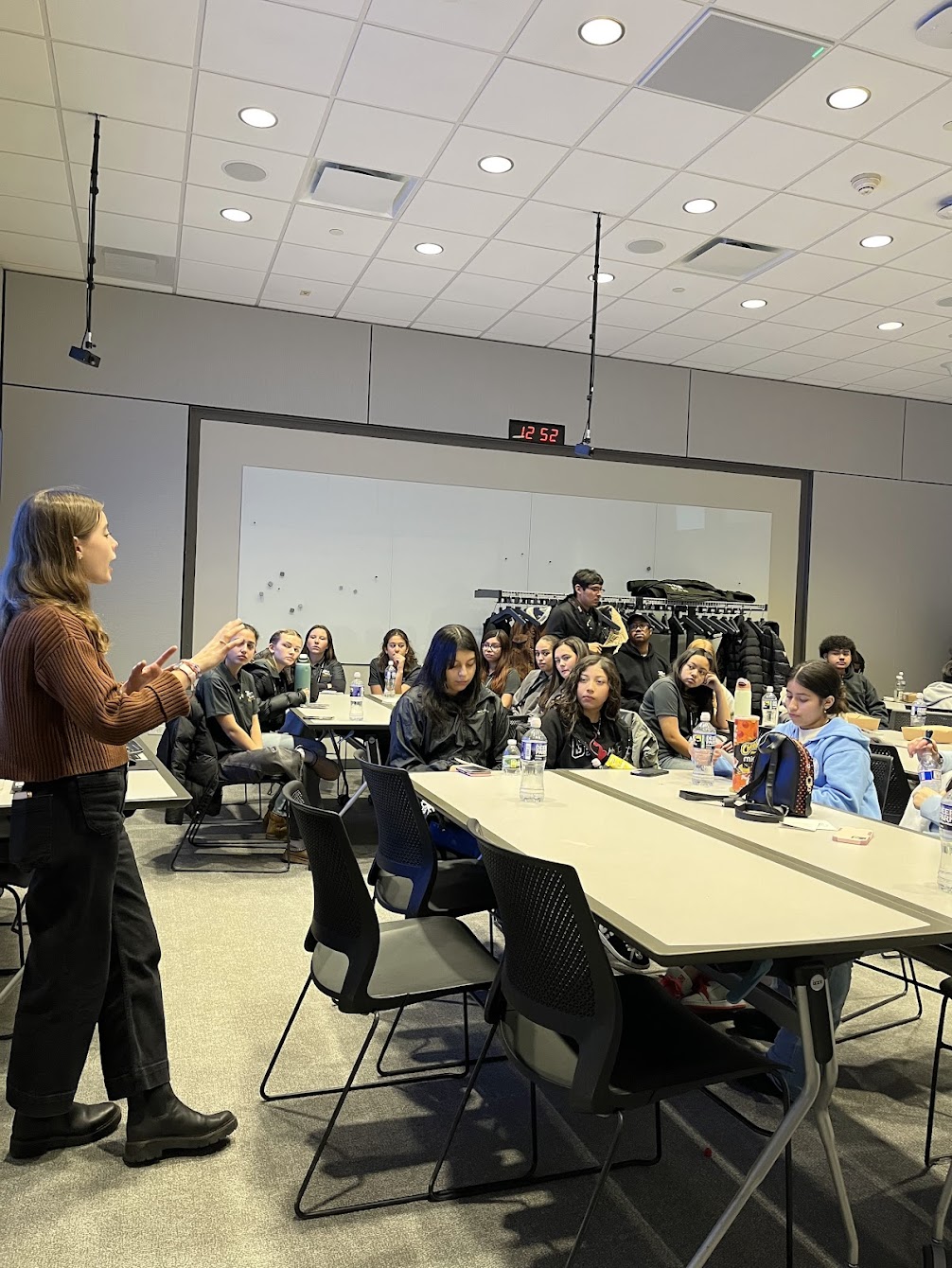
As part of the “Bringing the Lessons Home” program at the U.S. Holocaust Memorial Museum, Vezina teaches high school students how to give a two-hour tour of the museum’s Permanent Exhibition.

One of her favorite programs is called “Bringing the Lessons Home,” in which she teaches high school students how to give a two-hour tour of the museum’s Permanent Exhibition, the same program she went through in ninth grade. “You can’t just inundate them with information, which can be very depressing,” Vezina says. “You have to be able to make a personal connection with them and find a way to get to the emotion of the topic at hand. Otherwise you will lose your audience.” The more she learns about the Holocaust, the harder it is to fit everything she wants to say into a two-hour tour. “Every year my tour of the Permanent Exhibition gets longer and longer because I learn more stories and contextualizing details that I want to tell. Then suddenly my tour was three hours long!”

Vezina’s duties with the Social Team include researching and writing content for the Museum’s social media accounts, such as Instagram and Facebook. “I love this type of work because it is very historically grounded and every piece of content goes through multiple rounds of review,” she says. The impact of her work can feel very different depending on the audience. With the museum’s social media accounts, Vezina’s work can reach a global audience. “The museum has about three million followers across all platforms,” she says, “so three million people or more will read whatever you’re posting.” In the classroom, however, Vezina works with approximately fifty high school students, spending five hours per day once a week over the course of fourteen weeks. Though her audience is smaller, the impact is more personal. “You can see the reactions of the students firsthand and watch them grow.” 

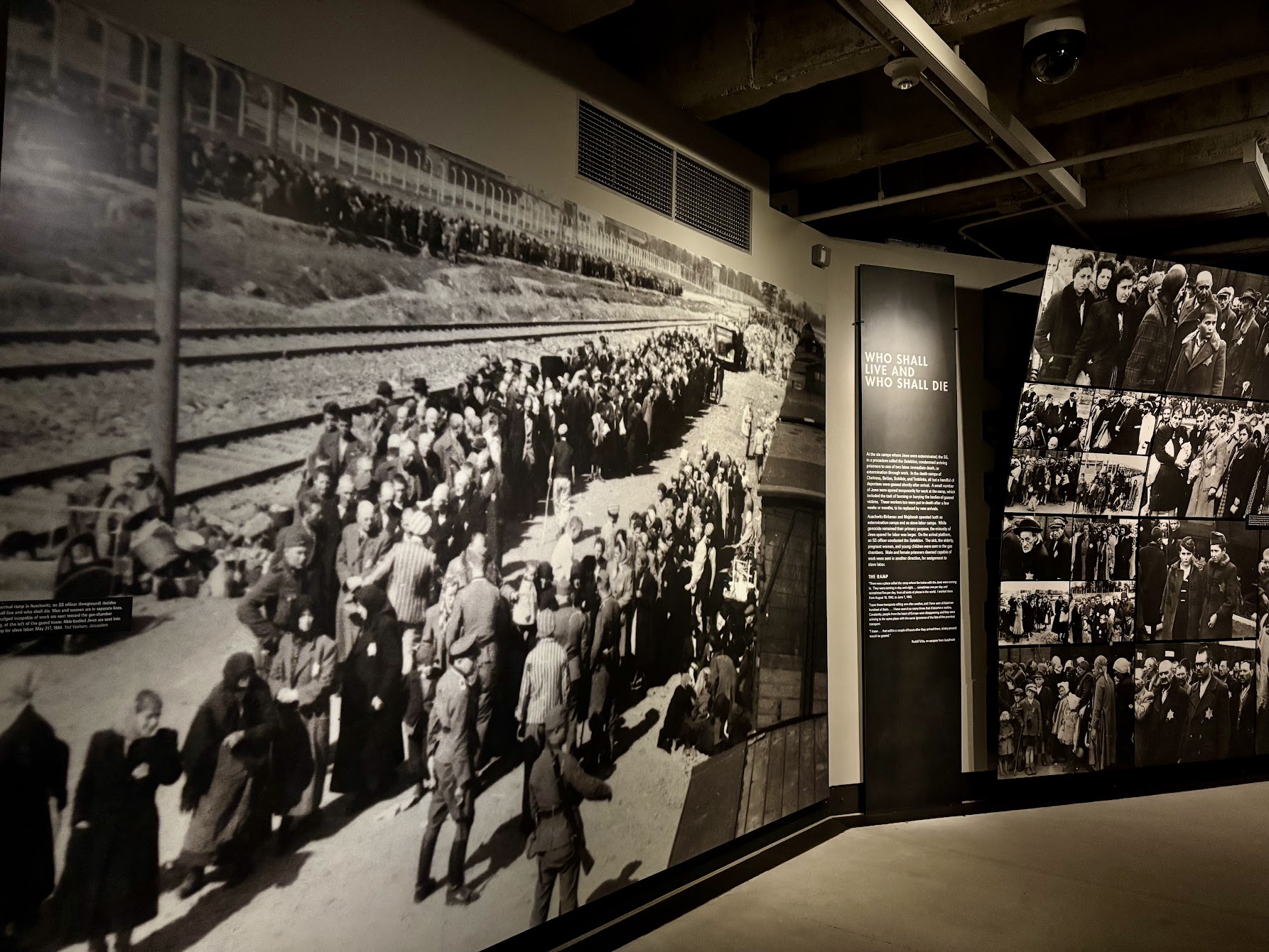
One of the many exhibits at the U.S. Holocaust Memorial Museum that Vezina integrates into her tours.

AU History Professor Awarded Guggenheim Fellowship

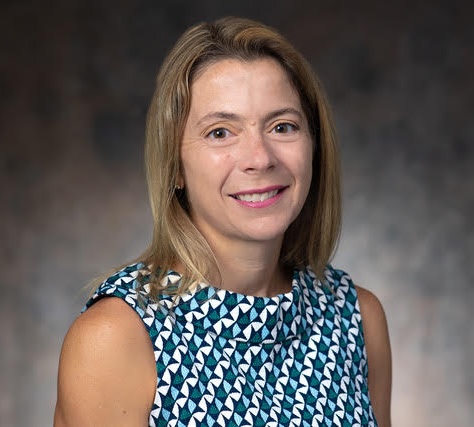
Laura Beers, a professor of modern British history in AU’s History Department, was awarded a Guggenheim Fellowship in 2025, one of many prestigious awards that her work has garnered in recent years. The Guggenheim Fellowship, which is highly selective, is intended to provide accomplished mid-career professionals with the financial support and freedom to work on projects that are meaningful to them. This is certainly the case with Prof. Beers, who is using her time as a Guggenheim fellow to work on her next book on the politics of assisted reproduction and surrogacy since the birth of the world’s first in-vitro fertilization (IVF) baby in Oldham, Britain in July 1978. Prof. Beers has written about her own personal experience with IVF and is widely sought out in media circles as an expert commentator on public debates about assisted reproductive technology, abortion, and perceptions of womanhood. 

The visibility of these issues and importance of Prof. Beers’ research on the history of public debates over IVF procedures has only grown in recent years. In 2023, it was estimated that twelve million children had been born via IVF worldwide, with nearly two percent of all live births in the United States the result of IVF and other artificial reproductive technologies. IVF is particularly common here in Washington, DC, where 1 in 15 babies born are conceived via IVF. Yet, as Beers notes, “policymakers have failed to come to terms with the ethical and social implications of assisted reproduction. The prominence of debates over IVF funding and the status of unborn embryos in recent years underscores the ongoing uncertainty about what role technologies like IVF, surrogacy, egg freezing and genetic testing should play in 21st century society.”

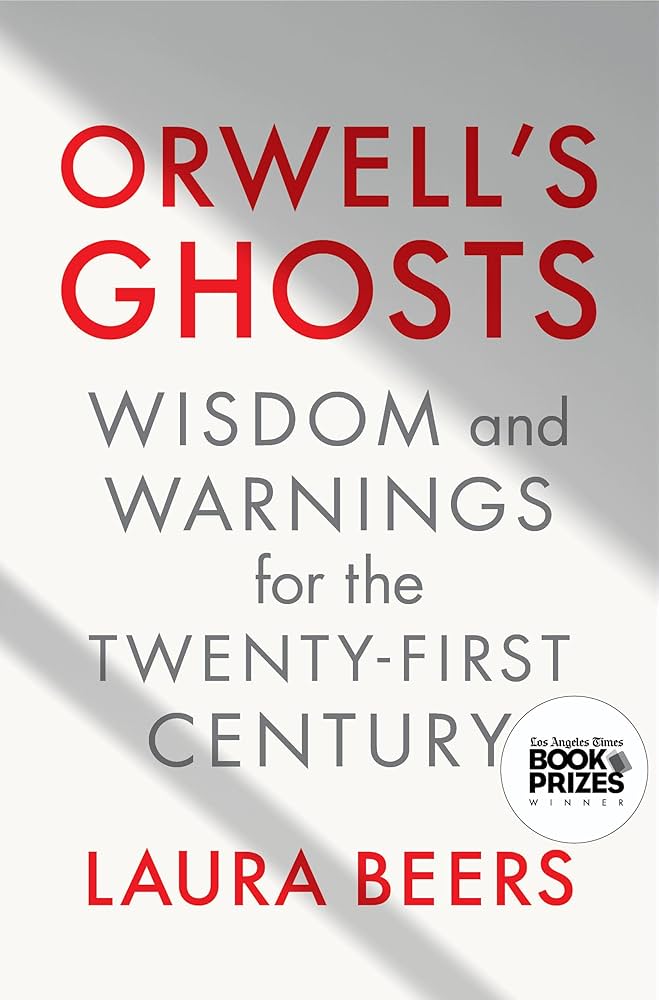
Prof. Beers’ Guggenheim Fellowship joins a long list of honors and recognitions that has been garnered by her groundbreaking work. Her latest book, Orwell’s Ghosts: Wisdom and Warnings for the Twenty-First Century (WW Norton), won the 45th Los Angeles Times Book Prize for Biography and was also named as one of the New Yorker’s “Best Books of 2024.” It was inspired in part by Prof. Beers’ own experience in the classroom with AU undergraduate students in her course HIST 235: “The West in Crisis, 1900–1945,” where Orwell’s texts and ideas constituted a major portion of intellectual debate and discussion. Orwell’s Ghosts is Prof. Beers’ third book, which follows up on the success of Red Ellen: The Life of Ellen Wilkinson, Socialist, Feminist, Internationalist (Harvard University Press, 2016), which received the Stansky Award for best book published in field of modern British history. 

Public History Student Curates Exhibits about AU’s Past

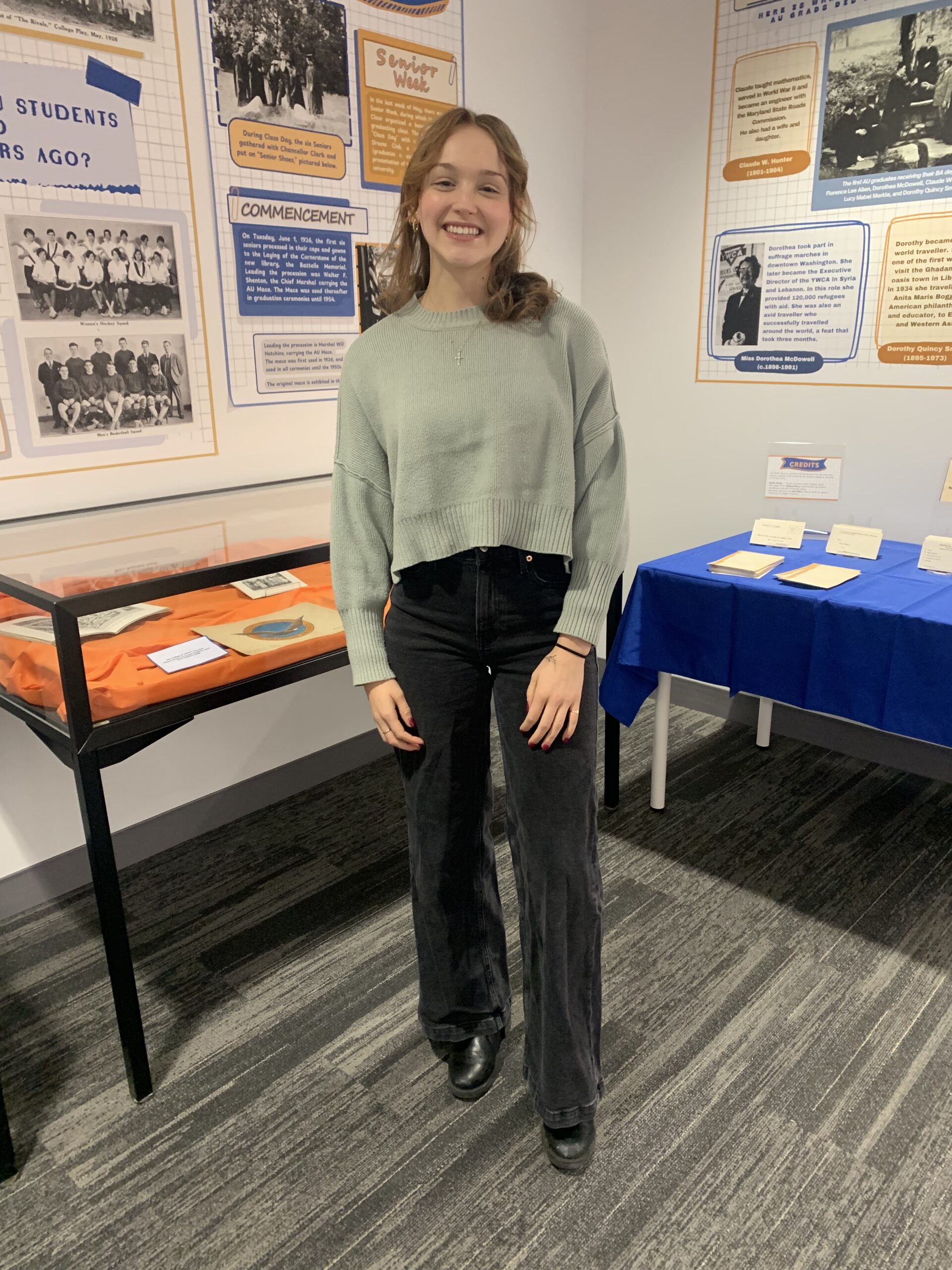
Sophia Moody, a second-year student in the Public History MA program at AU, has curated three fascinating exhibits during her time as an Outreach Fellow for the University Library’s Archives and Special Collections. Visitors to the first floor of Bender Library can take in 100 Years of Undergrad, which documents various aspects of AU student life during the first year of undergraduate classes in 1925–26. During the course of her research, Moody discovered that the first graduating class of undergrads a century ago consisted of just six students, who paid two hundred dollars a year for tuition. 

Second-year Public History MA student Sophia Moody in front of her 100 Years of Undergrad exhibit in Bender Library.

The exhibit she assembled for display includes precious mementos of their era, including an “Instructor’s Class Card,” an admissions application, and the original “Marshal’s Mace” used in the graduation ceremonies. Besides these fascinating artifacts, during the course of her research Moody also discovered a series of letters which revealed that AU’s chancellor had initially opposed admitting African-American students to the new undergraduate program. Through this research, she had to learn “how to present difficult aspects of an institution’s history,” Moody said. “I believe it is essential to present history in its full complexity—even when it reflects uncomfortable truths about an institution’s past.”

The exhibit also reveals what some members of the Class of 1926 did after graduation: Claude Hunter became an engineer with the Maryland State Roads Commission, Dorothea McDowell became the Executive Director of the YWCA in Syria and Lebanon, and Dorothy Quincy Smith became an avid world traveler. “I have truly enjoyed working as an Outreach Fellow,” Moody said. “I believe that I have learned a great deal about how to research and design an exhibit. I am passionate about making history accessible to the public and have learned much about how to use thematic design to bring an era or narrative to life for the visitor.”

Replicas of an AU “Instructor’s Class Card” from January 1926.

Those who spend time in the Spring Valley Building can also catch Moody’s second exhibit, Reading During a Revolution: A Look at 18th Century Literature, which was developed around the theme of the nation’s 250-year anniversary. By examining the books held in AU’s archives that were originally published between 1770 to 1780, Moody provides an analytical snapshot of American reading tastes two and a half centuries ago. “My first exhibit used an array of textual documents presented in a traditional case,” Moody said, “but my next exhibit was solely focused on books, and I had to learn how to properly display these artifacts so as not to damage the covers.” 

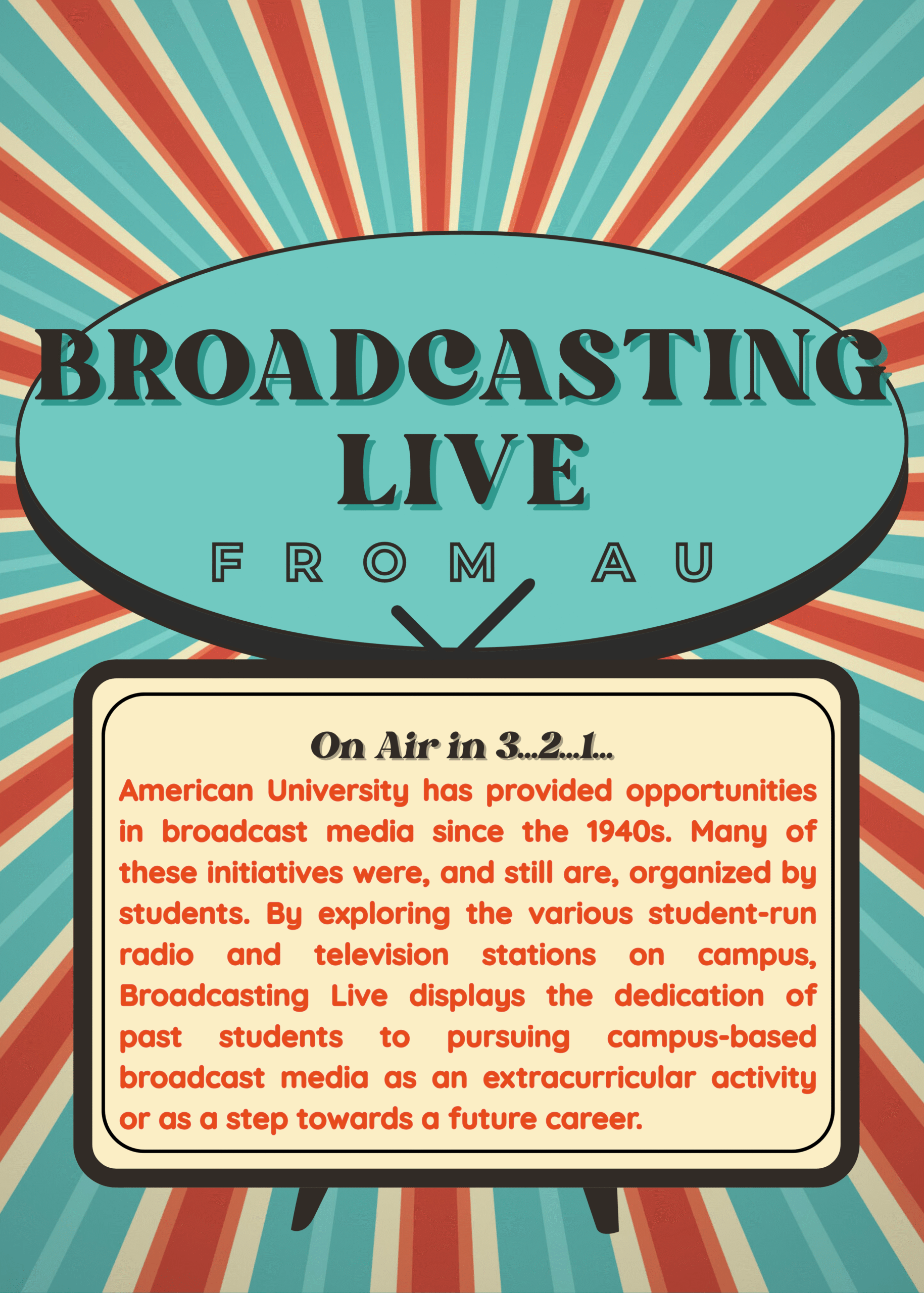
Most recently, Moody has also curated a digitally forward exhibit, Broadcasting Live, which details the long history of student-run radio and television at AU. By exploring the various student-run radio and television stations on campus, Moody’s third exhibit will soon be displayed in Bender Library to highlight the dedication of past students to pursuing campus-based broadcasting media as an extracurricular activity or as a step towards a future career. The exhibit was built around audio-visual material. Therefore, Moody was “challenged to present the materials in yet another format and ultimately decided to display clips from the students’ original television shows in the 1980s.” She is now beginning research for a new exhibit on AU’s archives in conjunction with the university’s events for the nation’s 250th anniversary.

Looking ahead, Moody has recently started an internship with the National Museum of American History, where she assists several curators in the Office of Curatorial Affairs with updating their collection records in the database. Having made the most of these invaluable opportunities to put her public history studies into practice, Moody hopes to work in museums in the D.C. area after graduation. “I had never independently created an exhibit before,” she said, “but after completing my first exhibit I was so proud and excited that I knew for certain that I had chosen the right career for me. I am very grateful to AU for the opportunities to learn how to design and curate exhibits and am devoted to continuing to promote the university’s archives throughout the remainder of my fellowship.”

AU Alum Keeps Memory of Holocaust Alive

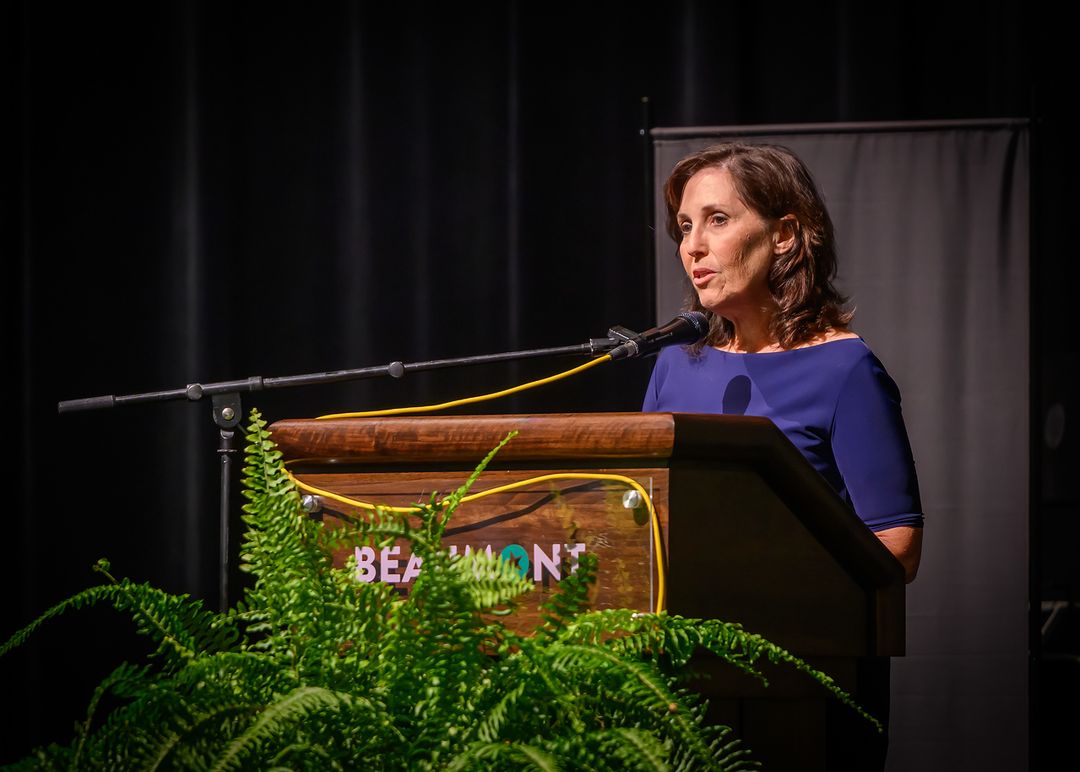
Eisen is frequently invited to give public speeches about the Holocaust and her own experiences growing up as the child of a Holocaust survivor.

The first time Anna Salton Eisen ever heard her father speak about his experiences in a Nazi concentration camp was in an AU history class. In the early 1980s, Eisen took a course taught by retired professor Richard Breitman on Nazi Germany and the Holocaust. “That was the beginning of a personal journey of discovery that has continued to the present day,” Eisen said. When she told Prof. Breitman her father was a Holocaust survivor, Breitman invited him to come and speak to the class. “I had never heard my father speak about the Holocaust before,” she said. “It always seemed like something forbidden to talk about in my childhood. But I think he was waiting to be asked.”

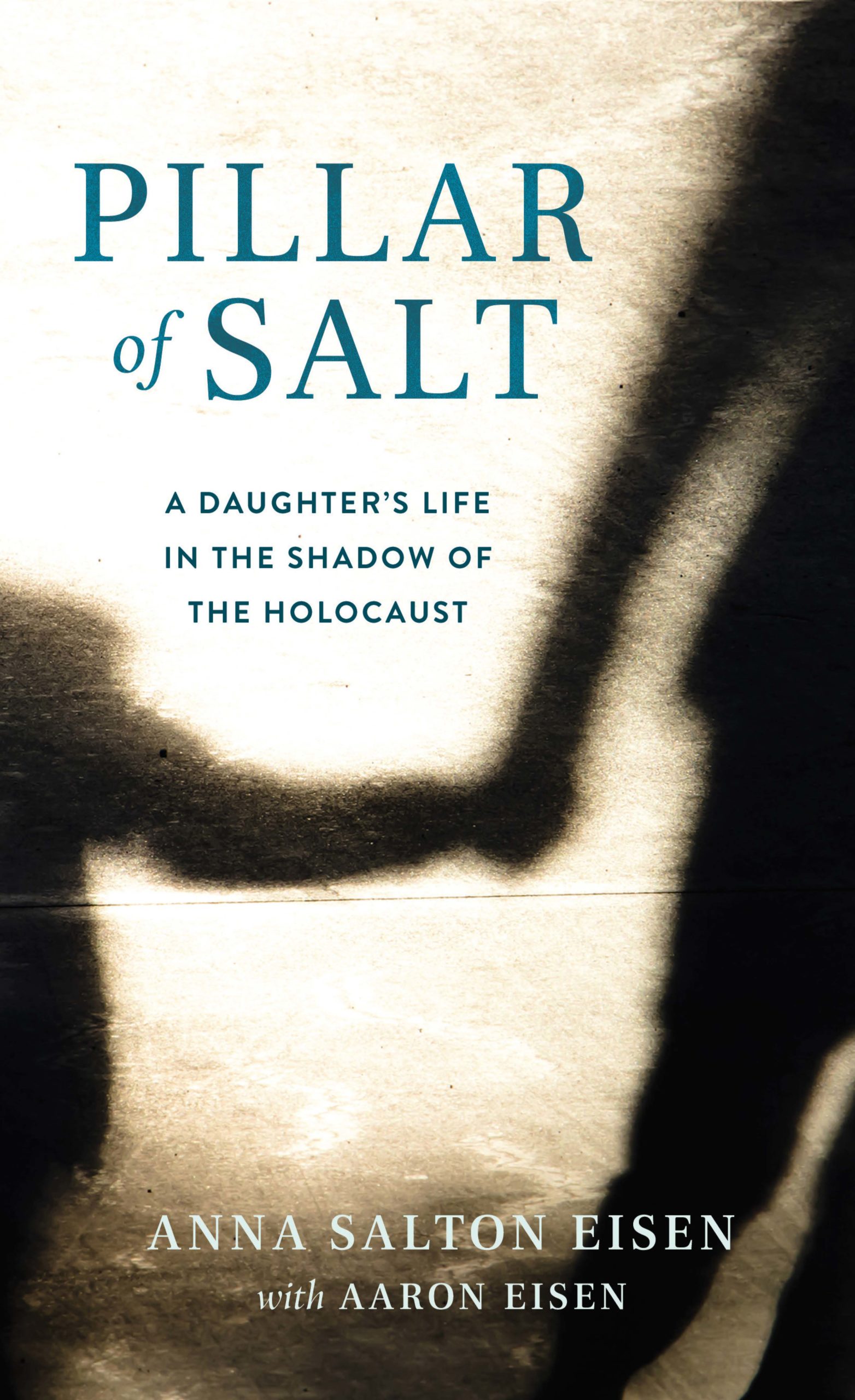
After she graduated from AU in 1984 with a degree in public communications and a minor in history, Eisen moved to the Dallas-Ft. Worth area and quickly became a pioneer in the field of Holocaust public education. In the nearly four decades since taking Prof. Breitman’s course, Eisen has found her voice as the child of a Holocaust survivor. “There aren’t many Holocaust survivors left anymore,” she said. “So we in the second generation, as the children of survivors, are trying to figure out what our responsibility is to educate and inform the public.” In 2002, Eisen helped her father write The 23rd Psalm: A Holocaust Memoir (2002), which has just been reissued in a 20th anniversary edition. She is currently producing a documentary, In My Father’s Words, which also draws from her most recent book, Pillar of Salt: A Daughter’s Life in the Shadow of the Holocaust, released in May 2022.

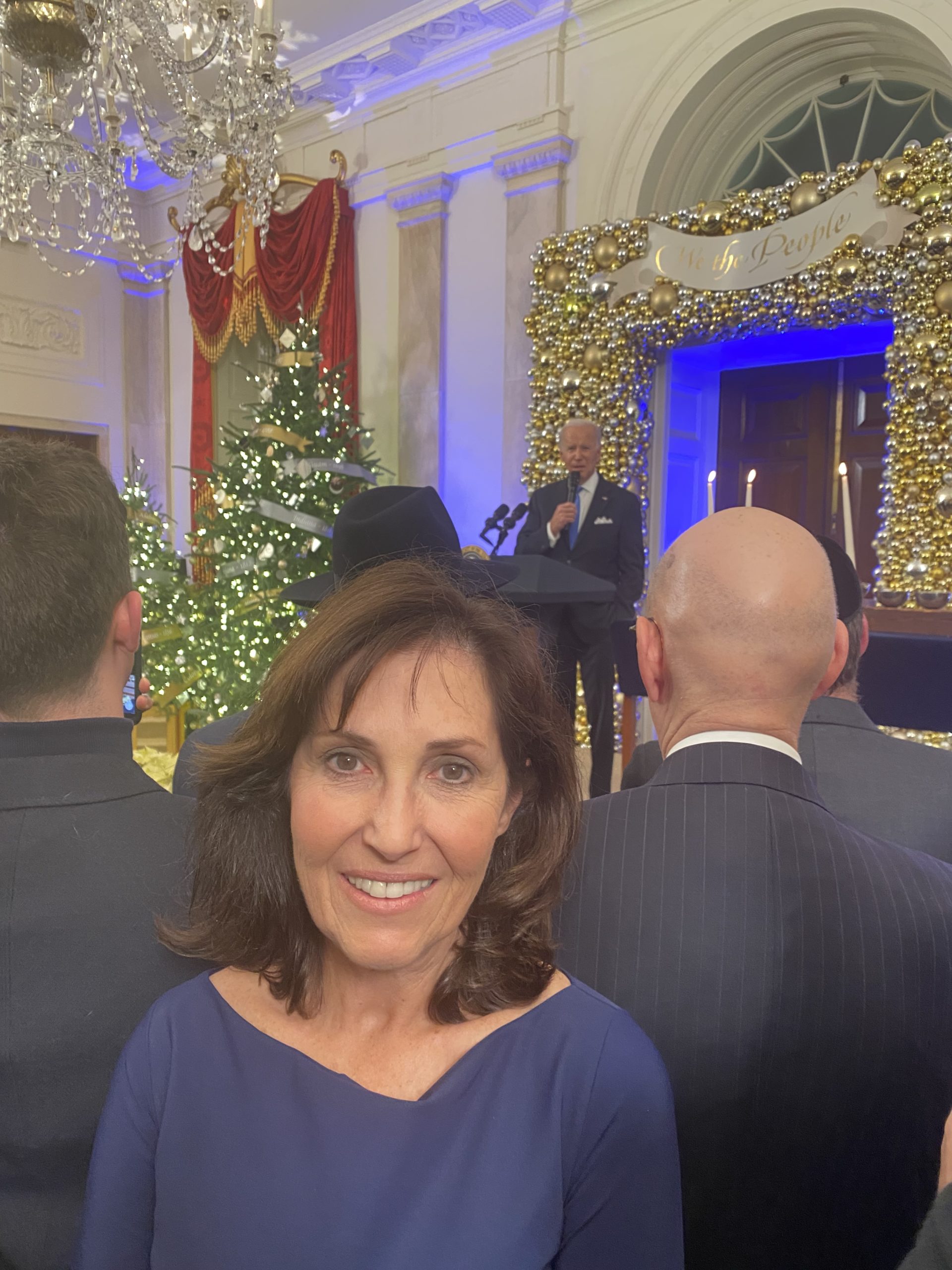
Eisen was invited to the White House to attend a Hanukkah celebration in December 2022.

Working to maintain awareness of the experiences of Holocaust survivors forces Eisen to confront a disturbing set of challenges. In the course of public speaking engagements at schools, commemorative events, and in the media, Eisen often has to endure personal threats to both her own safety and that of her family and friends. In January 2022, an Islamist terrorist took hostage four members of the Congregation Beth Israel, which Eisen helped found. Though the crisis was resolved without injury to the hostages, it serves as a constant reminder of anti-Semitism and its devastating consequences. “This used to be history, but now it is current events,” she said. With the re-emergence of anti-Semitist beliefs into popular media discourse, peddled by a small number of influential celebrities and other social media influencers, Eisen’s work is even more urgent than before. “I don’t know if what we’re doing is working or not,” she says, “but bullying not confronted becomes empowered.”

From Doctors to Farmers: Prize-Winning Paper Explores Lives of Jewish Refugees

AU graduate student Andrew Sperling, whose paper on Jewish refugees in the American South won the Mark and Ruth Luckens International Prize in Jewish Thought and Culture.

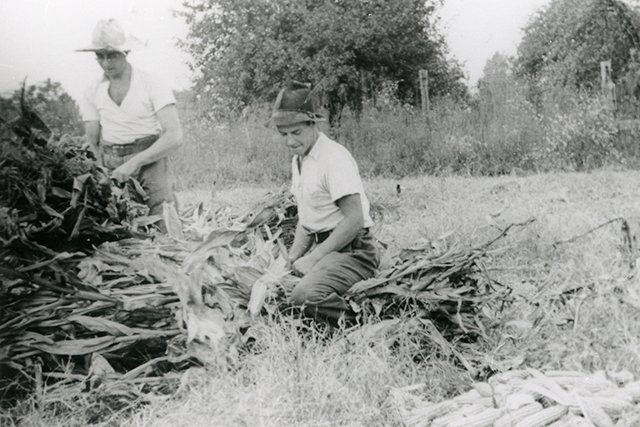
On March 24, 2022, AU graduate student Andrew Sperling gave a much anticipated talk to a rapt virtual audience at the University of Kentucky. The talk was based upon a paper that Sperling completed in Prof. Kate Haulman’s research seminar the previous year: “‘Living on a Sort of Island’: Jewish Refugee Farmers in the American South.” It follows the unique experiences of Jewish refugees from Germany and Austria who came to the United States during the rise of the Nazis in the run-up to World War II. But there was a catch: these particular refugees, who had once made their living as doctors, lawyers, and businessmen in dense European cities, would now be settled in rural communities and taught to farm the land.

Refugee farmers working at Hyde Farmlands in Burkeville, Virginia. Eva Loew Family Papers (RG-185), Virginia Holocaust Museum, Richmond, Virginia.

Drawing upon a wide range of diaries, memoirs, and other correspondence, Sperling analyzed their struggle to adapt to these new circumstances and their determination to succeed in an unfamiliar occupation. “So much of the scholarly literature on Jewish refugees has focused on government policy,” Sperling said. “But we know less about the actual lived experiences of these refugees once they get into the country. I wanted to find personal testimonies and highlight the human drama behind government policy.” In recognition of his groundbreaking work, the Jewish Studies Program at the University of Kentucky honored Sperling by awarding his paper its annual Mark and Ruth Luckens International Prize in Jewish Thought and Culture. The award, given to “the best unpublished original essay” written by a graduate student or recent Ph.D., comes with a $500 prize and opportunity to give a keynote talk on his research.

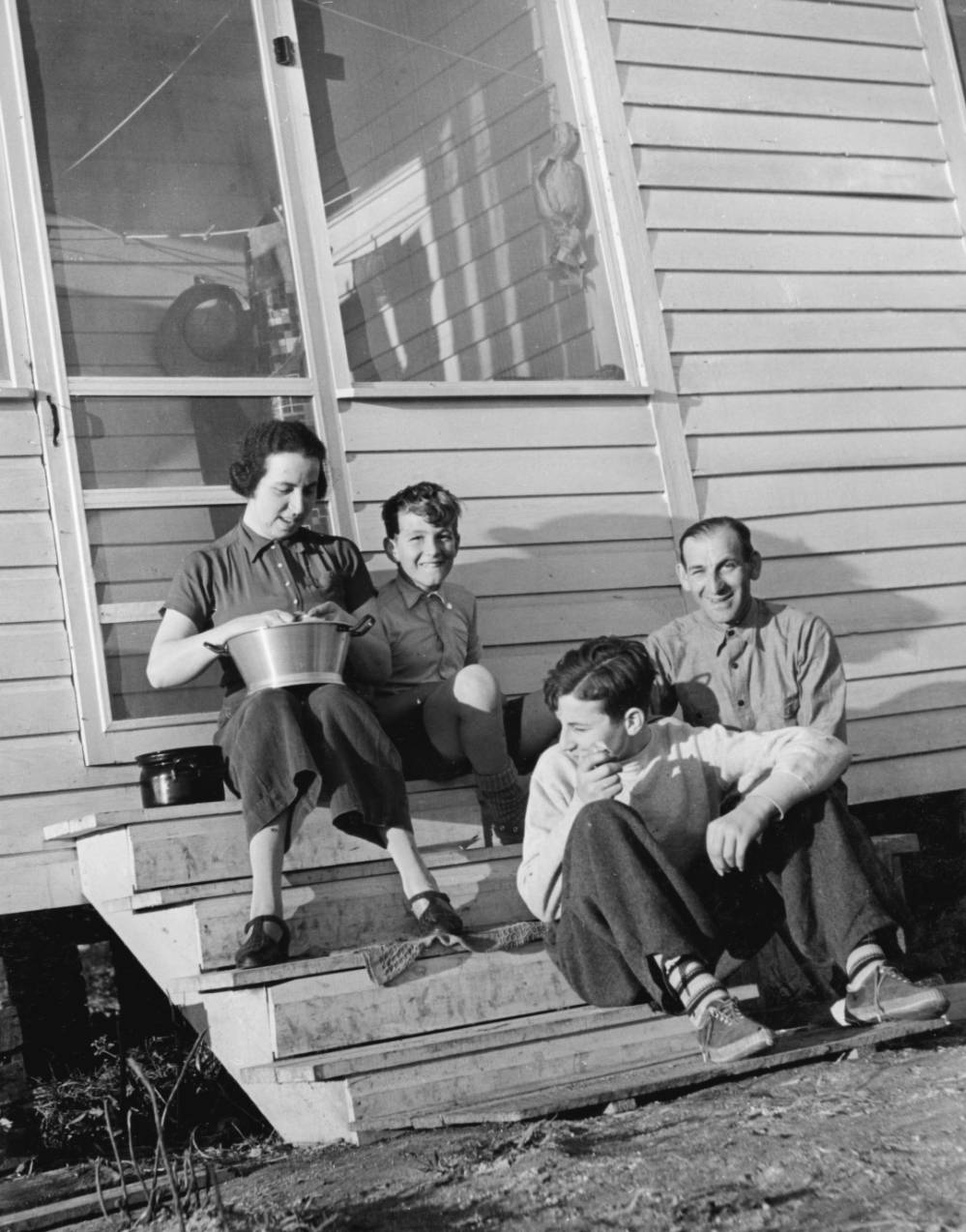
Helen, Walter, Manfred, and David Loeb at Van Eeden, in Burgaw, North Carolina. Manfred and Ann Loeb Collection (P0029), University of North Carolina Wilson Library, Chapel Hill, North Carolina.

Sperling is now starting to undertake research for his dissertation under the tutelage of Prof. Pamela Nadell, who serves as his advisor. “I really wanted to work with Prof. Nadell,” Sperling said. “She is one of the best scholars in American Jewish history, and the program felt like a good fit for me.” Living in Washington, D.C. is also invaluable, with easy access to institutions such as the Holocaust Museum. For his dissertation, Sperling is researching American Jewish responses to anti-Semitism espoused by extremist groups such as the KKK and American Nazi Party during the middle decades of the twentieth century. “So much has been written about antisemitism,” he says, “but there is much less research about the extremist angle. I want to assess Jewish perceptions of these groups.” Once he completes his Ph.D. at AU, Sperling hopes to pursue a career in academia.

AU History Alum Wins Prestigious Book Award

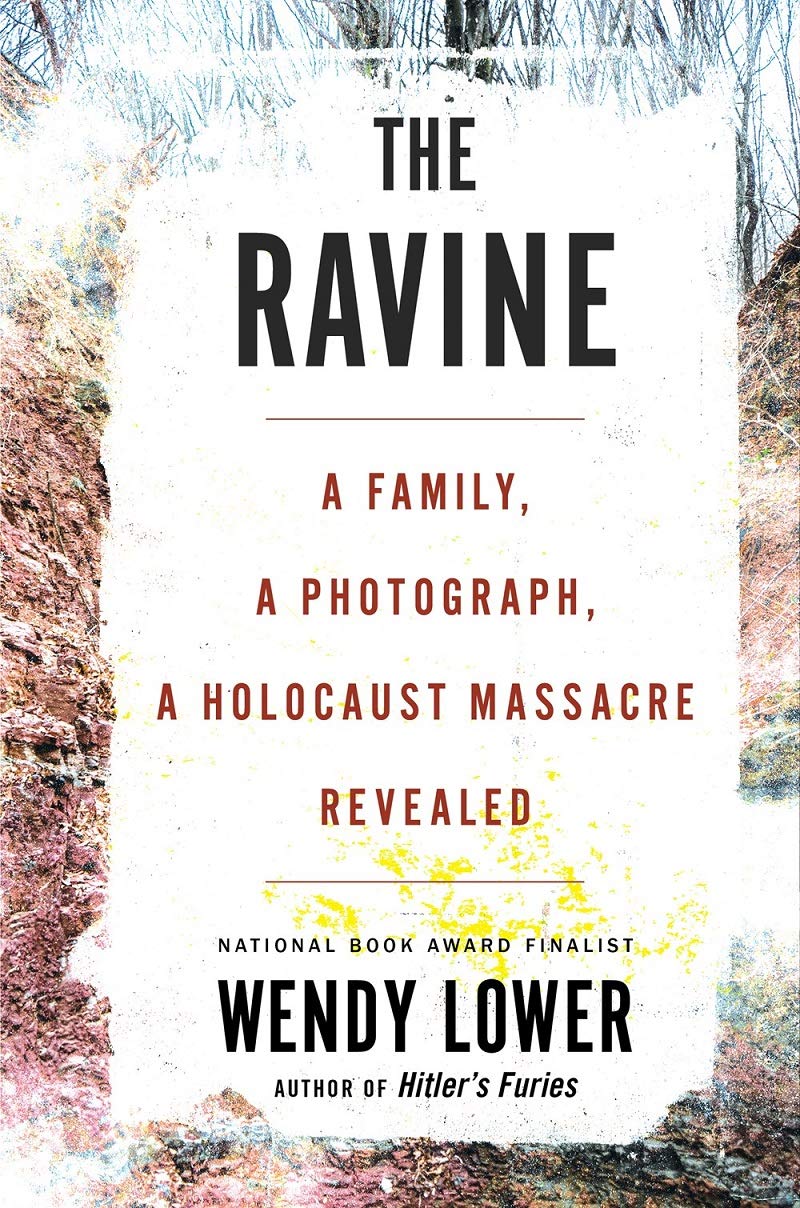
Last month the Jewish Book Council announced the winners of their National Jewish Book Awards. Among the winning books was AU alum Wendy Lower’s The Ravine: A Family, A Photograph, A Holocaust Massacre Revealed (Mariner Books, 2021), which was awarded the top prize in the category of Holocaust Studies. Dr. Lower received her Ph.D. from the AU History Department in 1999 while studying under Richard Breitman and is now John K. Roth Professor of History and George R. Roberts Fellow at Claremont McKenna College. In Spring 2021, AU’s Jewish Studies Program and the Center for Israel Studies brought Dr. Lower to AU (virtually, of course!) to give a talk on her book.

The Untold History of the Equal Rights Amendment

AU History alum Rebecca DeWolf

Before she earned her Ph.D. in history, AU alum Rebecca DeWolf poured her time and energy into politics. Prior to pursuing on a master’s degree in early modern European History at George Washington University, DeWolf worked on several political campaigns, including then Senator Hillary Clinton’s re-election bid to the Senate in 2005–6. But it was a desire to gain a better understanding of the origins and development of major political issues that inspired her to pursue a Ph.D. at AU.

In her first year as a graduate student, DeWolf discovered her passion for research and teaching. “I had the great luck of being a teaching and research assistant for Dr. Allan Lichtman,” she said. “He taught me great techniques in how to teach history and how to give great lectures.” Outside of the classroom, DeWolf was able to gain valuable research experience by accompanying Prof. Lichtman to the manuscript room in the Library of Congress. “What he showed me was how to do archival work from a historian’s point of view,” DeWolf recalls. “He showed me how to go through massive amounts of collections and how to take notes, organize them, and develop an analysis. It was because of him that I came to the ERA.”

DeWolf and her dissertation advisor Allan Lichtman during her AU graduation in May 2014.

The ERA is the Equal Rights Amendment. First introduced to Congress in 1923, the ERA was intended to eliminate legal distinctions between men and women in many areas of daily life, including employment, divorce, property rights, and other matters. DeWolf first became interested in the history of ERA political debates when Dr. Lichtman asked her to give a guest lecture on the topic to his undergraduate students. She was surprised to learn that many students did not seem to be aware of the implications of the amendment or its relevance to their daily lives.

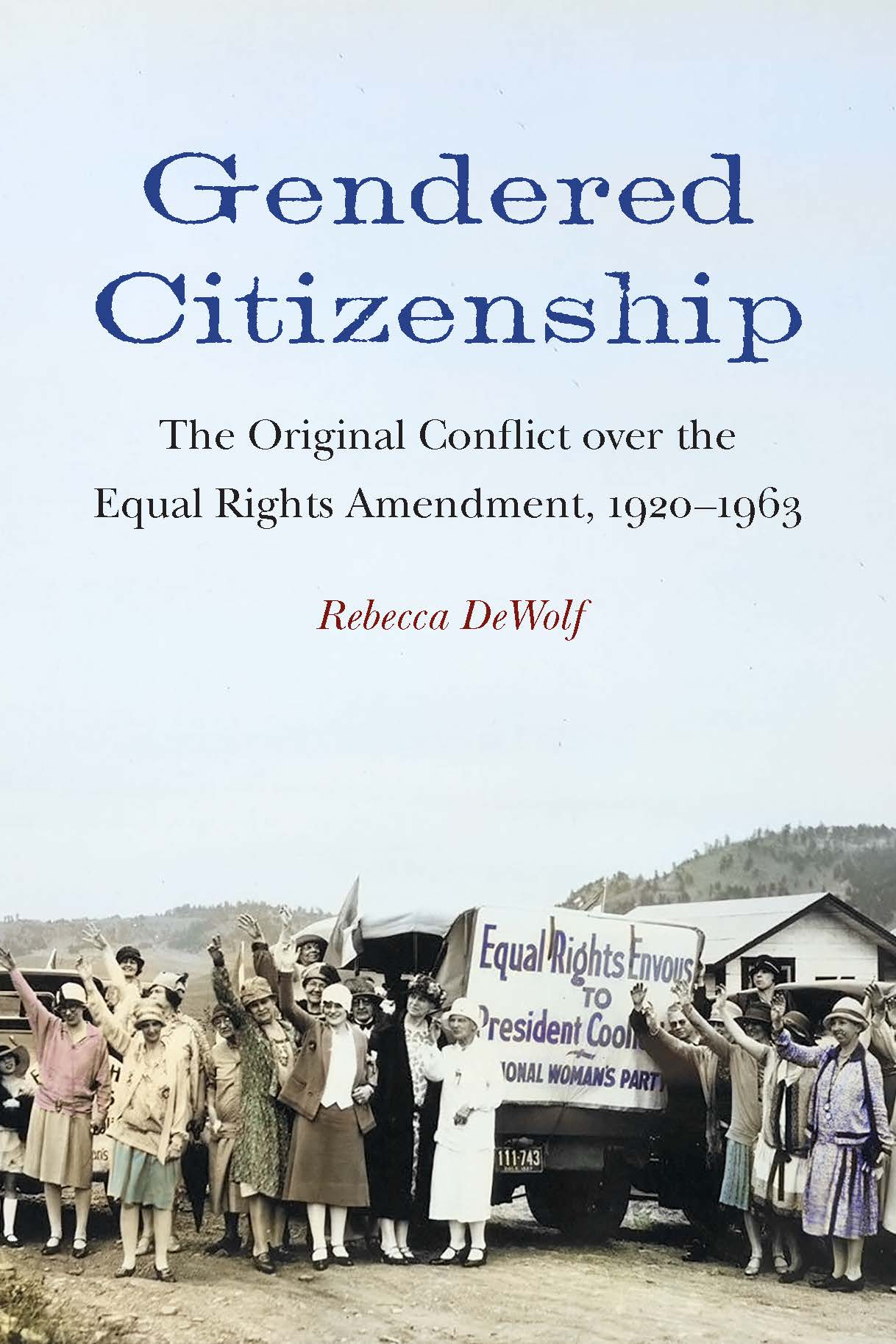
DeWolf’s book on the history of the Equal Rights Amendment was published by University of Nebraska Press in 2021.

As a result, she decided to write a dissertation on the complex history of political opposition and support for the ERA. She then revised her dissertation in a book, Gendered Citizenship: The Original Conflict over the Equal Rights Amendment, 1920–1963, which was published in 2021 by University of Nebraska Press. It has already been met with rave reviews, with DeWolf in high demand for media interviews. “Media depictions of the ERA debate often portray it as if it was some sort of catfight among women,” DeWolf said. “But the political coalitions were once much more diverse on both sides than they are now, and the role of men is all too often written out of the narrative.”

DeWolf hopes that her book will educate people of all political persuasions about the nuanced history of the ERA and its prospects for the future. “I didn’t write this book to necessarily push people to support the ERA,” she said, “but rather to help people understand the political and gendered implications of their arguments, why people think the way that they do, and why things played out the way they did.” In addition to her research on the ERA, DeWolf is also active as a public media figure, maintaining an online blog (Out of the Tower) and frequently offering her perspective on current political issues related to women’s rights. She still resides in the Washington, D.C. area and is currently formulating a second research project on Elsie Hill, a leading suffragist in the twentieth century who played a vital role in the drafting of the ERA in 1921.

Bridging the Research Gap

AU graduate Ivan Grek, who defended his dissertation on civil society in modern Russia in August 2020.

Over the past year and half, as the Covid pandemic closed borders and put a halt to long-distance travel, many scholars have been forced to put their research agendas on hold. For those who depend upon access to archives in foreign countries, on-site research has been difficult to conduct. Ivan Grek, a recent graduate of the doctoral program in AU’s History Department, has come up with an ingenious solution. It’s called “The Bridge Research Network,” and it helps scholars gain access to archives throughout the former republics of the Soviet Union without actually having to visit in person.

Grek, who in August 2020 defended his dissertation, “Illiberal Civil Society in Russia, 1992–2012,” says he came up with the idea while attending the 2018 convention of the Association for East European and Slavic Societies in Boston. “Everyone was complaining about how difficult it is to travel from the United States to Russia to conduct archival research,” he said. “The visas, the long flights, the cost—it was just so difficult and expensive to do research in Russia.” Thinking back to his time in the pharmaceutical industry, where he helped organize clinical trials, Grek saw firsthand how pharmaceutical companies outsource research abroad. So he decided to apply those methods to archival research.

The result is The Bridge, which now facilitates access to archives in fourteen countries throughout post-Soviet states in Eastern Europe and Central Asia. For a modest fee—far cheaper than organizing a research trip in person—The Bridge will draw upon Grek’s extensive network of freelance researchers to visit archives in person and procure digital images of documents. They will also help to conduct on-site interviews and obtain hard-to-find primary and secondary sources outside of archives. “Our researchers are scholars themselves,” Grek says, “so they know how to formulate research questions and look through archival files with a critical eye.” The Bridge also offers help with translation services. The Bridge developed an in-house electronic archive with autotranslation function, engages software that enables word search in pictures in any language, and uses other tools that allow for the overcoming of language barriers. “If you need KGB sources from Lithuania in the local language, we can get the sources and you can work with them even with no knowledge of Lithuanian. We ease those language barriers.” The Bridge can also handle more expansive research agendas. “If you have fifteen questions and you need to find answers for them from the archives of eight different countries,” Grek says, “we can do that within 2-4 weeks.”

Mugshot of a Ukrainian engineer who received payments in North Korean ginseng root in exchange for intelligence. Archives of the State Security Service, Ukraine.

Grek’s research network has already uncovered fascinating—and occasionally humorous—revelations in the archives. From the former KGB archive in Ukraine, “we learned how North Koreans once recruited an engineer from a factory in Kiyv.” According to Grek, they promised the engineer money, but soon shifted to payment in ginseng roots and vodka, healing extracts, and paintings from North Korea. “In the declassified reports, Ukrainian KGB agents were basically making fun of this guy for accepting payment in ginseng.” And in another humorous find, The Bridge uncovered sage advice from a 1970 KGB manual for its agents in Finland: “Sweater. It doesn’t go in pants.” Apparently, tucking a sweater inside your pants is a dead giveaway that you are not a local!

Instructions from a KGB training manual for agents in Finland: “Sweater. It doesn’t go in pants.” “Byt i Nravy Naseleniia Finlialndii” [Daily life and Customs of the Finns], 1970.
Though Grek’s early clients were mostly doctoral students working on their dissertations, The Bridge has now expanded to work on field work for documentaries, research cosponsored by the Carnegie Endowment for International Peace, partnered with a number of research institutes, and awaits for the decision of the National Science Foundation to sponsor a large project based on The Bridge’s proposal. Historians, political scientists, and sociologists have all found The Bridge to be a great help in facilitating greater access to relevant research materials. “Scholars have always been hiring assistants in foreign countries and delegating tasks abroad,” Grek says. “The Bridge is designed to streamline this process and make the collaboration between professors and research assistants more efficient and affordable.”


History Career Night Explores Future Pathways for Majors

On March 10, 2021, the AU History Department hosted a virtual “Career Night” event for majors and prospective majors. More than thirty students turned out to engage a diverse panel of former AU history majors who talked about their own experiences after graduation. Panelists included those who work in the federal government, those who work as research consultants for private companies, high school teachers, graduate students, and the Smithsonian Institution, among others. Department Chair Eric Lohr opened up the session by noting that history majors cultivate tangible skills that are in perennial demand in the marketplace. Not only that, but studies have also shown that over the long term history majors end up making higher salaries than many other majors that are often viewed as more “applicable” and “relevant” after graduation, including business and economics.

As several panelists noted, the key is getting history majors to learn how to promote the skills they cultivated as an undergraduate student. Justin Broubalow, who graduated with an AU history degree in 2009, pointed out that many people have little idea what exactly historians can do other than recite the battles of the Civil War. “But history is actually a way of thinking rather than a means of compiling facts,” Broubalow observed. “We can evaluate evidence, know when to take something at face value, when to investigate further, and when to synthesize. We know how to approach and solve a problem.” Elizabeth Charles, who now works as historian for the federal government, also emphasized the organizational skills of historians. “Don’t sell yourself short,” she reminded the audience. “We have lots of marketable skills.” It is thus important for history majors to learn how to highlight these skills when applying for jobs and how to talk about them with potential employers.

Several of the panelists also encouraged history majors to be proactive in seeking out people and opportunities in the Washington, D.C. area. Reza Akbari, now a Ph.D. student in the AU History Department, provided advice on how to break into the policy and think tank world. While reaching out to accomplished professionals may seem intimidating at first, Akbari noted, most are eager to offer advice about how they got where they are today. “Anyone in D.C. has been where you are right now,” he said. “People are understanding. They remember being exactly where you are today.” Elizabeth Charles echoed that sentiment. “Talk to the people who have the jobs that you think you might want to do. Don’t be intimidated by titles and institutions. Most people will be very happy to talk about their jobs.”