
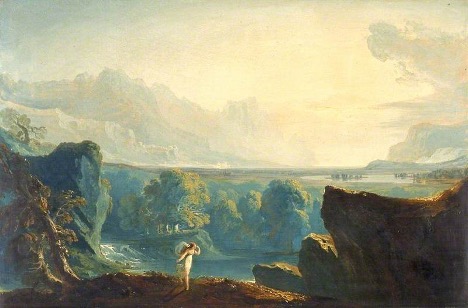
Figure 5. John Martin, Clytie, 1814, oil on canvas, 62 x 92.7 cm, Liang Art Gallery, Newcastle upon Tyne.
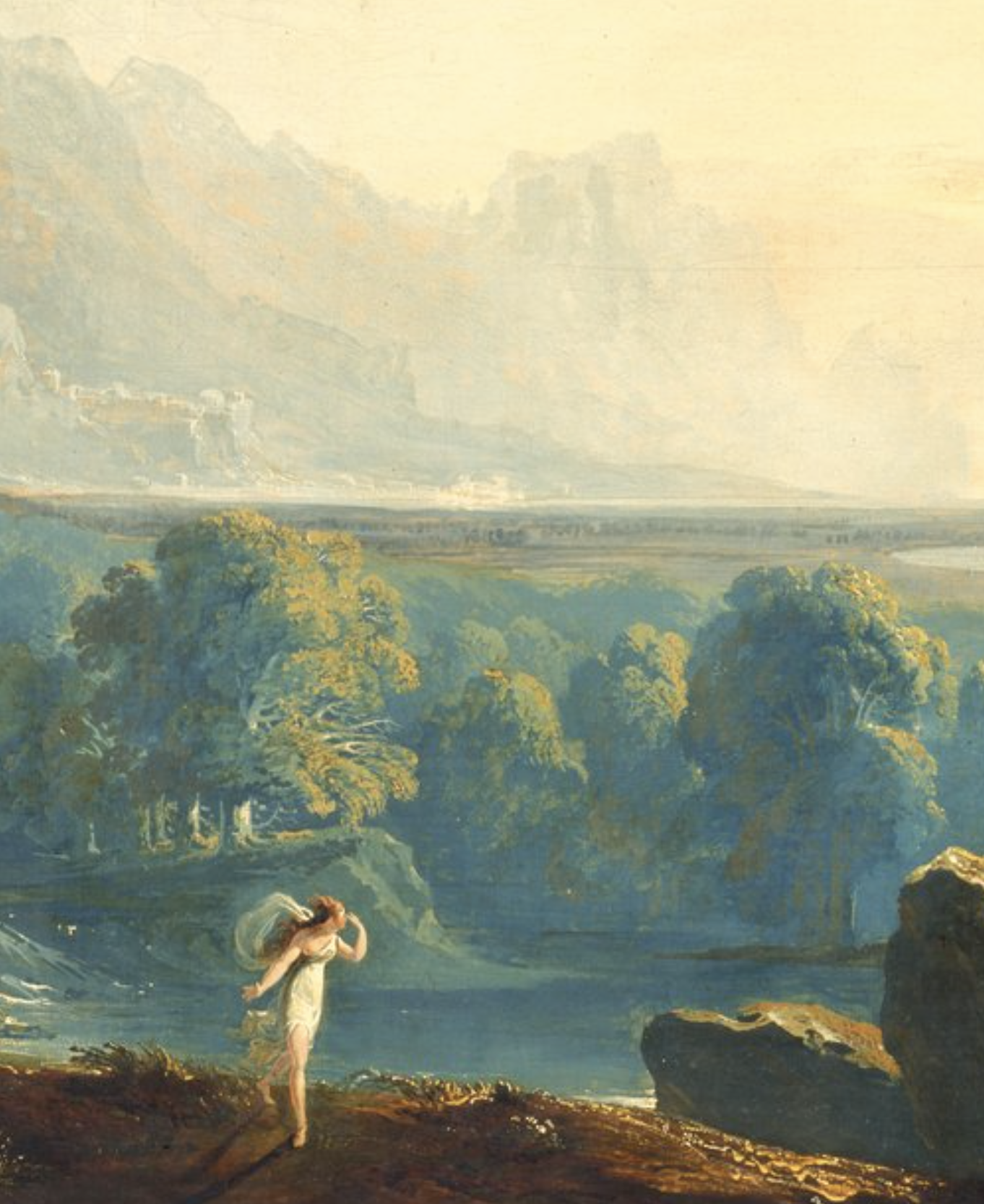
Clytie, detail
With the broader circumstances of exhibition in mind, we can now turn to Martin’s early career to understand how a decade’s worth of successes and failures at the Academy led to Martin’s turn against the RA. This dated back to 1810, when as an emerging artist Martin experienced how strongly hanging positions impacted a painting’s fortunes. In 1810, while working as a glass painter to support his family, Martin made time to create and send to the Academy his first oil painting for exhibition. The subject was Clytie, a nymph who was in love with Helios, the sun god. Although the painting was rejected upon Martin’s first try, he sent it again the following year. The work was accepted and hung in the Great Room, which was a favorable result for a young painter.[42] This placement, with ample illumination from above, enhanced Clytie’s ethereal luminosity, helping to make the work a critical success; notably, the painting would not have fared so well in a dark anteroom.
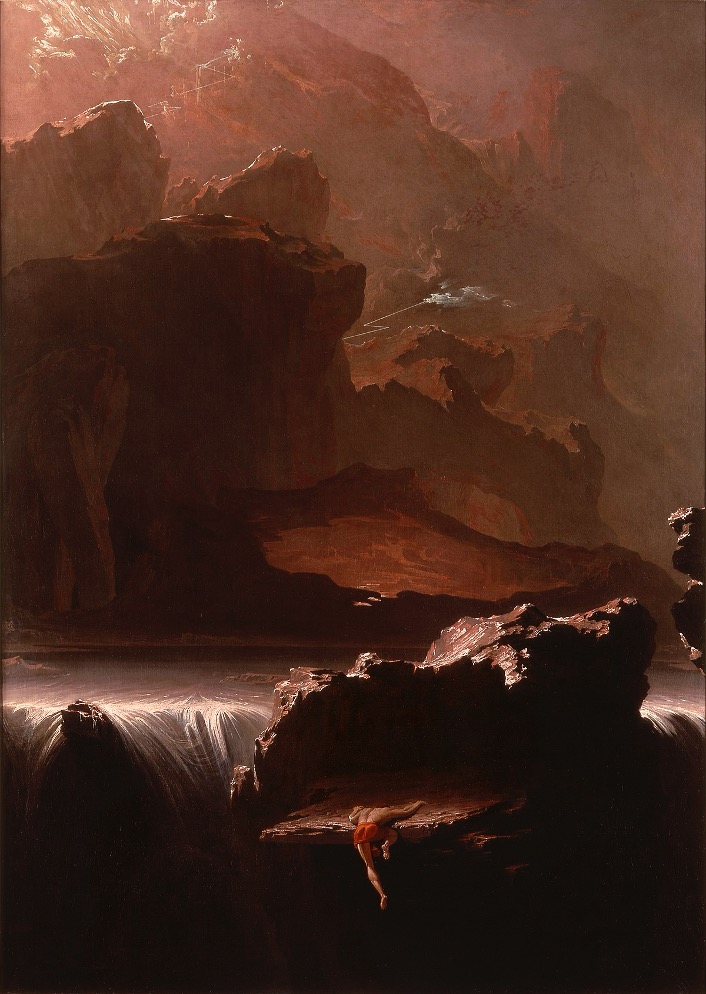
Figure 3. John Martin. Sadak in Search of the Waters of Oblivion, 1812, oil on canvas, 183.2 x 131.1 cm, Saint Louis Art Museum, Saint Louis.
This early success encouraged Martin to continue exhibiting with the Academy; he was also impelled by financial need (having lost his employment as a glass painter in 1812) and, as the artist later recounted, “ambitious of fame.”[43] These circumstances motivated him to create a large, dramatic, eye-catching work, Sadak in Search of the Waters of Oblivion (1812; figure 3). Sadak represented a story from James Ridley’s The Tales of Genii (1764), about a man whose wife was taken by a Sultan. In exchange for her safe return, Sadak must find and bring back some of the Waters of Oblivion, which had the power to wipe a person’s memory. While the Sultan’s goal was to use the waters on Sadak’s wife, his plan backfired, ultimately leading to Sadak’s placement on the throne. The moment Martin chose to depict was the scene of Sadak climbing up to the Waters, just before he reaches his goal. In the painting, Sadak is hanging from a cliff, unable to see the glow of the Waters of Oblivion and the promise of his triumph just ahead of him. Despite the work’s narrative and pictorial ambition and large size (over 6 feet tall), the Academy placed it in an anteroom. Such placement, which surely disappointed the artist, would typically decrease the chances of a work being sold, but Martin received favorable press that helped it to sell for fifty guineas.[44]
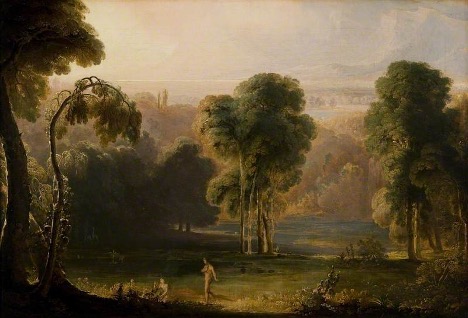
Figure 4. John Martin. Adam’s First Sight of Eve, 1812, oil on canvas, 70.2 x 105.7 cm, Glasgow Museums Resource Centre, Glasgow.
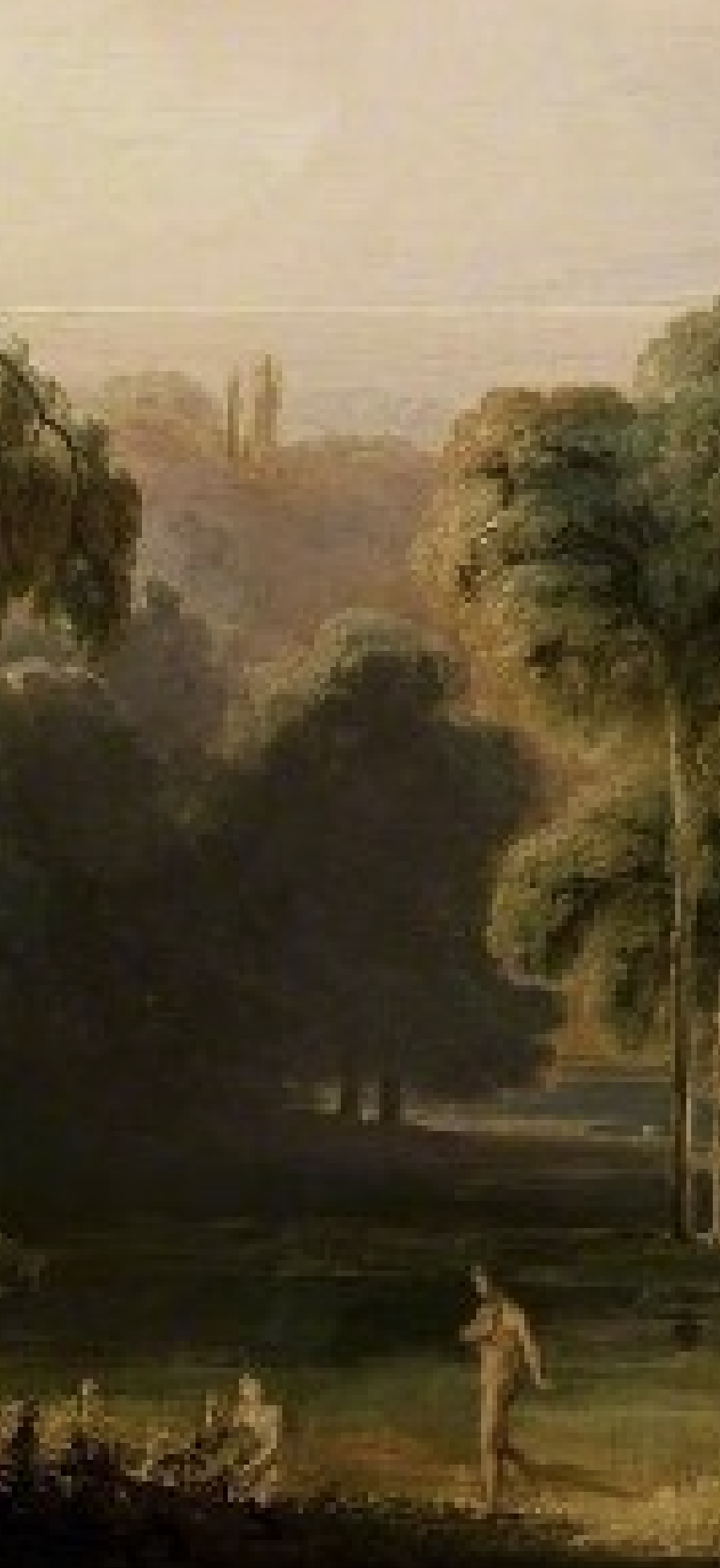
Adam’s First Sight of Eve, detail
With his desire for fame and fortune in mind, from 1813 onward Martin utilized more than one exhibition venue to increase his chances of being noticed by patrons. That year, he chose to send The Expulsion (1813; now lost) to the BI and Adam’s First Sight of Eve (1812; figure 4) to the RA. According to Martin’s autobiography, the latter was placed in the prestigious Great Room.[45] The painting’s mellow, atmospheric morning light would have been accentuated by the skylight, illuminating the small figures of Adam and Eve in the foreground. The following year, however, Martin’s relationship with the Academy soured. Having sent another version of Clytie (1814; figure 5) to the exhibition, he was dismayed to discover that an Academician spilled varnish down the center of the work while coating a painting placed above it.[46] According to Martin’s son Leopold,
Above my father’s picture of Clytie were hanging some smaller works, either by Royal Academicians or Associates of the Royal Academy. Thus it happened… that one of the privileged painters, when varnishing his picture, contrived – we must hope unobserved – to upset a quantity of dark varnish, which ran in a thick stream directly down it completely in two, and in every way destroying the beauty of the clear landscape and the anticipated effect my father hoped to excite… The ‘private view’ arrived, then the dinner, and the picture of Clytie passed unnoticed – all the startling effect having been quite destroyed. Months of work and thought had been wasted. A whole season was quite lost, with the incidental losses in the shape of income and reputation.[47]
Martin never received compensation for the damage that was done, nor were the culprits reprimanded. His only consolation was an apology from the son of the Academy’s president, Benjamin West. Whether it was truly an accident or a deliberate sabotage, Leopold stated that, “One may date my father’s enmity to the Royal Academy from this unfortunate incident, which he never overlooked or forgave”—although Martin did continue to exhibit at the RA afterward.[48]
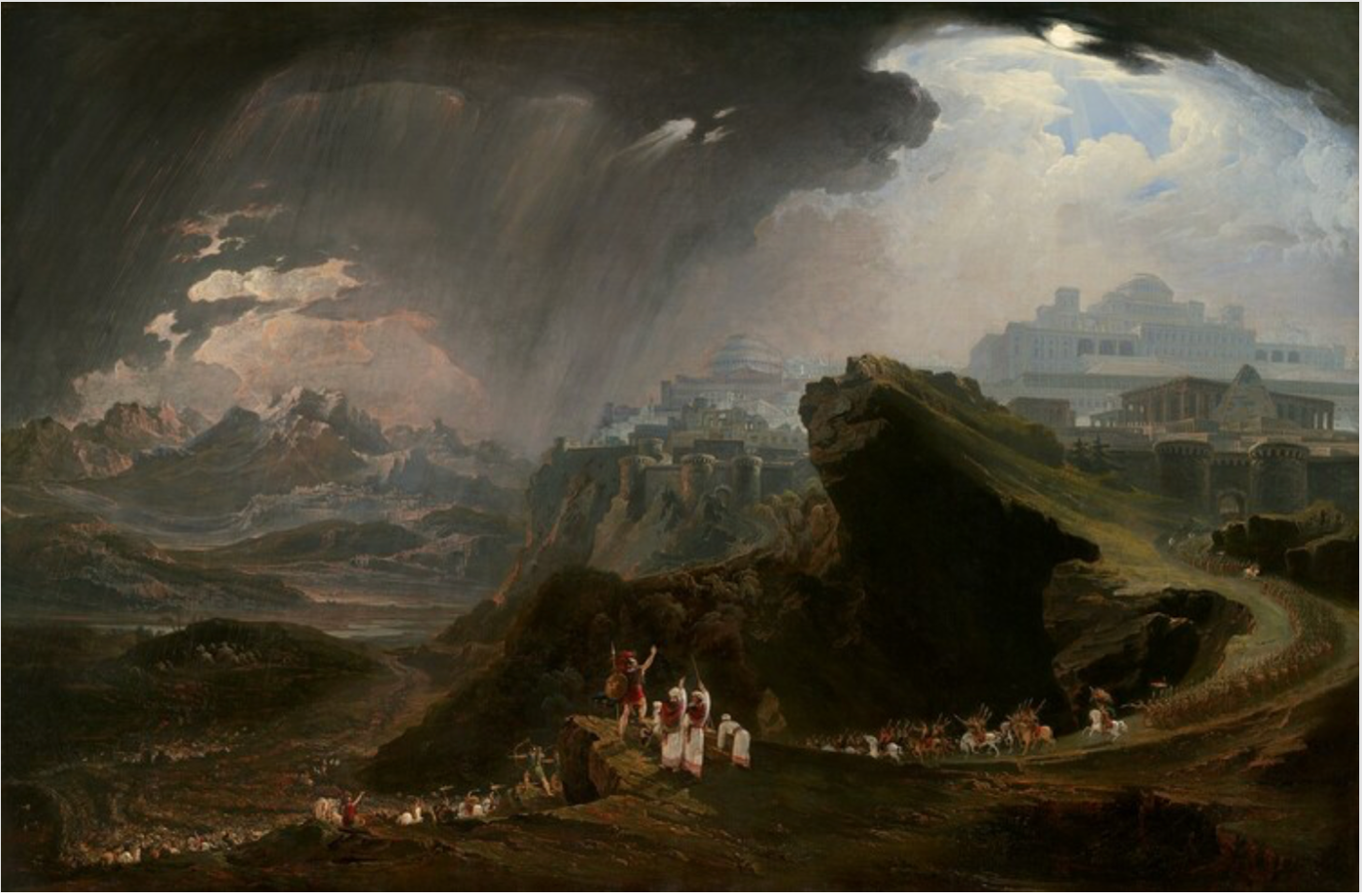
Figure 6. John Martin, Joshua Commanding the Sun to Stand Still Upon Gibeon, 1816, oil on canvas, 150 x 231 cm, National Gallery of Art, Washington DC.
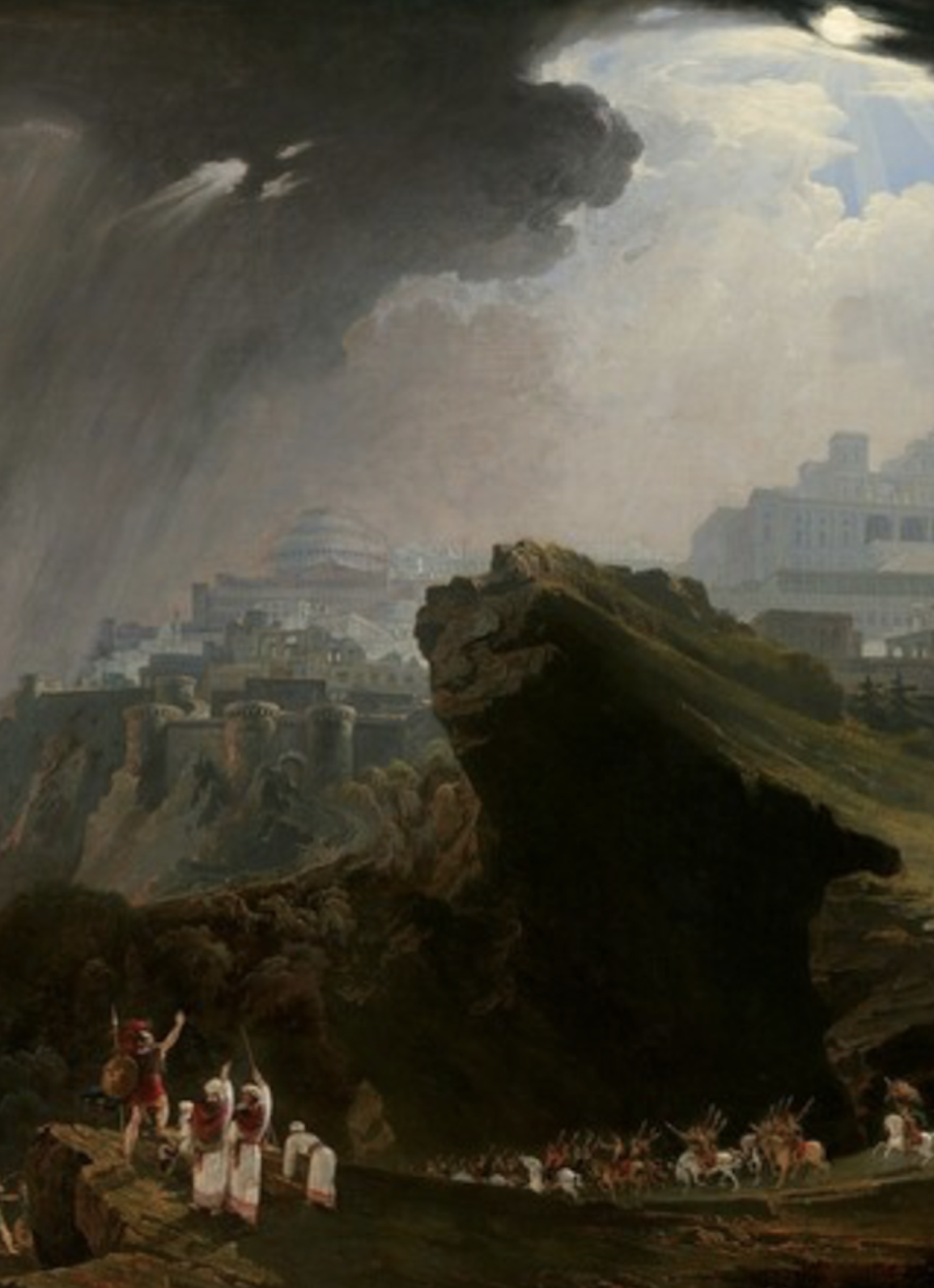
Joshua Commanding the Sun to Stand Still Upon Gibeon, detail
Two years later, when Martin exhibited Joshua Commanding the Sun to Stand Still Upon Gibeon (1816; figure 6), his treatment pushed him to lash out against the RA. Nearly seven and a half feet long and five feet tall, this composition depicts a scene from the Old Testament. Joshua, leader of the Israelite forces, begs God to stop the sun from setting to help his forces fight for their allies in Gibeon. God pauses the sun, aiding the Israelites in their victory. The Academy relegated this work to the obscurity of an anteroom, a placement that would have diminished Martin’s visual and narrative emphases in the painting. A dark room would have shrouded the already dimly lit composition, causing Martin’s small, detailed figures to get lost, and its emphasis on the sun breaking through a gray and stormy sky pass unnoticed. In Martin’s autobiography, he recalled that it was the placement of works like his Joshua that “led to my ceasing to enter my name upon its books, to my considering its laws, and to my subsequent opposition on public grounds.”[49] Hoping to turn this painting’s fortunes around, he exhibited the Joshua one year later at the British Institution, where it won the “chief premium” of the year, £100.[50] The Examiner, a newspaper known for commenting on current exhibitions, published a response to Martin’s reward: “his grand picture Joshua Commanding the Sun to Stand Still, 152, is now seen in an excellent light of this gallery with more satisfaction than last year in the dark anti-room of the Royal Academy. It is truly historical and poetical, an accumulation of the grand in nature and art.”[51] The buzz that Joshua received at the British Institution started Martin’s ascent to fame, a trajectory that would continue without much more help from the Royal Academy.
[42] John Martin, “Mr. John Martin,” The Illustrated London News. March 17, 1849, 176.
[43] Martin, The Illustrated London News, 176.
[44] Martin. The Illustrated London News, 176.
[45] Martin. The Illustrated London News. 176.
[46] Martin painted several works on the subject of Clytie, figure 5 is a “Clytie” but is unconfirmed as the one that was ruined.
[47] Pendered, 59-60.
[48] Pendered, 60.
[49] Martin, The Illustrated London News, 177.
[50] Martin, The Illustrated London News, 176.
[51] R.H., “Fine Arts: British Institution,” The Examiner, February 16, 1817, 13.