
Francis Bacon Amidst the Turmoil
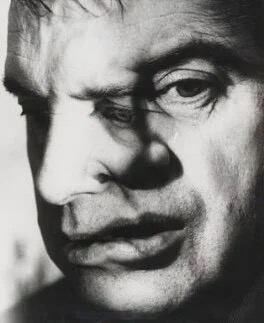
During the late 1920s, Francis Bacon settled into a London apartment and ventured into the world of interior and furniture design. It was a creative but not yet fully formed period for Bacon, who was searching for his artistic voice. The Australian painter Roy de Maistre, who Bacon met through his design work, became a pivotal figure in his life, not only as a patron but as a mentor[1]. De Maistre introduced Bacon to oil painting and guided him through the nascent stages of his development as an artist. Bacon’s early work was heavily influenced by the transformative experience of viewing Picasso and Surrealist artworks during a visit to Paris. Bacon himself stated “I went to Paris for a short time. While there I saw at Rosenberg’s an exhibition of Picasso, and at that moment I thought, well I will try and paint too.”[2] This influence was apparent in his 1933 painting “Crucifixion,” (Figure 8) a piece that resonated with the unsettling themes of anguish and dread that would become the hallmark of his later work. The stark, skeletal composition gained some recognition, being published in Herbert Read’s “Art Now” and purchased by collector Sir Michael Sadler. However, despite this early success, Bacon struggled to gain wider acclaim. His self-organized exhibition in 1934 went largely unnoticed, and his paintings were notably excluded from the International Surrealist Exhibition on the grounds that they were not sufficiently Surrealist. These setbacks, coupled with a sense of disillusionment, led Bacon to a nomadic lifestyle, and he destroyed much of his work from this period in a fit of self-critique. By his own later admission, only fifteen or so pieces from before 1943 survived, as he felt his true artistic career began with the triptych that marked his breakthrough.
Due to his asthma, Bacon was exempt from active military service during World War II. However, he volunteered for a role in Civil Defence, specifically working in the ARP. The duties in ARP included firefighting, civilian rescue, and the recovery of the dead [3]. Bacon’s time serving with the ARP during the Blitz exposed him to the immediacy of suffering and the precariousness of life, infusing his work with a visceral quality that seemed to capture the existential anxiety of the era. Though never formally associated with the WAAC, Bacon’s work shared a thematic lineage with the committee’s mission. Bacon confronted a continent scarred both physically and mentally. This grim reality, which spared neither man nor monument, became the raw material for Bacon’s artistic endeavors. While WAAC artists, including Graham Sutherland, depicted the war’s physical devastation, Bacon delved into the internal landscape of those affected by the violence of the war. The thematic parallels between Bacon’s focus on the tortured human form and the WAAC’s documenting of Britain’s wartime experience were significant. Both were responding to the same historical moment, albeit through different lenses.
In retrospect, Bacon’s experiences in the 1940s—his early attempts at success, the mentoring by de Maistre, the influence of Picasso and the Surrealists, the rejection, the wandering, and the destruction of his own work[4]—were all part of the crucible that forged his identity as an artist. His personal history during this decade is critical to understanding the themes he would explore throughout his career. Bacon himself pinpointed the 1944 triptych as the true genesis of his oeuvre, marking the moment when his distinctive style began to crystallize—a style that would continue to engage with the depths of human experience and the fragility of existence.
[1] Rina Arya, The Influence of Roy de Maistre on Francis Bacon, 2017
[2] David Sylvester, Interviews with Francis Bacon, 2012
[3] Estate of Francis Bacon, Biography 1940s
[4] Martin Harrison, In Camera: Francis Bacon, 39