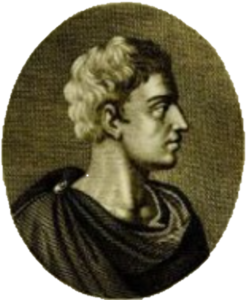

Figure 2. Titian, Portrait of Alfonso d’Este, 1530. Bemberg Foundation, France.
Source: Public Domain
Alfonso I d’Este’s reign as Duke of Ferrara was epitomized by his endeavor to establish Ferrara as a preeminent Italian state through political ambitions and artistic patronage. Alfonso was born to Ercole I d’Este and Eleonora of Aragon, the Duke and Duchess of Ferrara in 1475, and received a humanistic education, as was custom at the time for the children of nobles.[3] Though Alfonso’s early years were marred by tales of debauchery, he quickly became a respected figure in the court of Ferrara due to his intelligence, political acumen, and dedication to his duchy.[4] Among Alfonso’s closest confidants were his wife Lucrezia Borgia, who bore him eight children and proved to be an effective leader in her own right, and his brother, Cardinal Ippolito I d’Este.[5]
Upon his father’s death in 1505, Alfonso became the third Duke of Ferrara, inheriting both his father’s title and political woes, from negotiating with the papacy to aiding his people during a devastating famine.[6] The greatest of Alfonso’s trials began in 1509 when the Venetians attacked Ferrara. Though Alfonso was able to defend Ferrara from the invading forces, the duke’s continued aggression toward the Venetians earned him the ire of Pope Julius II, who desired to remove the d’Este family from power and reclaim Ferrara for the papacy.[7] Julius II proceeded to excommunicate Alfonso from the church and invade his territories, culminating in the Battle of Ravenna, which saw the forces of Alfonso and his French allies defeating the armies of Julius and the Spanish.[8] The Papal State’s loss of the Battle of Ravenna, followed by the death of Julius II in 1513, did not mean the end of papacy’s attempted conquest of Ferrara, with the following Pope, Leo X, allying with the Holy Roman Empire in order to follow in his predecessor’s footsteps.[9] Alfonso would spend the next decade and a half defending his city from papal invaders, while at the same time trying to renegotiate peace with the Holy Roman Emperor and the Pope, eventually succeeding in 1530.[10] Though his military ambitions were grand, it was all he could do to maintain the territory he possessed in the face of the overwhelming power of the papacy and Venice. Alfonso, however, was more than just warmonger, as his eyes were equally trained on Ferrara’s cultural identity as its political one, and it was during those seventeen tumultuous years that Alfonso would commission many of the most significant paintings in his collection, as well as finish construction on his Camerino d’Alabastro.
Though his love for classical and humanist literature and poetry is the most well-known, the duke was also fascinated with a number of classical art forms, from music to sculpture.[11] Alfonso’s interest in classical sculpture was so great that he employed various ambassadors to seek out prized antiquities from the collections of other prominent individuals.[12] Alfonso was so keen on collecting antique statuary that in 1517 he requested that Raphael, who was Papal Prefect of Antiquities, acquire antique sculptures on his behalf.[13]