As with Feast of the Gods and the Triumph of Bacchus in India, Dossi’s Jupiter Mercury, and Virtue contains illusions to several works of classical sculpture, which indicates once again that it was Equicola, presumably with the assistance of Dossi, who conceived the painting’s scheme, and did so in order to embody “the creation of beauty by selection.” At the bottom left of the painting, placed right beside Jupiter’s foot Jupiter’s primary iconographic symbol, the lightning bolt. Even members of Duke Alfonso I d’Este’s court might have been stumped by this peculiar item, as most Renaissance depictions of Jupiter feature either an eagle or staff as the sky god’s primary attribute. This bundle of fiery lightning bolts, however, did not come from Dosso Dossi’s imagination, nor was it a recent invention, but was actually designed and frequently used in the classical era.
One of the earliest visual depictions of Jupiter’s lightning bolt comes from a third century coin from ancient Epirus, a geographical region that was once in the Roman Empire, which features the head of Zeus on one side, and on the other is Zeus’ emblematic lightning bolt (Fig. 14). This depiction of the lightning bolt, though lacking detail due to the nature of ancient coinage, is quite similar to the one in Jupiter, Mercury, and Virtue. The base of the bolt resembles a flame that has been bound at the center, with linear offshoots extending from the base in opposite directions.
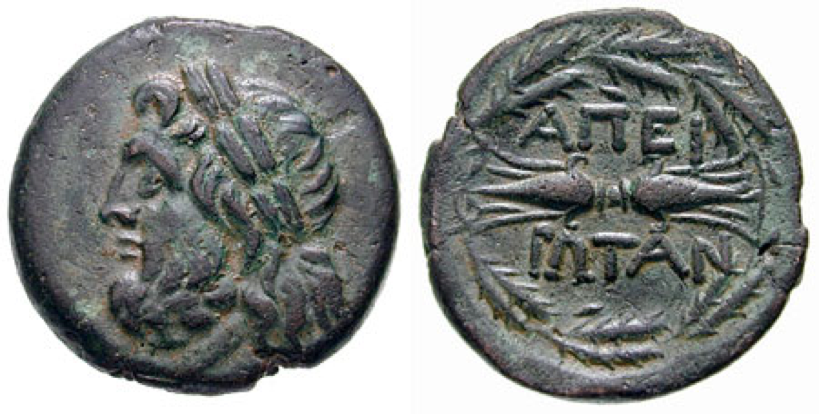
Figure 14. Unknown, Epirote Coin. 234 B.C.
Source: Public Domain
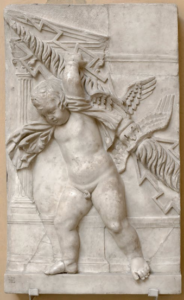
Figure 15. Unknown, Putto with Lightning Bolt. Mid-first century A.D. Uffizi Gallery, Florence.
Source: https://www.uffizi.it/en/artworks/putto-with-lightning-bolt
The Uffizi Gallery in Florence, possesses a Roman low-relief sculpture titled Putto with Lightning Bolt from the first century A.D. (Fig. 15). As the name of work implies, this relief features a nude putto struggling to carry Jupiter’s lightning bolt, which exceeds the putto in size, on his back. This depiction of Jupiter’s lightning bolt resembles a bundle of tightly coiled flames bound in the center, and four prominent geometric, linear protrusions, much like the lightning bolt painted by Dosso Dossi. Equicola likely suggested the inclusion of this classical-style lightning bolt as an allusion to the classical statuary that his patron admired.
Aside from the lightning bolt, the body of Mercury, the most central figure of Dossi’s composition, has a very distinct pose. While Dosso Dossi is well-known for his ability to render fabrics and metals with incredible detail and accuracy, his treatment of the human body is often less successful. This can be seen in his figure of Virtue (or Helios), whose strangely foreshortened right arm appears swollen and misshapen, and is far less realistic than the rest of the figure. Yet Mercury is rendered incredibly naturalistically, from his anatomically sound proportions to the creases in his skin. Although entirely absent from the scholarship on this painting, Mercury’s body bears a striking and as of yet unnoticed resemblance to another, more well-known work of classical sculpture, the Belvedere Torso (Fig. 16).
The Belvedere Torso, the fractured remains of an unidentified marble statue, has resided in the Vatican since the sixteenth century. The statue was carved by Apollonios, son of Nestor, an Athenian artist of little renown from around the first century BC.[92] The identity of this massive and muscular figure is up for debate even to this day. During the Renaissance, it was believed to have been Hercules seated upon the skin of a lion, while modern scholars have claimed it to be the torso of a variety of classical heroes, such as Ajax, Marsyas and Philoctetes.[93] It is also possible that Michelangelo played a role in preventing the torso’s restoration, which had become a common practice during the early sixteenth century.[94]
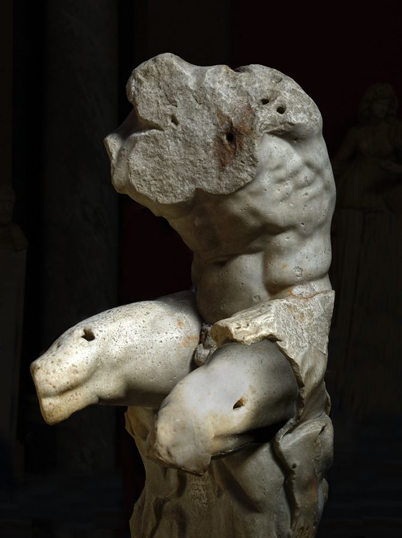
Figure 16. Unknown, Belvedere Torso. 1st-2nd century B.C. Vatican Museums, Vatican City.
Source: Public Domain
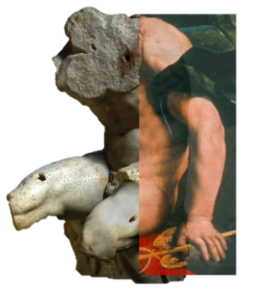
The statue was carved in a seated position with its legs splayed and torso twisted with every tendon and fiber straining as if the marble body was actually exerting itself. These qualities have made the Belvedere Torso an incredibly popular model for artists trying to capture a twisting male body, such as Michelangelo and his Sistine Ignudi, and it seems Dosso Dossi was no exception.[95] As Mercury puts his finger to his lips, his body twists slightly, causing his stomach to crease in a manner nearly identical to that of the Belvedere Torso. Dossi’s rendering of Mercury’s clenched abdominal muscles, shoulder and ribcage also bear a striking resemblance to the antique torso, right down to identical creases across the midsection. Even the figure’s outstretched legs and exposed rear look to be modeled after the Belvedere Torso. The multitude of similarities between Dossi’s Mercury and the Belvedere Torso go beyond just mere coincidence, and they suggest that Equicola included this figural parallel in his invenzione in order to evoke the Zeuxian method.
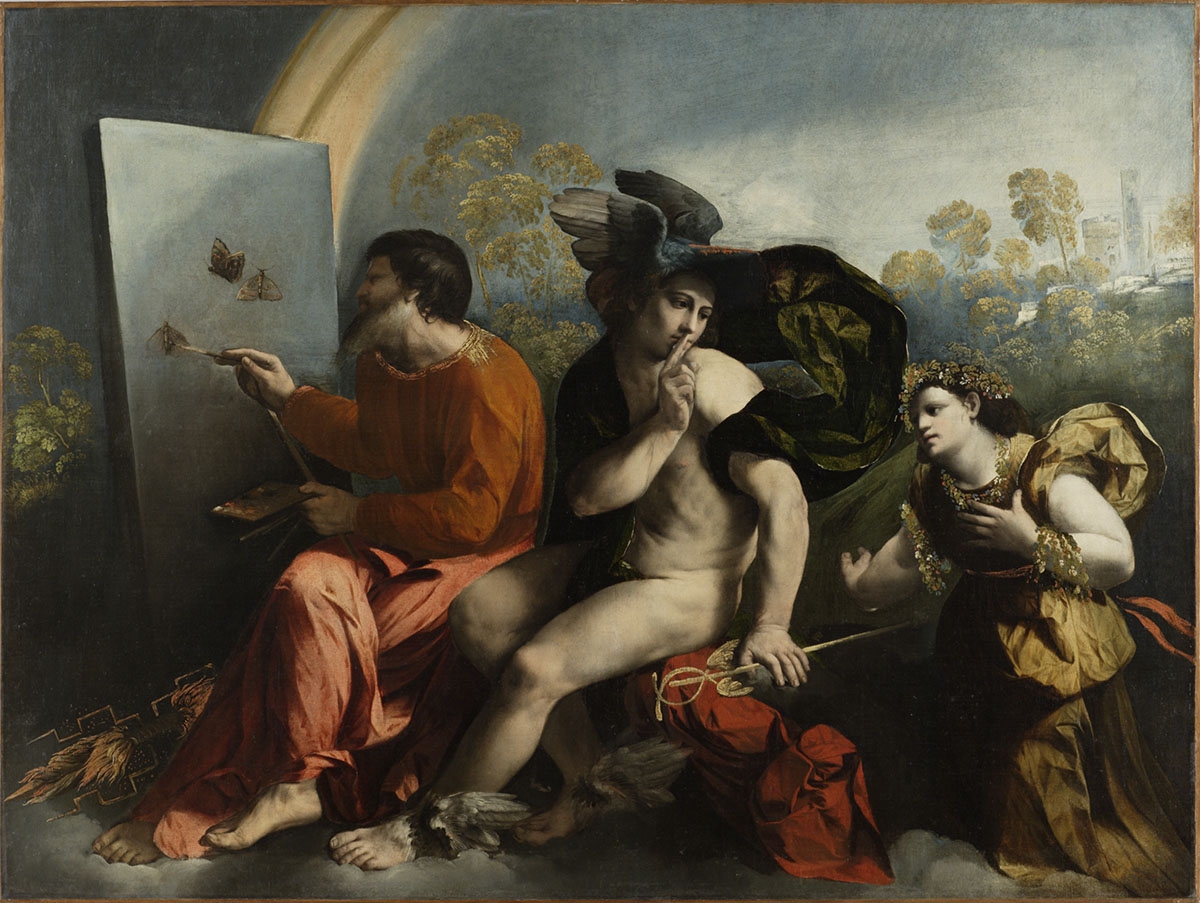
Jupiter, god of sky and king of the gods. Depicted painting butterflies in order to evoke Alberti’s description of the gods from Intercenales.
Mercury, the messenger god
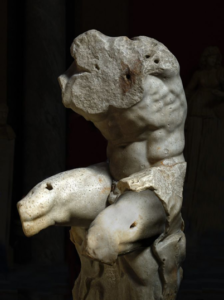
The twisting body of Mercury is based on the Belvedere Torso.
Helios, the personification of the sun, as described by Lucian.
Jupiter’s symbol, the lightning bolt
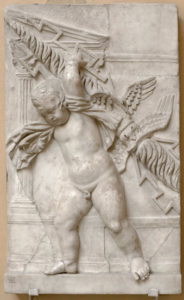
Based on classical depictions of the lightning bolt, as shown in Putto with Lightning Bolt.
“They say in fact that the gods must make the pumpkins bloom in time or make sure that the wings of the butterflies are beautifully painted”
-Alberti, Intercenales
“Zeus says you’re not to go out driving today, Mr. Sun-god, or tomorrow or the next day. You’ve to stay at home and all that time’s to be one long night; so the Hours can unyoke your horses and you can put out your fire and have a nice long rest.”
-Lucian
As the legend goes, in order to create an ideally beautiful figure, Zeuxis selected individual body parts from five different women to serve as his model. By choosing a disembodied torso as the model for Mercury, Equicola mimicked Zeuxis’ selection of ideal parts quite literally, as the ancient painter must have done the same exact thing in order to paint Helen’s torso. With a reference to the Belvedere Torso, ancient relief carvings, and classical and humanist texts, Equicola selected a variety of ideal bodies, whether they be literal or bodies of work, and synthesized them in a fashion befitting a humanist scholar.