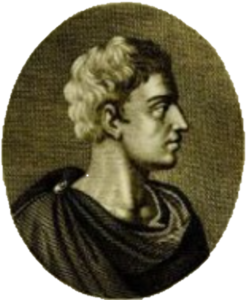
Initiated by fourteenth century Italian scholar Petrarch and inspired by classical literature, Renaissance Humanism refers to the study of the liberal arts, namely poetry, grammar, rhetoric, philosophy and history.[29] Petrarch, upon discovering Cicero’s Letters to Atticus in 1345, began advocating for the search and critical study of lost texts from antiquity, as he believed they held the key to developing a deeper understanding of the world and guidance for attaining a more ideal humanity.[30] Eventually, more and more scholars began following Petrarch’s lead, such as Coluccio Salutati, Poggio Bracciolini, and Leonardo Bruni, all of whom ardently collected ancient manuscripts.[31] Their reverence and dedication to the classics spread across Italy, eventually transforming into a major intellectual movement by the fifteenth century.[32] By the end of fifteenth century, not only had humanism become a prominent academic practice within several universities, but it also had great influence over many members of Renaissance Italy’s elite, from powerful nobles like Alfonso I d’Este, to high ranking members of clergy.
A major principle of humanism during the Renaissance was the concept of “creation of beauty by selection,” which was based on the legend of Zeuxis.[33] Zeuxis was a Greek painter who was tasked with painting Helen of Troy, the most beautiful woman in the world. Lacking a real-life model matching Helen’s idealized beauty, Zeuxis gathered five beautiful maidens and selected their most beautiful attributes, and by combining them into a single figure, was able to create a beauty beyond nature.[34] This story was initially described by Cicero in the first century, BC, though both Quintilian and Pliny the Elder wrote their own accounts in the following century.[35] The tale of Zeuxis and his selective method of artistic creation was eventually embraced by the humanists of the Renaissance, with Alberti using it as a central component in his conception of the ideal work of art, which he referred to as istoria.[36] Both Cicero and Alberti saw Zeuxis’ method as the visual manifestation of the literary process of writing, and along with Horace’s concept of ut pictura poesis, “creation of beauty by selection” became a foundational tenet of humanistic artistry.[37] Alberti, who was associated with the Estense court during the fifteenth century, greatly impacted Ferrarese humanism and his writing would go to influence Mario Equicola’s own perception of humanistic painting.[38] This suggests that Equicola was not only aware of Zeuxis and his selective method, but was intimately familiar with it through his study of Albertian theory.

Figure 5. François-André Vincent, Zeuxis Choosing his Models for the Image of Helen from among the Girls of Croton.
Source: Public Domain