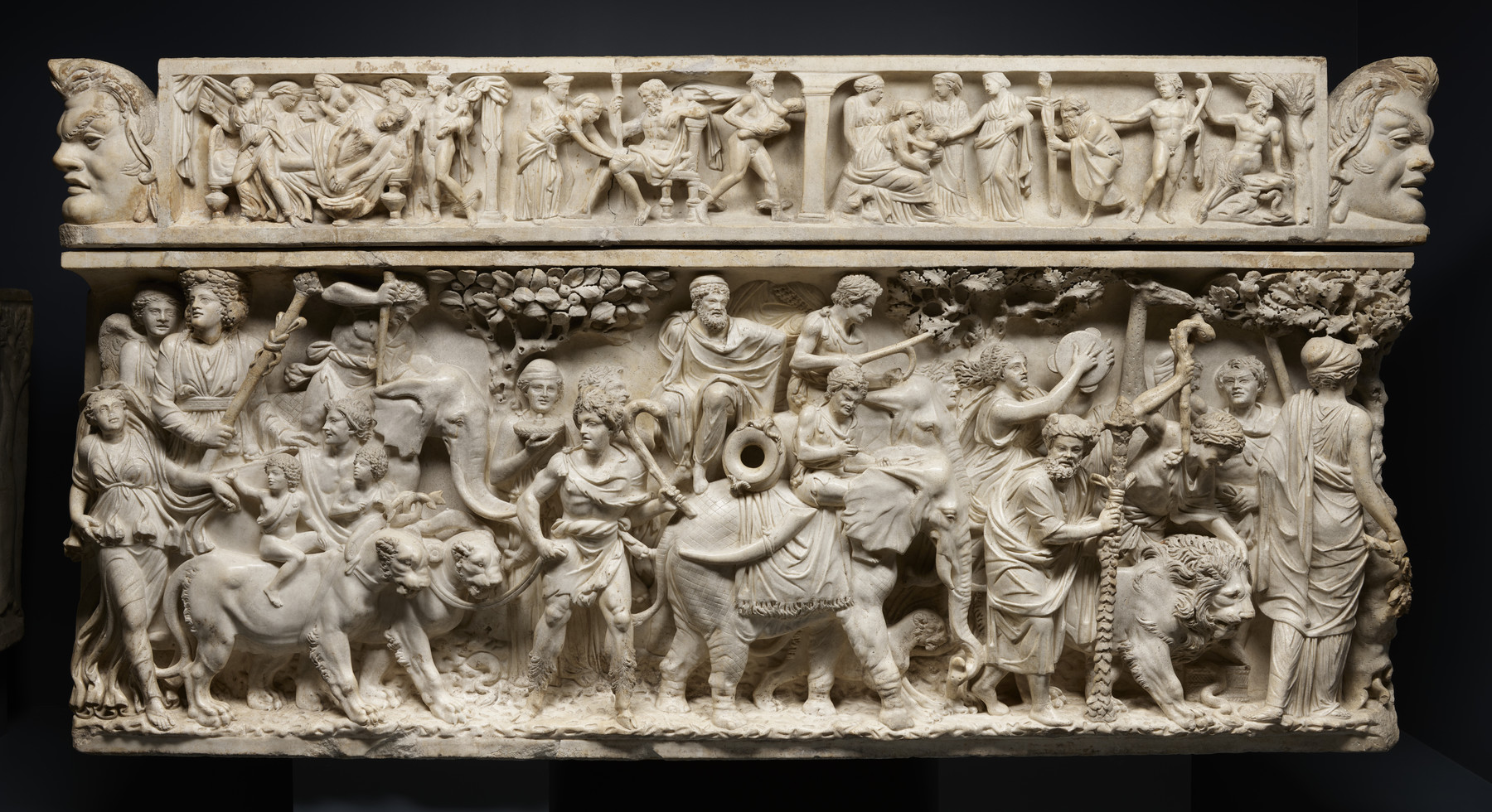
Figure 12. Unknown, Sarcophagus of the Triumph of Dionysus, 190 CE. Marble. The Walters Art Museum.
Source: https://art.thewalters.org/detail/33305/sarcophagus-with-the-triumph-of-dionysus/
With the legend of Zeuxis in mind, Equicola, likely with Raphael’s assistance, selected various figures from a classical sarcophagus when designing the plan for the Triumph of Bacchus in India. During the Classical era, the tale of Bacchus’ triumph in India was an incredibly popular sculptural motif that was favored by kings and generals alike, as it was thematic of victory, military triumph, and celebration. It was not an uncommon practice to have the scene carved into a sarcophagus as a means of symbolizing the deceased’s military greatness.[80]
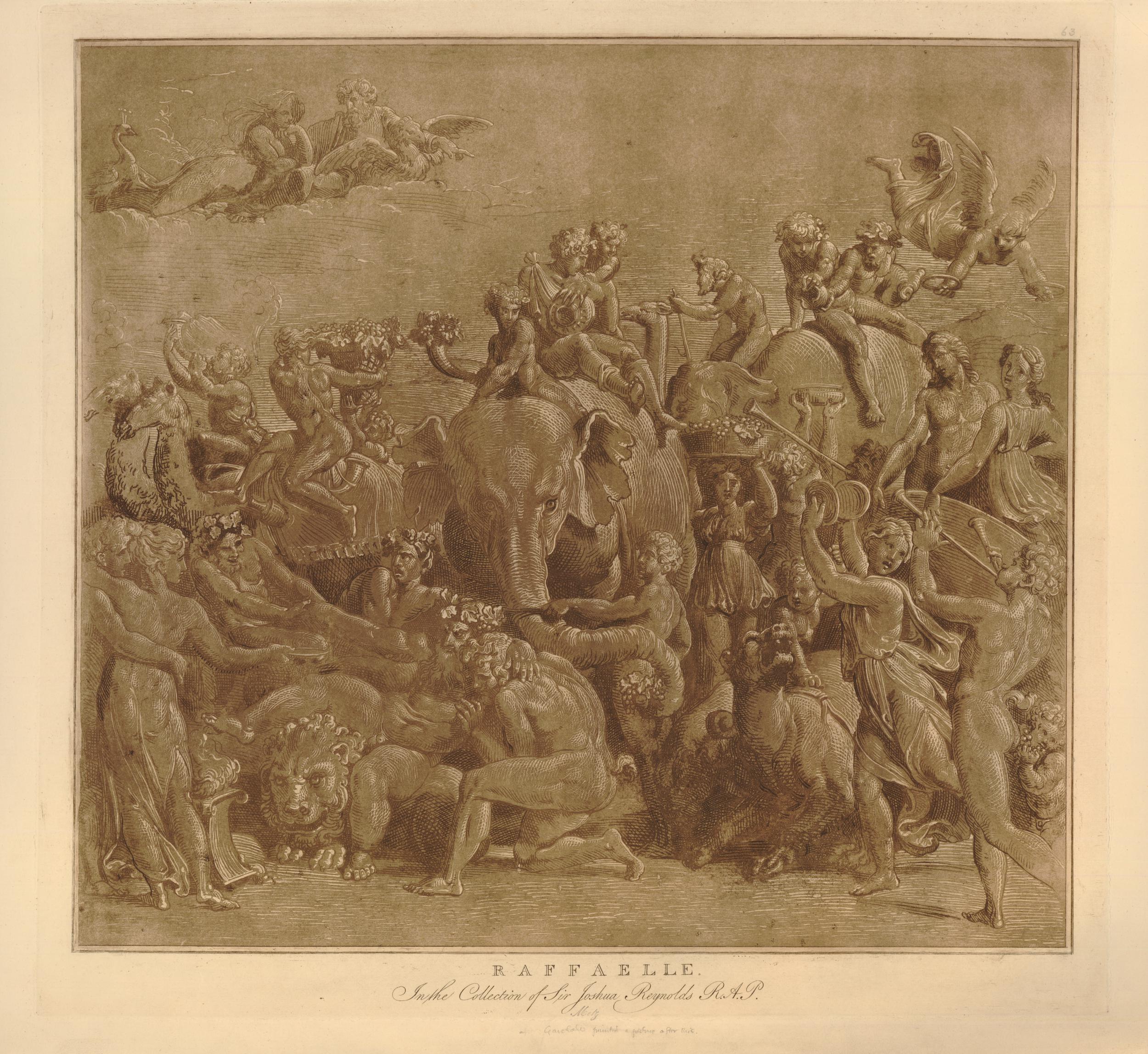
The compositional drawing for the Triumph of Bacchus in India clearly reflects ancient Roman sarcophagi in both design and subject matter, so the question remains, what sarcophagus was Equicola’s source of inspiration? Despite the prevalence of sarcophagi depicting Bacchus’ triumph in the classical era, few examples remain today, all of which were uncovered after the Renaissance. However, we know that Equicola was familiar with Bacchic sarcophagi, as he had seen the Blenheim Sarcophagus while in Rome, so it is likely that he would have seen a sarcophagus depicting Bacchus’ triumph in India during his ten years in the ancient city. Though it is unclear what specific sarcophagus Equicola based his schema on, by comparing his drawing to one of the remaining sarcophagi, specifically the Sarcophagus with the Triumph of Dionysus (Fig. 12), which is currently in the Walters Art Museum’s collection, Equicola’s classical inspiration becomes clear. This sarcophagus, which has never been associated with Raphael or Equicola prior to my analysis, bears an unmistakable resemblance to Raphael’s compositional drawing for the Triumph of Bacchus in India. Not only is the sarcophagus’ composition similar, but many of the figures correspond directly with one’s found in Raphael’s drawing, such as the panthers, lion, giraffe, and elephants, along with the presence of Jupiter in the upper register. Though Equicola was not familiar with the Walters sarcophagus in particular, since it was excavated over three-hundred years after his death, it is quite clear that he must have been aware of one of the many sarcophagi depicting the same scene, since the resemblance between his relief-like drawing and the Sarcophagus with the Triumph of Dionysus is so striking.[81]
Elephant
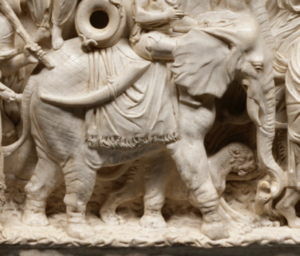
“another hurried under the lofty peaks of broad-based Imaios the straight-legged elephants which he had captured by his spear”
-Nonnus, Dionysiaca
Lion
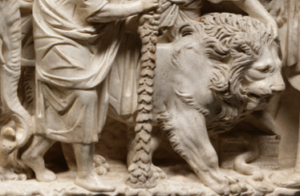
“Here was one by the deepcaverned mountain of Hemodos driving to exile a team of Indian lions, in triumph”
-Nonnus, Dionysiaca
Angel

Elephant
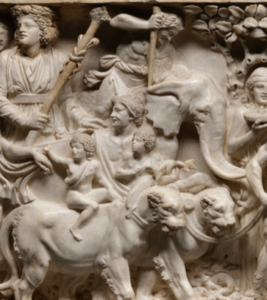
“another hurried under the lofty peaks of broad-based Imaios the straight-legged elephants which he had captured by his spear”
-Nonnus, Dionysiaca
Putto

Frequently depicted in scenes of Bacchus’ Indian triumph.
Panthers
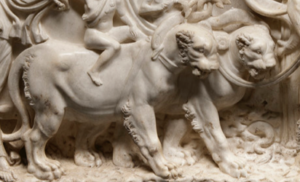
“there was another pulling a panther to the Mygdonian shore with a chain fast about its neck.”
-Nonnus, Dionysiaca
Nymph

One of many in Bacchus’ thiasus.
Bacchus and Ariadne
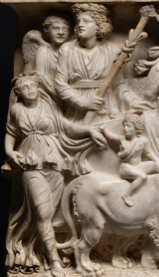
“After he had made captive the Indian nation, shackled in sleep by their potations, immovable, without a wound, Dionysos did not commit his quarrel to the forgetful winds.”
-Nonnus, Dionysiaca
Jupiter and Juno
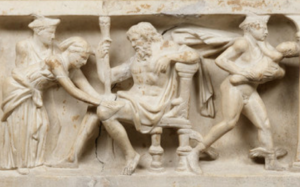
Depicted with their avian attributes, the Eagle and the Peacock
Giraffe
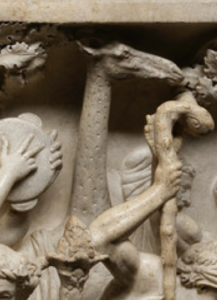
Frequently depicted in scenes of Bacchus’ Indian triumph.
If Raphael’s Triumph of Bacchus in India had actually been painted, it would have been an ideal companion piece to Bellini’s Feast of the Gods. The subject matter of both works was derived from a combination of Ovidian poetry and late antique writing, while the compositions were inspired by ancient Roman sarcophagi relief. The Triumph of Bacchus in India, with its ancient relief like composition and classical literary references, from Roman mythology to Greek epic poetry, was a perfect example of the selective method of creation favored by the humanists, and would have been an ideal catalyst for scholarly humanist debates. Even though Raphael’s work never came to fruition, the humanistic principle of selection that it embodied did not die with the artist, as the mantle would be picked up four years later by Alfonso’s very own court artist, Dosso Dossi.