Much like with Feast of the Gods, Mario Equicola was tasked with inventing the schema for a painting depicting Bacchus and his conquest of India, the commission for which was given to Raphael. In 1517, Raphael first delivered a remarkably detailed compositional sketch to his patron based on Equicola’s instructions. The drawing depicted Bacchus and his throng of raucous followers engaging in triumphant revelry, surrounded by a slew of exotic animals. Unfortunately, a fully realized Triumph of Bacchus in India painting would never come to fruition due to Raphael’s premature death, and with his compositional drawing lost as well, the only existing visual link to the original commission is a 1789 etching after it (Fig. 11), completed by the British-German painter and printmaker Conrad Martin Metz, currently housed in the British Museum in London.
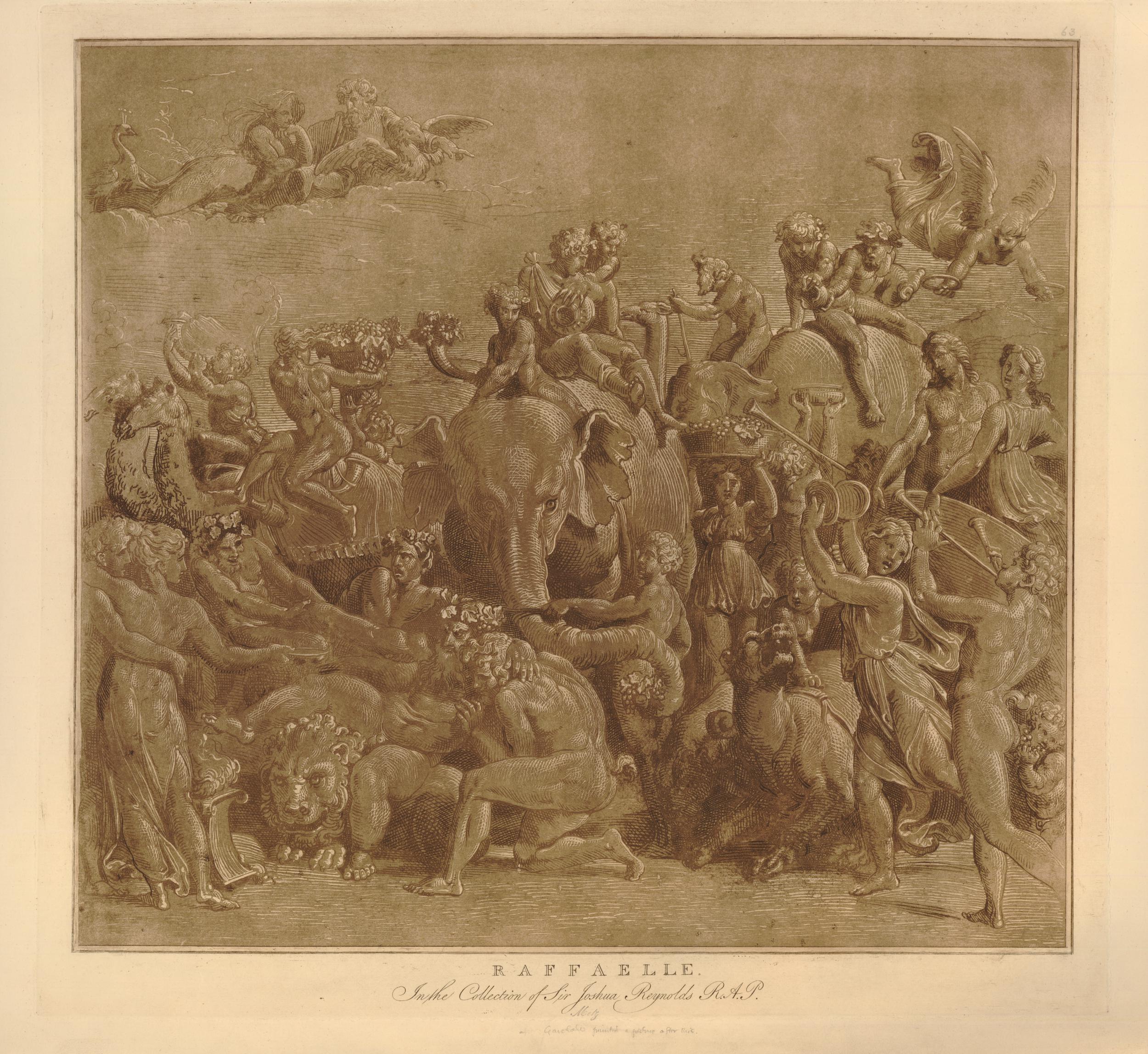
Figure 11. Conrad Metz, Triumph of Bacchus in India, 1789. Etching. The British Museum, London.
Source: https://www.britishmuseum.org/collection/object/P_1981-U-21
One of the most notable formal elements of this drawing is its lack of depth, which, like the Feast of the Gods, evokes ancient Roman funerary and sarcophagi reliefs. This similarity is further compounded by the whirlwind composition, dynamic movement and the overlapping of figures that embody the energizing and tumultuous nature of a classical bacchanal. This contrasts with the other bacchanalian scenes that were hung in the Camerino d’Alabastro, which favored harmony over intentional disorder. Beyond the tumultuous nature of the composition, Raphael’s drawing is unique in its almost complete lack of depth, which contrasts greatly with his other work. The background is almost completely obscured by the overabundance of figures, all of whom are pushed to the front of the picture plane, which creates a distinct flattening effect.
On the far right of the scene is Bacchus, depicted as a naked young man with long, flowing hair, standing on a chariot beside his bride, the Cretan princess Ariadne. Bacchus is not the focal point of composition, but instead appears to be a spectator who is content watching the revelry unfold around him. The rest of the composition is made up of various members of Bacchus’ thiasus, from the drunken and disheveled Silenus at the bottom left, to the various musicians, cherubs, merrymakers, two elephants, a crouched lion, a giraffe, two panthers, and two camels. At the top left of the scene are a man and a woman atop a cloud, along with a peacock and an eagle. These figures, based on their elevated position within the scene and their recognizable avian attributes, are Jupiter and Juno, the king and queen of the gods.