Despite serving Marchioness Isabella d’Este in Mantua in 1524, Mario Equicola was still an ardent supporter of Alfonso, and was most likely behind the invenzione of Dosso Dossi’s Jupiter, Mercury, and Virtue (1524) (Fig. 13).[82] The circumstances surrounding the commission and creation of the painting are unclear due to a lack of contemporaneous accounts, but between the classical and Albertian subject matter, references to antique sculpture, and the employment of the selective method of artistic creation, Equicola’s influence is palpable. The painting depicts three figures from Greco-Roman mythology, but with seemingly unprecedented subject matter, namely Jupiter, the god of sky and thunder, in the act of painting butterflies on a canvas. Unsurprisingly, due to the humanistic nature of the duke’s collection, scholars have mainly explored the literary sources that could have inspired such a unique and perplexing work, and much like the works of Bellini and Raphael that came before it, Dosso Dossi’s Jupiter, Mercury, and Virtue is equally rife with allusions to classical statuary.
The subjects of Jupiter, Mercury, and Virtue, as the title suggests, are the Roman gods Jupiter and Mercury, along with Virtue, the physical embodiment of the Roman virtue of virtus, meaning valor or courage. On the far left of the painting sits Jupiter at his canvas, wearing a simple but luxurious orange robe with a golden ornamentation on the cuffs and collar. The sky god, with his dark, messy hair and graying beard, sits barefoot with his right leg crossed over his left, and his heavenly lightning bolt resting at his feet. Jupiter holds a palette and several brushes in his left hand and a paintbrush in his right, which he uses to paint three butterflies on the massive, sky-blue canvas set before him. To his right sits Mercury who, save for his winged helmet and deep green mantle, is completely nude. Instead of wearing winged sandals, the messenger god is depicted with winged feet, with feathers growing out of his ankles. In his left hand, he holds his mythological attribute, the caduceus, while his right index finger hovers over his lips in a gesture of silence. Finally, to Mercury’s right, kneels Virtue, clothed in a rich, golden dress and adorned with various floral garlands. The background of the painting features a vague cityscape in the far right, and a golden arc of light on the left, with yellow and green trees populating the space in between. To the right of the golden arc, the sky is painted navy blue, turning lighter and lighter towards the right side of the frame, eventually becoming a pale sky blue intermixed with white. The perplexing depiction of Jupiter as a painter did not originate from classical mythology, but from the fifteenth century writings of Leon Battista Alberti, the Italian Renaissance humanist.
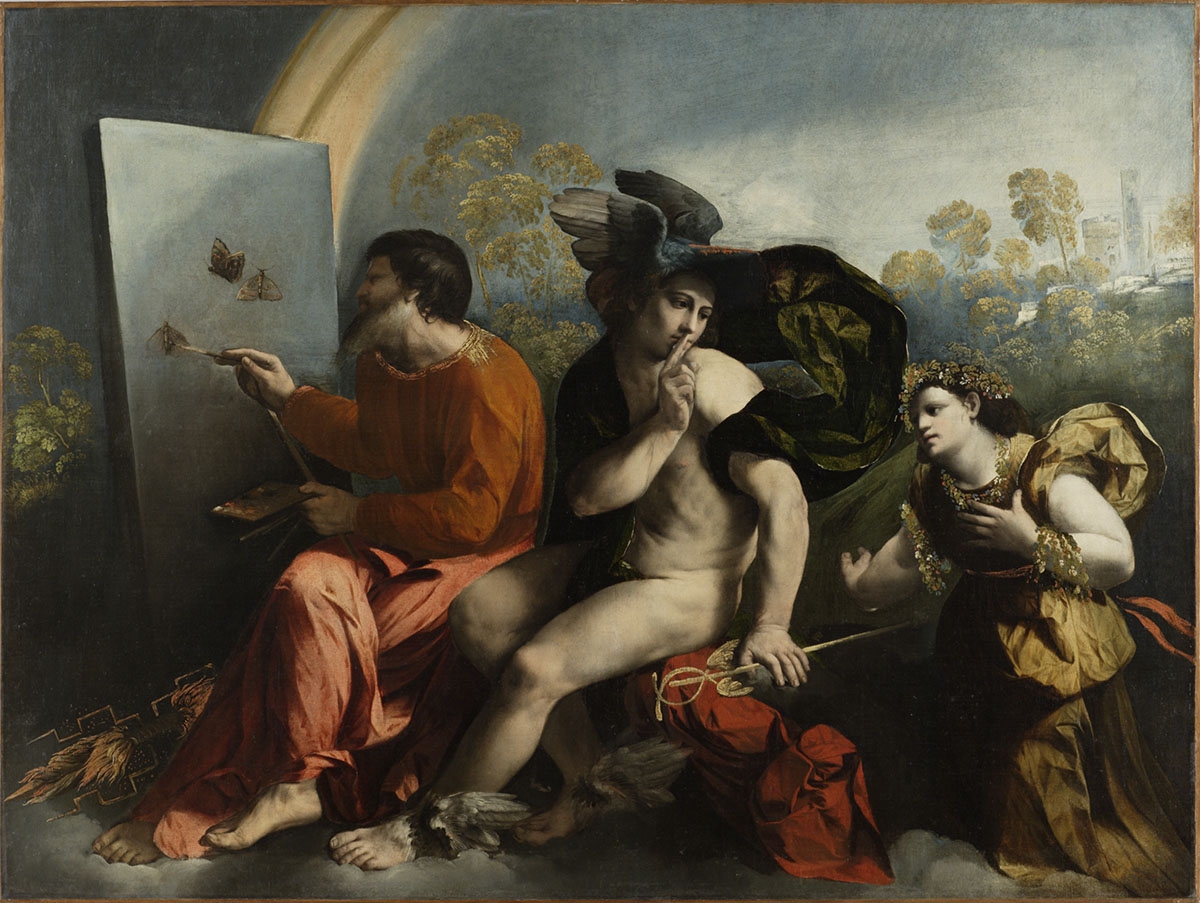
Figure 13. Dosso Dossi, Jupiter, Mercury, and Virtue. 1524. Oil on canvas. Wawel Castle, Poland.
Source: Public Domain